What Is Self-Compassion? A Guide to Being Kinder to Yourself:
Think about a time when you made a mistake. What did you say to yourself? Many people respond with harsh self-criticism, even when they would be kind and understanding toward a friend in the same situation. Self-compassion means treating yourself with the same kindness and patience you would offer someone else. It is not about ignoring mistakes or making excuses. Instead, it helps you accept difficult moments, remember that everyone makes mistakes, and move forward with a kinder attitude toward yourself. In the rest of this article, we will explore “What Is Self-Compassion? A Guide to Being Kinder to Yourself”

What Is Self-Compassion? A Sum of Three Parts:
Self-compassion has three main parts: self-kindness, common humanity, and mindfulness (Neff, 2003). These three parts work together when we face mistakes, difficulties, or painful experiences. Instead of judging ourselves harshly, self-compassion helps us respond with understanding and care.
You may already know how to show these qualities to other people. For example, when a friend has a difficult day, you may comfort them, remind them that everyone struggles, and help them think clearly about what happened. Self-compassion means learning to offer that same understanding to yourself.
Self-Kindness:
Self-kindness means treating yourself with warmth and understanding when things go wrong. It means avoiding harsh self-criticism and giving yourself the support you need during difficult moments. It does not mean pretending that a mistake did not happen or avoiding responsibility. Instead, it means accepting the mistake without adding unnecessary blame or punishment.
For example, imagine that you missed an important deadline at work. A self-critical response might be, “I always do this. I am careless. No one can trust me.” This type of thinking can make the situation feel even worse.
A self-compassionate response would be more balanced. You might say, “This was a difficult week, and I did not meet the deadline. What can I do now to fix the situation and get back on track?”
This approach does not remove responsibility. Instead, it allows you to learn from the mistake without attacking yourself. Research suggests that responding to setbacks with self-compassion can reduce the emotional impact of difficult experiences compared with harsh self-criticism (Leary et al., 2007).
Common Humanity:
Common humanity means understanding that struggle, failure, and imperfection are normal parts of human life. Everyone makes mistakes. Everyone experiences disappointment. No one gets everything right all the time.
When something goes wrong, it is easy to feel alone. You may think that other people are doing well while you are the only person struggling. This can make a difficult situation feel even more painful.
Common humanity helps you see the situation differently. For example, after missing a deadline, you might think, “Everyone makes mistakes sometimes. I am not the only person who has failed to meet an expectation.”
This does not mean that every mistake is unimportant. It simply reminds you that making mistakes does not make you different from everyone else. It is part of being human. Recognizing this shared experience can reduce feelings of isolation and help you respond to yourself with greater understanding (Neff, 2003).
Mindfulness:
Mindfulness means being aware of your thoughts and feelings without ignoring them or becoming completely controlled by them. It allows you to notice what you are experiencing and respond in a balanced way (Neff, 2003).
For example, after missing a deadline, you might feel embarrassed, worried, or stressed. Mindfulness allows you to notice these feelings and say, “I feel stressed about what happened.” You recognize the emotion without allowing it to take over your thoughts for the entire day.
Without mindfulness, you may try to push the feelings away or spend hours thinking about the mistake. Both responses can make the situation harder to manage. Mindfulness creates a middle path. You acknowledge the difficulty without becoming overwhelmed by it.
How the Three Parts Work Together:
Self-kindness, common humanity, and mindfulness are not separate steps that must always happen in a fixed order. They support and strengthen one another in everyday life (Neff, 2003).
Mindfulness helps you notice that you are struggling. Common humanity reminds you that struggle is a normal part of life. Self-kindness then helps you respond to yourself with care and understanding.
For example, if you make a mistake at work, you can first recognize your feelings instead of ignoring them. You can then remind yourself that everyone makes mistakes. Finally, you can speak to yourself with kindness and think about what you can do next.
Together, these three parts create a healthier way of dealing with difficult experiences. Self-compassion does not mean avoiding responsibility or making excuses. It means facing your mistakes honestly while giving yourself the understanding and support needed to learn, recover, and move forward.
How Self-Compassion Differs From Self-Esteem and Self-Love:
Self-compassion is related to self-esteem and self-love, but they are not the same thing. Each concept describes a different way of relating to yourself. Understanding these differences can help you see why self-compassion is useful during both success and difficult times.
Self-Esteem:
Self-esteem is mainly about how you evaluate yourself. It often depends on how you see your abilities, achievements, or personal qualities. You may feel good about yourself when you meet your goals or perform well. You may also compare yourself with other people or with your own idea of what it means to be successful.
Because self-esteem can depend on performance and comparison, it can change easily. When things are going well, you may feel confident and proud. However, when you fail, make a mistake, or feel that someone else is doing better, your self-esteem may decrease. In this way, self-esteem can be fragile because it is often connected to how well you believe you are doing (Neff & Vonk, 2009).
Self-Love:
Self-love is a broader idea. It means valuing, accepting, and caring about yourself. It encourages you to recognize your own worth and treat yourself with respect.
Self-love can be helpful in many areas of life. There are also useful self-love exercises that can help people develop a more positive relationship with themselves.
However, self-love does not always provide a clear structure for dealing with difficult experiences. It tells you that you should value yourself, but it may not always explain what to do when you fail, feel disappointed, or experience emotional pain.
Self-Compassion:
Self-compassion is different because it does not depend on success, achievement, or comparison. It means giving yourself kindness and understanding even when things do not go as planned.
For example, imagine that you give an important presentation. If it goes very well, self-esteem may increase because you feel successful. If the presentation goes badly, your self-esteem may fall. Self-compassion works differently. It allows you to support yourself in both situations.
You might say, “That did not go the way I hoped, but everyone makes mistakes. I can learn from this and try again.”
The focus is not on deciding whether you are successful or unsuccessful. The focus is on responding to yourself with care when you are having a difficult experience.
Why Self-Compassion Can Be More Stable:
Research suggests that self-compassion is linked to a more stable sense of self-worth. Unlike self-esteem, it is less dependent on personal achievements, social comparison, or approval from other people. At the same time, self-compassion is associated with happiness and positive emotions (Neff & Vonk, 2009).
This does not mean that self-esteem or self-love are unimportant. They can both contribute to a healthy relationship with yourself. However, self-compassion offers something especially important: kindness that does not disappear when you fail.
You do not have to prove that you are good enough before you deserve compassion. You can make mistakes, experience setbacks, and still treat yourself with understanding. That is one of the key differences between self-compassion, self-esteem, and self-love.
Practicing Self-Compassion:
Self-compassion is a skill that can be learned. It is not something that only certain people have. Like any other skill, it can become stronger through regular practice (Neff & Germer, 2013).
A good place to start is with the way you speak to yourself. Notice what you say when you make a mistake or face a difficult situation. If your inner voice is harsh or blaming, try to replace those words with something more understanding. You can recognize what went wrong without treating yourself badly.
A simple self-compassion pause can be helpful when you are having a difficult moment. First, notice what you are going through and accept that it is hard. Next, remind yourself that other people also experience failure, stress, and disappointment. Finally, offer yourself a few kind words. Then think about what you can do next.
For example, you might tell yourself, “This is a difficult moment. Other people struggle too. I can be patient with myself and take one step forward.” Practicing this kind of response can gradually change the way you deal with mistakes and difficult emotions. Resources such as worksheets on the inner critic can also help you understand your self-critical thoughts and develop a kinder inner voice.
More Structured Ways to Practice:
Self-compassion can also be developed through more formal training. One example is Mindful Self-Compassion, which was developed by Kristin Neff and psychologist Christopher Germer (2013). The program combines mindfulness and self-compassion. It teaches practical ways to deal with difficult thoughts, feelings, and experiences.
Research suggests that people who take part in this type of training can experience improvements in self-compassion, mindfulness, and overall well-being compared with those who do not take part in the training.
Another useful starting point is the self-compassion scale. It can help you think about how you normally respond to yourself when life becomes difficult. It may also help you notice whether you are often kind to yourself or tend to be highly self-critical.
You can then use practical resources such as how to practice self-compassion and self-compassion exercises. These resources can give you simple activities to practice in your everyday life.
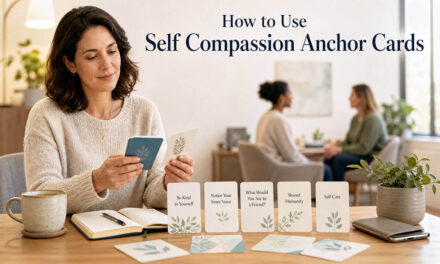
Self-compassion anchor cards can also be useful. They provide short reminders that can help you remember to treat yourself with kindness and understanding throughout the day.
Making Self-Compassion a Daily Practice:
The purpose of practicing self-compassion is not to stop making mistakes or to feel positive all the time. Difficult moments and self-critical thoughts will still happen. The important thing is learning how to respond to them differently.
With regular practice, a kinder response can become more natural. Instead of blaming yourself when something goes wrong, you can recognize the problem, accept that mistakes are part of life, and give yourself the support you need.
Self-compassion allows you to learn from difficult experiences without putting yourself down. Over time, this simple practice can help you face challenges with greater patience, understanding, and care (Neff & Germer, 2013).
In conclusion, self-compassion means treating yourself with kindness when you make mistakes or face difficult times. It helps you remember that everyone struggles and that you do not have to hide or judge your feelings.
Self-compassion is not based on success or failure. It allows you to care for yourself even when things do not go as planned. Research shows that higher self-compassion is linked with lower levels of anxiety, depression, and stress (MacBeth & Gumley, 2012).
You do not need to handle every situation perfectly. What matters is noticing how you treat yourself and choosing a kinder response. With practice, self-compassion can help you accept mistakes, learn from them, and move forward with greater understanding.
References:
- Leary, M. R., Tate, E. B., Adams, C. E., Batts Allen, A., & Hancock, J. (2007). Self-compassion and reactions to unpleasant self-relevant events: The implications of treating oneself kindly. Journal of Personality and Social Psychology, 92(5), 887–904. https://doi.org/10.1037/0022-3514.92.5.887
- MacBeth, A., & Gumley, A. (2012). Exploring compassion: A meta-analysis of the association between self-compassion and psychopathology. Clinical Psychology Review, 32(6), 545–552. https://doi.org/10.1016/j.cpr.2012.06.003
- Neff, K. D. (2003). Self-compassion: An alternative conceptualization of a healthy attitude toward oneself. Self and Identity, 2(2), 85–101. https://doi.org/10.1080/15298860309032
- Neff, K. D., & Germer, C. K. (2013). A pilot study and randomized controlled trial of the Mindful Self-Compassion program. Journal of Clinical Psychology, 69(1), 28–44. https://doi.org/10.1002/jclp.21923
- Neff, K. D., & Vonk, R. (2009). Self-compassion versus global self-esteem: Two different ways of relating to oneself. Journal of Personality, 77(1), 23–50. https://doi.org/10.1111/j.1467-6494.2008.00537.x

Meta Psychological Education focuses on the foundational, higher-order skills (meta-skills) that allow individuals to “learn how to learn,” manage their own cognitive processes, and adapt to new situations, often termed meta-learning. It bridges psychological research with practical application in learning and development.