Basic Understanding of Applied Metapsychology:
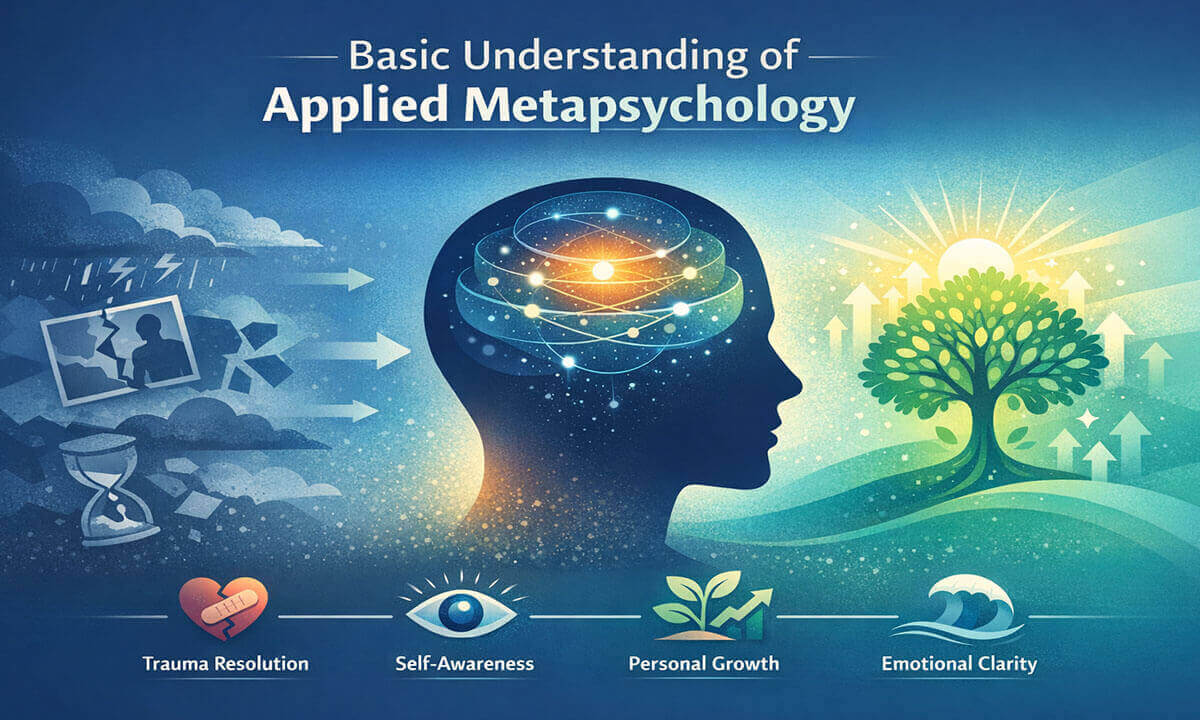
The field of psychology has long attempted to understand not only human behavior but also the deeper processes that shape subjective experience, meaning-making, and personal transformation. Within this broader intellectual landscape, metapsychology emerges as a framework that goes beyond observable behavior to examine the underlying structures and principles of the human mind. Originally introduced by Sigmund Freud, metapsychology sought to explain the dynamic, structural, and economic aspects of mental functioning (Freud, 1915/1963). Building upon this foundation, Applied Metapsychology (AMP), developed by Frank A. Gerbode in the late twentieth century, offers a practical and structured approach to addressing psychological distress and enhancing human potential. Applied Metapsychology is not merely a theoretical construct; it is a systematic method that integrates person-centered philosophy with directive techniques to help individuals resolve trauma, improve emotional well-being, and achieve self-actualization. This article provides a basic understanding of Applied Metapsychology, including its theoretical roots, core principles, applications, and limitations.
What Is Applied Metapsychology?
Applied Metapsychology can be understood as the practical application of metapsychological principles to facilitate personal change and psychological healing. Gerbode (1989) defined metapsychology as “the science that unifies mental and physical experience,” emphasizing the importance of understanding individuals from their own subjective perspectives. Unlike traditional behavioral approaches that focus primarily on observable actions, AMP centers on the person as an active agent; someone who perceives, interprets, and creates meaning.
At its core, AMP employs structured techniques within a person-centered framework. These techniques are designed to help individuals examine various aspects of their lives, including:
- Emotional experiences
- Traumatic memories
- Decisions and beliefs
- Patterns of thought and behavior
- Personal successes and strengths
The ultimate goal is to reduce emotional distress, resolve unresolved experiences, and restore a sense of clarity, productivity, and life satisfaction.
The Purpose and Goals of Applied Metapsychology:
Applied Metapsychology is fundamentally designed to move individuals beyond psychological distress toward clarity, resilience, and personal fulfillment. Unlike many traditional therapeutic models that focus primarily on symptom reduction, AMP adopts a broader and more ambitious vision: it seeks not only to resolve emotional suffering but also to cultivate human potential. Its goals can be understood across several interrelated dimensions, ranging from trauma resolution to self-actualization.
1. Resolution of Traumatic Stress: One of the central purposes of Applied Metapsychology is the effective and systematic resolution of traumatic stress. Psychological trauma often arises from experiences that overwhelm an individual’s ability to cope, such as accidents, injuries, emotional shocks, illnesses, or significant losses. These experiences may leave behind what AMP describes as “emotional charge,” a lingering intensity that continues to affect thoughts, feelings, and behavior.
AMP addresses this issue through structured techniques such as Traumatic Incident Reduction (TIR), which guide individuals to revisit distressing experiences in a safe and controlled manner. By repeatedly examining these incidents, individuals can gradually desensitize the emotional impact and integrate the experience into their broader life narrative. This process aligns with earlier psychoanalytic insights suggesting that unresolved memories contribute to psychological symptoms and must be processed for healing to occur (Freud, 1910/1926/1962).
Importantly, AMP recognizes that trauma is often cumulative rather than singular. Therefore, it emphasizes addressing entire chains of related experiences rather than isolated events. This comprehensive approach allows for deeper and more lasting resolution of distress.
2. Addressing Persistent Life Challenges: Beyond trauma, Applied Metapsychology aims to help individuals navigate a wide range of ongoing life difficulties. Many psychological struggles are not rooted in a single traumatic event but instead arise from patterns of thinking, decision-making, and emotional response that develop over time.
AMP provides a structured framework for examining and resolving such issues, including:
- Relationship conflicts and interpersonal difficulties
- Low self-esteem and lack of self-confidence
- Career dissatisfaction or indecision
- Chronic stress and emotional fatigue
- Loss of motivation, enthusiasm, or sense of purpose
By encouraging individuals to explore these areas from their own perspective, AMP fosters greater self-awareness and insight. Rather than imposing interpretations, the facilitator supports the individual in discovering the underlying causes of their difficulties, consistent with person-centered principles (Rogers, 1951).
3. Restoring Functional and Emotional Well-Being: A key goal of AMP is to help individuals move from states of distress toward a stable and satisfying level of functioning. Sigmund Freud once described the aim of psychotherapy as transforming “hysterical misery into common unhappiness” (Freud, 1910/1926/1962). Applied Metapsychology extends this goal by striving for a more complete resolution of distress.
Through its methods, AMP seeks to:
- Reduce emotional reactivity
- Increase clarity of thought
- Enhance the ability to make effective decisions
- Restore a sense of control and personal agency
This phase of work often represents the initial stage of AMP, where the primary focus is on alleviating suffering and stabilizing the individual’s psychological state.
4. Promoting Personal Growth and Self-Actualization: While resolving distress is essential, Applied Metapsychology does not stop there. A distinguishing feature of AMP is its commitment to fostering personal growth and self-actualization. Drawing on humanistic psychology, particularly the work of Carl Rogers, AMP assumes that individuals possess an inherent drive toward growth, creativity, and fulfillment (Rogers, 1961).
Once major sources of emotional disturbance have been addressed, individuals can engage in a second phase of work focused on expanding their capabilities. This includes:
- Enhancing creativity and problem-solving abilities
- Developing greater emotional intelligence
- Increasing self-awareness and insight
- Exploring values, goals, and life purpose
This stage reflects a shift from therapy to education, where the individual actively participates in a structured “viewing curriculum” designed to unlock higher levels of functioning.
5. Empowering Autonomy and Personal Responsibility: Another imperative goal of AMP is to empower individuals as active agents in their own lives. Rather than positioning the practitioner as an authority who diagnoses and interprets, AMP emphasizes the client’s role as the ultimate authority on their own experience.
This approach fosters:
- Greater self-trust and confidence
- Improved decision-making capacity
- A stronger sense of personal responsibility
- Independence from external validation
By maintaining a respectful, person-centered environment while still providing structure, AMP creates conditions in which individuals can safely explore and resolve their concerns without feeling judged or controlled.
6. Exploring and Maximizing Human Potential: At its highest level, Applied Metapsychology is concerned with the exploration of human potential. It seeks to answer fundamental questions about what individuals are capable of when freed from limiting beliefs, unresolved trauma, and habitual patterns (Henriques, 2011).
This includes:
- Expanding cognitive and perceptual abilities
- Enhancing creativity and innovation
- Deepening understanding of self and others
- Achieving a more meaningful and purposeful life
In this sense, AMP aligns with broader movements in psychology that emphasize well-being, flourishing, and optimal human functioning rather than merely the absence of illness.
7. Providing a Structured Yet Person-Centered Framework: Finally, a defining goal of Applied Metapsychology is to integrate structure with respect for individual experience. Unlike purely non-directive approaches, AMP employs clearly defined techniques and processes. However, these are applied within a framework that prioritizes the individual’s perspective and autonomy.
This balance allows AMP to achieve both efficiency and depth:
- Structure ensures systematic progress
- Person-centeredness ensures safety and authenticity
- Directive techniques enhance effectiveness without undermining autonomy
As a result, AMP occupies a unique position among psychological approaches, combining the strengths of both directive and non-directive traditions.
In short, the purpose and goals of Applied Metapsychology extend far beyond traditional therapeutic aims. It seeks to:
- Resolve traumatic stress and emotional distress
- Address persistent life challenges
- Restore psychological stability and well-being
- Promote personal growth and self-actualization
- Empower individuals as autonomous agents
- Explore and expand human potential
By integrating these objectives into a coherent and structured framework, Applied Metapsychology offers a comprehensive approach to both healing and personal development. Its emphasis on the individual’s subjective experience, combined with systematic techniques, makes it a distinctive and valuable contribution to modern psychological practice.
Theoretical Foundations of Applied Metapsychology:
Applied Metapsychology is grounded in a rich and integrative theoretical framework that draws primarily from classical psychoanalysis and humanistic psychology, while also developing its own distinctive philosophical position. Rather than adhering rigidly to a single school of thought, AMP synthesizes key ideas from earlier traditions and refines them into a coherent, structured, and practice-oriented system. Its theoretical foundations can be best understood through three major influences: the metapsychological concepts of Sigmund Freud, the person-centered philosophy of Carl Rogers, and the original contributions of Frank A. Gerbode.
1. Foundations in Freudian Metapsychology: The concept of metapsychology was first introduced by Sigmund Freud to describe a level of psychological analysis that goes beyond observable behavior and examines the underlying processes of the mind. Freud’s metapsychology aimed to explain mental phenomena in terms of dynamic forces (conflicts between drives), structural components (id, ego, superego), and economic factors (distribution of psychic energy) (Freud, 1915/1963).
A particularly relevant aspect of Freud’s early work for AMP is his understanding of trauma and symptom formation. Freud proposed that psychological symptoms often arise not from a single traumatic event but from a series of related experiences that accumulate over time. He emphasized that these experiences must be revisited and processed in order to resolve their lingering effects (Freud, 1910/1926/1962).
Applied Metapsychology builds directly on this insight. It adopts and operationalizes Freud’s earlier idea that therapeutic progress can be achieved by systematically revisiting traumatic memories in reverse chronological order. While Freud later moved away from this structured method in favor of free association, AMP reintroduces and refines it into a more consistent and replicable technique.
In AMP, this principle is embodied in methods such as Traumatic Incident Reduction (TIR), where individuals are guided to repeatedly review distressing experiences. This repetition facilitates emotional discharge and cognitive integration, ultimately reducing the “emotional charge” associated with the memory. In this way, AMP preserves Freud’s core insight that unresolved experiences continue to influence present functioning, while offering a more structured pathway to resolution.
2. Influence of Humanistic Psychology and Carl Rogers: While Freud provided the foundation for understanding the origins of psychological distress, Carl Rogers contributed essential principles regarding the conditions necessary for healing and growth. Rogers’ person-centered approach emphasized that individuals possess an innate tendency toward self-actualization, which can be realized in a supportive and non-judgmental environment (Rogers, 1951, 1961).
Central to Rogers’ theory are three core conditions:
- Empathy: Deep understanding of the client’s subjective experience
- Unconditional positive regard: Acceptance without judgment
- Congruence: Authenticity and transparency on the part of the therapist
Applied Metapsychology incorporates these principles as fundamental ethical and practical guidelines. In AMP, the practitioner (often called a facilitator) maintains a respectful attitude toward the client’s perspective, refrains from imposing interpretations, and avoids evaluative judgments. This creates a safe psychological environment in which individuals can explore their experiences freely.
However, AMP also departs from Rogers in a significant way. Rogers initially described his method as “non-directive,” meaning that the client determines the direction and content of the session. Frank A. Gerbode argued that non-directiveness and person-centeredness are not synonymous. According to AMP, it is possible (and often beneficial) to be both person-centered and directive.
This distinction is crucial. In AMP:
- Person-centeredness refers to respecting the client’s reality and authority over their own experience.
- Directiveness refers to the structured use of specific techniques to guide the therapeutic process.
By combining these elements, AMP creates a unique hybrid approach that maintains the humanistic emphasis on respect and autonomy while also ensuring efficiency and effectiveness through structured intervention.
3. Gerbode’s Integrative and Original Contributions: Frank A. Gerbode played a fundamental role in synthesizing and extending the ideas of Freud and Rogers into a unified system. Beginning in the 1980s, Gerbode sought to develop a comprehensive framework that could systematically address both psychological distress and human potential.
One of his key contributions was the formal definition of metapsychology as a discipline that unifies mental and physical experience and studies the individual from their own point of view. This emphasis on subjective experience distinguishes AMP from more behaviorally oriented approaches.
Gerbode also introduced the idea that psychological work can be understood as an educational process. Rather than viewing therapy solely as treatment for pathology, AMP conceptualizes it as a structured learning experience in which individuals gain insight, develop skills, and expand awareness. This perspective is reflected in the concept of the “viewing curriculum,” a sequence of processes designed to guide individuals from distress resolution to personal growth.
Another essential theoretical contribution is the concept of emotional charge. In AMP, unresolved experiences are believed to carry a residual intensity that influences current perception and behavior. The goal of AMP techniques is to neutralize this charge, allowing individuals to perceive past events more objectively and respond more adaptively in the present.
Gerbode’s framework is also notable for its internal consistency. Unlike some eclectic approaches that combine techniques without a unifying philosophy, AMP is built on clearly defined principles, including:
- Respect for the client’s subjective reality
- Avoidance of interpretation and evaluation
- Systematic and repeatable procedures
- Emphasis on awareness and conscious processing
These principles provide a solid theoretical foundation that supports both the practice and teaching of AMP methods.
4. The Integration of Directive and Experiential Approaches: A defining feature of Applied Metapsychology’s theoretical foundation is its integration of directive techniques with experiential processing. Traditional psychoanalysis often relies on insight gained through free association, while humanistic approaches emphasize emotional experience and self-exploration.
AMP bridges these traditions by offering structured methods that directly engage the individual’s experience. Rather than analyzing or interpreting from the outside, the facilitator guides the individual to re-experience and examine events from their own perspective. This experiential focus aligns with modern understandings of memory reconsolidation and emotional processing, which suggest that revisiting experiences in a safe context can lead to lasting change.
5. Philosophical Orientation (The Primacy of the Individual): Underlying all aspects of AMP is a philosophical commitment to the primacy of the individual. This means that:
- The individual is the ultimate authority on their own experience
- Reality is understood subjectively rather than imposed externally
- Change occurs through increased awareness rather than external correction
This orientation reflects both existential and humanistic influences, emphasizing personal responsibility, freedom, and the capacity for growth.
In brief, the theoretical foundations of Applied Metapsychology represent a thoughtful synthesis of classical and modern psychological ideas. Drawing from Freud’s metapsychological insights, Rogers’ person-centered philosophy, and Gerbode’s original contributions, AMP establishes a framework that is both deeply humanistic and methodologically structured. By integrating these influences, AMP achieves a balance between understanding the roots of psychological distress and providing practical tools for transformation. Its emphasis on subjective experience, systematic processing, and personal growth positions it as a distinctive and comprehensive approach within the broader field of psychology.
Techniques and Process in Applied Metapsychology:
Applied Metapsychology is distinguished not only by its philosophical foundations but also by its highly structured and systematic approach to psychological change. Unlike many therapeutic models that rely heavily on interpretation or unstructured dialogue, AMP employs clearly defined techniques and processes designed to guide individuals through the resolution of distress and the enhancement of personal capacity. These techniques are delivered within a person-centered framework, ensuring that structure does not override the individual’s autonomy or subjective experience. The techniques and processes in AMP can be understood across several stages, from initial assessment to advanced personal development, each contributing to a comprehensive and progressive system of change.
1. The Intake Interview and Case Planning: The process of Applied Metapsychology begins with a structured intake interview conducted by a trained facilitator. This initial phase is crucial, as it establishes the foundation for all subsequent work.
During the intake interview, the facilitator gathers detailed information about the individual’s:
- Presenting concerns and goals
- Emotional and psychological history
- Significant life events, including traumatic experiences
- Current life circumstances and stressors
Rather than diagnosing or labeling, the facilitator uses this information to collaboratively develop a plan tailored to the individual’s needs. This plan determines which AMP techniques will be used and in what sequence. Importantly, the process respects the individual’s perspective, ensuring that their priorities guide the direction of the work.
2. Traumatic Incident Reduction (TIR): One of the crucial techniques in Applied Metapsychology is Traumatic Incident Reduction (TIR), developed by Frank A. Gerbode. TIR is specifically designed to address unresolved trauma by systematically reducing the emotional intensity associated with distressing memories.
How TIR Works: In a TIR session, the individual (referred to as the “viewer”) is guided to recall a specific traumatic incident in detail. The facilitator provides clear, simple instructions, encouraging the viewer to:
- Re-experience the event from beginning to end
- Repeat the viewing of the incident multiple times
- Continue until the emotional charge diminishes significantly
This repetition is a key feature of TIR. Unlike approaches that avoid revisiting trauma, AMP assumes that controlled and repeated exposure allows the mind to process and integrate the experience fully. Over time, the memory loses its distressing intensity and becomes a neutral or manageable part of the individual’s life narrative.
Outcomes of TIR: Successful TIR sessions often lead to:
- Reduction or elimination of emotional distress
- Increased clarity and insight
- A sense of resolution or closure
- Improved ability to function in daily life
TIR is particularly effective for single-incident trauma, such as accidents or sudden losses, but it can also be adapted for more complex situations.
3. Addressing Chains of Trauma: Building on early psychoanalytic insights from Sigmund Freud, AMP recognizes that many psychological difficulties stem from a series of related experiences rather than a single event. These “chains” of trauma may involve repeated patterns, such as ongoing criticism, neglect, or similar types of loss.
Sequential Processing: To address this, AMP employs a structured method of sequential processing, where the individual revisits multiple incidents in a specific order, often from the most recent to the earliest. This approach ensures that:
- Later experiences, which may be more accessible, are resolved first
- Earlier, more deeply rooted experiences can be addressed more effectively
- The entire chain of related memories is integrated
This method prevents partial resolution and reduces the likelihood of unresolved elements continuing to influence present behavior.
4. Life Stress Reduction (LSR) Programs: For individuals dealing with multiple sources of stress, AMP offers comprehensive Life Stress Reduction (LSR) programs. These programs are designed to systematically identify and resolve a wide range of distressing experiences across the individual’s life.
Structure of LSR: An LSR program typically includes:
- Identification of major stressors and unresolved issues
- Prioritization of areas to address
- Application of appropriate AMP techniques (e.g., TIR, thematic viewing)
- Ongoing assessment of progress
The goal is not merely to address isolated problems but to reduce the overall burden of accumulated stress. This holistic approach allows individuals to experience a broader and more stable improvement in well-being.
5. The Viewing Process: A central concept in AMP is “viewing,” which refers to the structured examination of one’s experiences, thoughts, and emotions. Viewing is not passive reflection; it is an active and guided process that promotes awareness and resolution.
Characteristics of Viewing: Viewing involves:
- Focused attention on specific experiences or issues
- Repetition to deepen understanding and reduce emotional charge
- Non-judgmental observation of thoughts and feelings
- Gradual uncovering of insights and connections
The facilitator’s role is to maintain the structure of the process while ensuring that the viewer remains engaged and comfortable. Importantly, the facilitator does not interpret or analyze the viewer’s experience but allows insights to emerge naturally.
6. The Viewing Curriculum (From Healing to Growth): Once significant distress has been resolved, individuals may progress to a more advanced phase of AMP known as the “viewing curriculum.” This stage reflects the educational aspect of Applied Metapsychology.
Focus Areas of the Viewing Curriculum: The curriculum is designed to enhance:
- Cognitive clarity and decision-making
- Emotional resilience and regulation
- Creativity and problem-solving abilities
- Awareness of personal values and goals
This phase represents a shift from therapeutic intervention to personal development. The individual is no longer primarily focused on resolving past issues but on expanding present and future capabilities.
7. The Role of the Facilitator: The facilitator plays a crucial role in the effectiveness of AMP techniques. Unlike traditional therapists, facilitators in AMP do not interpret, diagnose, or impose meaning. Instead, their responsibilities include:
- Providing clear and consistent instructions
- Maintaining a safe and respectful environment
- Ensuring adherence to AMP principles
- Supporting the viewer’s focus and engagement
This role reflects the influence of Carl Rogers, particularly the emphasis on respect for the client’s subjective experience. However, unlike purely non-directive approaches, the facilitator actively guides the process through structured techniques.
8. Integration and Completion: A key aspect of the AMP process is ensuring that each issue is fully resolved before moving on. Indicators of completion may include:
- Absence of emotional distress when recalling the event
- Increased sense of understanding and acceptance
- Ability to view the experience objectively
This emphasis on completion helps prevent partial processing and contributes to the long-term effectiveness of the approach.
In momentary, the techniques and processes of Applied Metapsychology form a coherent and systematic pathway for psychological change. Beginning with careful assessment and planning, progressing through structured methods such as Traumatic Incident Reduction and Life Stress Reduction, and culminating in advanced personal development, AMP offers a comprehensive framework for both healing and growth. By combining directive techniques with a person-centered philosophy, AMP ensures that individuals are both guided and respected throughout the process. This balance allows for deep emotional resolution while empowering individuals to take an active role in their own transformation.
Applications of Applied Metapsychology:
Applied Metapsychology is a versatile and practice-oriented framework that extends beyond traditional psychotherapy into multiple domains of human functioning. Its structured yet person-centered methodology allows it to be applied effectively across a wide range of psychological, emotional, and developmental contexts. From trauma recovery to personal growth, AMP provides tools that are adaptable to diverse individual needs while maintaining a consistent philosophical foundation. The applications of AMP can be broadly categorized into clinical, developmental, relational, and performance-oriented domains.
1. Trauma Recovery and Post-Traumatic Stress: One of the most well-established applications of Applied Metapsychology is in the treatment of trauma. Traumatic experiences (such as accidents, injuries, abuse, natural disasters, or sudden losses) can leave lasting psychological effects, including anxiety, intrusive memories, and emotional dysregulation.
AMP addresses trauma primarily through structured techniques like Traumatic Incident Reduction (TIR), developed by Frank A. Gerbode. These techniques enable individuals to systematically revisit and process distressing events in a controlled environment. Over time, the emotional intensity associated with these memories diminishes, leading to resolution.
Research has indicated that TIR can be effective in reducing symptoms of post-traumatic stress, particularly in community-based and non-clinical populations (Valentine & Smith, 2001). Its structured nature makes it especially useful in settings where brief and focused interventions are required.
2. Treatment of Complex Trauma and Cumulative Stress: While single-incident trauma can be addressed relatively directly, many individuals experience complex trauma, which arises from repeated or prolonged exposure to distressing situations (e.g., chronic neglect, ongoing interpersonal conflict, or repeated failures).
AMP is particularly well-suited for such cases because it emphasizes the processing of chains of related experiences. Drawing on early insights from Sigmund Freud, AMP techniques allow individuals to work through sequences of events systematically, often beginning with more recent incidents and gradually addressing earlier ones.
This approach helps to:
- Uncover recurring patterns of thought and emotion
- Reduce the cumulative emotional burden of repeated experiences
- Promote deeper and more comprehensive healing
3. Addiction and Behavioral Issues: Applied Metapsychology has also been applied in the treatment of addiction and maladaptive behaviors. Substance abuse and compulsive behaviors are often linked to unresolved emotional pain, stress, or trauma.
AMP techniques can assist individuals in:
- Identifying the underlying emotional triggers of addictive behavior
- Processing past experiences that contribute to dependency
- Developing greater self-awareness and control
However, it is important to note that AMP is most effective when individuals are stable and not actively under the influence of substances. As such, it is often used as part of a broader recovery plan rather than a standalone intervention during acute phases of addiction.
4. Grief, Loss, and Bereavement: Loss is an inevitable aspect of human life, yet the psychological impact of grief can vary widely. The death of a loved one, the end of a relationship, or the loss of a career can lead to prolonged emotional distress if not adequately processed.
AMP provides a structured approach to grief work by allowing individuals to revisit and process the experiences associated with their loss. This may include:
- The moment of loss or separation
- Related memories and emotional responses
- Unresolved feelings such as guilt, anger, or regret
By facilitating the gradual resolution of these emotional components, AMP helps individuals move toward acceptance and emotional balance.
5. Phobias and Anxiety Disorders: Phobias and anxiety disorders often stem from specific experiences or learned associations that trigger disproportionate fear responses. AMP techniques can be used to identify and resolve the underlying incidents that contribute to these fears.
Through repeated and controlled viewing of fear-inducing situations, individuals can:
- Reduce the intensity of their fear response
- Gain a clearer understanding of its origins
- Develop a more balanced and adaptive perspective
This application aligns with broader psychological principles of exposure and desensitization but is distinguished by AMP’s emphasis on subjective experience and structured repetition.
6. Relationship and Interpersonal Difficulties: Interpersonal relationships are a common source of both fulfillment and distress. Conflicts, misunderstandings, and unresolved emotional patterns can significantly impact relationship quality.
AMP can be applied to relationship issues by helping individuals:
- Explore past interactions and emotional responses
- Identify recurring patterns in relationships
- Resolve unresolved feelings toward specific individuals
- Improve communication and emotional awareness
Because AMP is person-centered, it does not impose interpretations about relationships but instead supports individuals in discovering their own insights and solutions.
7. Enhancing Creativity and Cognitive Performance: Beyond addressing psychological distress, Applied Metapsychology is also used to enhance creativity and cognitive functioning. Once major sources of emotional interference are resolved, individuals often experience increased mental clarity and flexibility.
Applications in this domain include:
- Overcoming creative blocks
- Improving problem-solving abilities
- Enhancing focus and concentration
- Expanding innovative thinking
This aspect of AMP reflects its alignment with humanistic psychology, particularly the emphasis on self-actualization and the realization of potential (Rogers, 1961).
8. Personal Development and Self-Actualization: One of the most distinctive applications of AMP lies in its focus on personal growth. After addressing distress and stabilizing emotional functioning, individuals can engage in a structured “viewing curriculum” aimed at expanding their capabilities.
This phase may involve:
- Clarifying personal values and life goals
- Developing greater self-awareness
- Enhancing emotional intelligence
- Exploring meaning and purpose
In this context, AMP functions not as therapy in the traditional sense but as an educational process that supports lifelong development.
9. Educational and Organizational Contexts: Applied Metapsychology is increasingly relevant in non-clinical settings, including education and organizational development. Its techniques can be adapted to help individuals and groups function more effectively.
In educational contexts, AMP can support:
- Student well-being and emotional resilience
- Improved focus and learning capacity
- Resolution of stress related to academic performance
In organizational settings, it can be used to:
- Address workplace stress and burnout
- Improve communication and teamwork
- Enhance leadership and decision-making skills
These applications highlight the flexibility of AMP as a tool for both individual and collective improvement.
10. Preventive Mental Health and Well-Being: Last but not the least; AMP has significant potential as a preventive approach to mental health. By addressing stress and unresolved experiences early, individuals can reduce the likelihood of more severe psychological difficulties developing later.
Preventive applications include:
- Early intervention for stress and emotional difficulties
- Building resilience and coping skills
- Promoting overall well-being and life satisfaction
This proactive approach aligns with contemporary trends in psychology that emphasize prevention and well-being rather than solely focusing on treatment.
In short, the applications of Applied Metapsychology are broad and multifaceted, encompassing clinical treatment, personal development, and performance enhancement. Its effectiveness lies in its ability to address both the roots of psychological distress and the expansion of human potential. From trauma recovery and addiction treatment to creativity enhancement and organizational development, AMP offers a structured yet flexible framework that can be adapted to a wide range of contexts. By maintaining a focus on the individual’s subjective experience while employing systematic techniques, it provides a unique and powerful approach to understanding and improving human functioning.
Limitations and Contraindications of Applied Metapsychology:
While Applied Metapsychology offers a structured and person-centered approach to resolving trauma and enhancing personal growth, it is not universally suitable for all individuals or situations. Like any psychological method, its effectiveness depends on specific conditions related to the client, the context, and the nature of the presenting issues. Understanding these limitations and contraindications is essential for ethical practice, appropriate application, and realistic expectations.
1. Substance Use and Chemical Dependency: One of the primary contraindications for AMP is active substance use, including drugs and alcohol. Individuals who are currently dependent on or under the influence of such substances often experience impaired attention, reduced awareness, and diminished emotional access. These factors interfere directly with the core processes of AMP, which rely on focused attention and the ability to consciously revisit and process experiences.
AMP techniques, particularly those involving repeated viewing of traumatic events, require a stable mental state. When substance use is ongoing, the individual may:
- Struggle to maintain concentration during sessions
- Experience distorted perceptions or inconsistent recall
- Be unable to engage fully with emotional material
For this reason, it is generally recommended that individuals achieve a stable period of sobriety before beginning AMP work. In many cases, AMP can be integrated into a broader recovery program once this stability has been established.
2. Effects of Certain Medications: Another vibrant limitation involves the use of medications that alter cognitive or emotional functioning. In particular, sedatives, strong painkillers, and major or minor tranquilizers can reduce alertness and dampen emotional responsiveness.
Since AMP depends on the individual’s ability to access and process emotional experiences, such medications may:
- Limit the depth of engagement with memories
- Reduce the effectiveness of repeated viewing techniques
- Interfere with the natural resolution of emotional charge
However, not all medications pose the same challenge. For example, selective serotonin reuptake inhibitors (SSRIs) are generally considered compatible with AMP because they do not significantly impair awareness or cognitive functioning. Nevertheless, careful assessment is required to determine whether a client’s medication regimen supports or hinders the process.
3. Severe Psychiatric Disorders and Cognitive Impairment: Applied Metapsychology may not be appropriate for individuals with certain psychiatric conditions that significantly impair cognitive functioning, attention, or reality testing. These may include severe psychotic disorders, acute mania, or conditions involving substantial disorganization of thought.
AMP requires the ability to:
- Maintain sustained attention
- Follow structured instructions
- Distinguish between past experiences and present reality
- Engage in reflective self-observation
When these capacities are compromised, the individual may find it difficult or even distressing to participate in AMP techniques. In such cases, stabilization through other forms of treatment (such as psychiatric care or supportive therapy) may be necessary before AMP can be considered.
4. Lack of Motivation or Voluntary Participation: A fundamental principle of Applied Metapsychology is that meaningful change occurs through the active participation of the individual. As such, motivation and willingness are essential prerequisites.
Individuals who are:
- Coerced into therapy by external parties (e.g., family members, legal authorities)
- Resistant to self-exploration
- Uninterested in engaging with their own experiences
are unlikely to benefit from AMP. The process requires sustained effort, openness, and a genuine desire for change. Without these elements, sessions may lack depth and fail to produce meaningful outcomes.
This limitation underscores the importance of informed consent and client readiness in AMP practice.
5. Overwhelming Life Circumstances: Another substantial limitation arises when individuals are in the midst of highly stressful or unstable life situations. Examples may include:
- Ongoing abuse or unsafe living conditions
- Severe financial or occupational crises
- Acute health emergencies
- Intense interpersonal conflict
In such circumstances, the individual’s attention may be fully occupied with immediate survival or problem-solving needs. This makes it difficult to engage in the focused and reflective processes required in AMP.
For these individuals, it may be more appropriate to begin with supportive interventions aimed at stabilizing their situation. Once a basic level of safety and stability is achieved, AMP techniques can be introduced more effectively.
6. Emotional Readiness and Tolerance: Although AMP techniques are designed to be safe and structured, they involve revisiting potentially distressing experiences. Not all individuals are immediately ready to confront such material.
Some may experience:
- Intense emotional reactions when recalling past events
- Difficulty regulating emotions during sessions
- Avoidance or withdrawal from the process
In these cases, it is important to assess emotional readiness and build coping capacity before engaging in deeper work. Gradual pacing and careful preparation can help mitigate these challenges, but they also highlight the need for skilled facilitation.
7. Dependence on Skilled Facilitation: The effectiveness of Applied Metapsychology is closely tied to the competence of the facilitator. AMP techniques require strict adherence to specific procedures and principles, including:
- Maintaining a non-judgmental, person-centered attitude
- Providing clear and consistent instructions
- Avoiding interpretation or interference with the client’s process
If these guidelines are not followed, the quality of the process may be compromised. Inexperienced or improperly trained facilitators may:
- Disrupt the client’s focus
- Introduce bias or suggestion
- Fail to recognize signs of distress or completion
Therefore, proper training and supervision are essential for ensuring safe and effective practice.
8. Limited Empirical Validation: While there is some research supporting specific AMP techniques such as Traumatic Incident Reduction (Valentine & Smith, 2001), the overall body of empirical evidence for Applied Metapsychology remains relatively limited compared to more established therapeutic approaches.
This limitation has several implications:
- AMP may not be widely recognized within mainstream clinical psychology
- Access to trained practitioners may be limited
- Further research is needed to establish its efficacy across diverse populations and conditions
As a result, AMP is often used as a complementary or alternative approach rather than a primary, evidence-based treatment in clinical settings.
9. Not a Substitute for Medical or Crisis Intervention: To end with, it is important to recognize that Applied Metapsychology is not designed to replace medical treatment or crisis intervention. Individuals experiencing:
- Severe psychiatric crises (e.g., suicidal ideation, psychosis)
- Medical emergencies
- Immediate risk of harm to themselves or others
require urgent and specialized care that goes beyond the scope of AMP.
In such cases, AMP may be considered only after stabilization and in conjunction with appropriate medical or psychological support.
In brief, although Applied Metapsychology offers powerful tools for resolving trauma and fostering personal growth, its application must be carefully considered in light of certain limitations and contraindications. Factors such as substance use, medication effects, psychiatric conditions, lack of motivation, and unstable life circumstances can significantly influence its effectiveness. By recognizing these constraints and applying AMP within appropriate contexts, practitioners can ensure that the method is used safely, ethically, and effectively. Eventually, a thoughtful and individualized approach is essential to maximizing the benefits of Applied Metapsychology while minimizing potential risks.
In conclusion, Applied Metapsychology represents a unique integration of psychoanalytic insight and humanistic philosophy, offering a structured yet person-centered approach to psychological healing and growth. By focusing on the individual’s subjective experience and employing systematic techniques, AMP provides a pathway for resolving trauma, addressing life challenges, and unlocking human potential.
What distinguishes AMP is its holistic vision: it does not stop at alleviating distress but extends toward fostering self-awareness, creativity, and fulfillment. In doing so, it aligns with broader trends in contemporary psychology that emphasize not only mental health but also well-being and personal development.
While further empirical research is needed to establish its efficacy across diverse populations, Applied Metapsychology remains a compelling framework for understanding and facilitating human transformation. Its emphasis on respect, structure, and experiential processing offers valuable insights for both practitioners and individuals seeking meaningful change.
Frequently Asked Questions (FAQs):
What is Applied Metapsychology in simple terms?
Applied Metapsychology (AMP) is a structured, person-centered approach that helps individuals understand and resolve emotional difficulties by examining their own experiences. It focuses on reducing the emotional impact of past events and improving overall well-being, while also supporting personal growth.
How is Applied Metapsychology different from traditional therapy?
AMP differs from many traditional therapies in two key ways. First, it combines a person-centered philosophy (respecting the individual’s perspective) with directive techniques (structured methods guided by a facilitator). Second, it emphasizes systematic processing of experiences rather than interpretation or diagnosis. Unlike some therapies, the facilitator does not impose meaning but helps the individual discover insights independently.
What is Traumatic Incident Reduction (TIR)?
Traumatic Incident Reduction (TIR) is a core technique within AMP developed by Frank A. Gerbode. It involves revisiting a traumatic event in a safe and structured way, often multiple times, until the emotional intensity associated with the memory decreases. This process helps individuals achieve resolution and relief from distress.
Can Applied Metapsychology help with trauma?
Yes, AMP is particularly effective for addressing trauma. It helps individuals process both single traumatic events (such as accidents or sudden losses) and complex trauma involving repeated experiences. The structured approach allows for gradual desensitization and integration of difficult memories.
Is Applied Metapsychology suitable for everyone?
No, AMP is not suitable for everyone in all situations. It may not be appropriate for individuals who are actively using drugs or alcohol, experiencing severe psychiatric disorders, or facing overwhelming life crises. Additionally, it requires willingness and active participation, so individuals who are not motivated may not benefit fully.
Do I need to talk about my past in detail?
Yes, to some extent. AMP involves examining past experiences, especially those that carry emotional significance. However, this is done in a structured and supportive environment, allowing you to process experiences at your own pace without judgment or interpretation.
How long does the process take?
The duration of AMP varies depending on the individual’s needs and goals. Some people may experience significant improvement after a few sessions focused on a specific issue, while others may engage in a longer process, such as a Life Stress Reduction program or a full “viewing curriculum” for personal development.
What happens after trauma is resolved?
Once major sources of emotional distress are addressed, AMP shifts toward personal growth. This stage focuses on enhancing self-awareness, creativity, decision-making, and overall life satisfaction. It reflects the broader goal of helping individuals reach their full potential.
Is Applied Metapsychology evidence-based?
There is some research supporting specific techniques within AMP, particularly TIR, which has shown effectiveness in reducing trauma-related symptoms. However, the overall body of empirical research is still limited compared to more widely established therapies, and further studies are needed.
What role does the facilitator play?
The facilitator guides the process by providing clear instructions and maintaining a safe, respectful environment. Unlike traditional therapists, facilitators do not interpret or analyze the individual’s experiences. Instead, they support the individual in exploring and resolving issues independently, consistent with principles influenced by Carl Rogers.
Can Applied Metapsychology be used for personal development, not just therapy?
Yes, AMP is not limited to treating psychological problems. It is also used for personal development, helping individuals enhance creativity, improve decision-making, and explore their potential. This makes it both a therapeutic and educational approach.
Is Applied Metapsychology safe?
When practiced by a trained facilitator following established guidelines, AMP is generally considered safe for most individuals. However, as it involves revisiting emotional experiences, it should be approached with proper preparation and professional support, especially for those dealing with intense trauma.
How is AMP connected to earlier psychological theories?
AMP is influenced by the work of Sigmund Freud, particularly his ideas about unresolved trauma, and by the person-centered approach of Carl Rogers, which emphasizes respect for the individual’s experience. It integrates these ideas into a structured and practical system developed by Frank A. Gerbode.
Can AMP replace medical or psychiatric treatment?
No, AMP is not a substitute for medical or emergency psychiatric care. Individuals with severe mental health conditions or those in crisis should seek appropriate medical or clinical support. AMP can sometimes be used alongside other treatments but should not replace them.
What is the ultimate goal of Applied Metapsychology?
The ultimate goal of AMP is not only to reduce emotional distress but also to help individuals achieve greater clarity, self-awareness, and fulfillment. It aims to move beyond “feeling okay” toward living a more meaningful and productive life.
References:
- Freud, S. (1963). The unconscious. In J. Strachey (Ed. & Trans.), The standard edition of the complete psychological works of Sigmund Freud (Vol. 14, pp. 159–215). Hogarth Press. (Original work published 1915).
- Freud, S. (1962). Two short accounts of psycho-analysis (J. Strachey, Ed. & Trans.). Penguin Books. (Original works published 1910, 1926).
- Gerbode, F. A. (1989). Beyond psychology: An introduction to metapsychology. TIR Publications.
- Henriques, G. (2011). A new unified theory of psychology. Springer Science + Business Media. https://doi.org/10.1007/978-1-4614-0058-5
- Rogers, C. R. (1951). Client-centered therapy: Its current practice, implications, and theory. Houghton Mifflin.
- Rogers, C. R. (1961). On becoming a person: A therapist’s view of psychotherapy. Houghton Mifflin.
- Valentine, J. L., & Smith, T. E. (2001). Traumatic incident reduction therapy: A review of its effectiveness. Journal of Traumatic Stress, 14(2), 391–400.

Meta Psychological Education focuses on the foundational, higher-order skills (meta-skills) that allow individuals to “learn how to learn,” manage their own cognitive processes, and adapt to new situations, often termed meta-learning. It bridges psychological research with practical application in learning and development.