Key Ways Psychoeducation Is Used in Therapy:
Psychoeducation has become a foundational component of modern psychotherapy, bridging the gap between clinical knowledge and clients’ lived experiences. Rather than positioning clients as passive recipients of treatment, psychoeducation equips them with scientific understanding about their symptoms, emotions, and behaviors. This process empowers individuals to actively participate in their own recovery, reinforcing the idea that clients are “experts” in their own experiences (Swift & Parkin, 2017). Over time, psychoeducation has evolved from simple informational sessions into structured, evidence-based interventions applied across a wide range of mental health conditions, including anxiety, depression, schizophrenia, addiction, ADHD, and bipolar disorder. In the rest of this article, we will explore the key ways psychoeducation is used in therapy.
Understanding Psychoeducation in Therapy:
Psychoeducation refers to the systematic provision of information about psychological conditions, treatment options, coping strategies, and relapse prevention. It often incorporates insights from neuroscience, helping clients understand how brain processes influence behavior and emotional regulation. For example, neuroscience-informed psychoeducation in addiction treatment explains how reward systems, impulse control, and neurocognitive deficits contribute to substance use, making recovery strategies more meaningful and actionable (Ekhtiari et al., 2017).
Importantly, psychoeducation is not merely about delivering facts. It involves interactive learning, discussion, and reflection, ensuring that knowledge is personalized and applicable to the client’s daily life.
Key Ways Psychoeducation Is Used in Therapy:
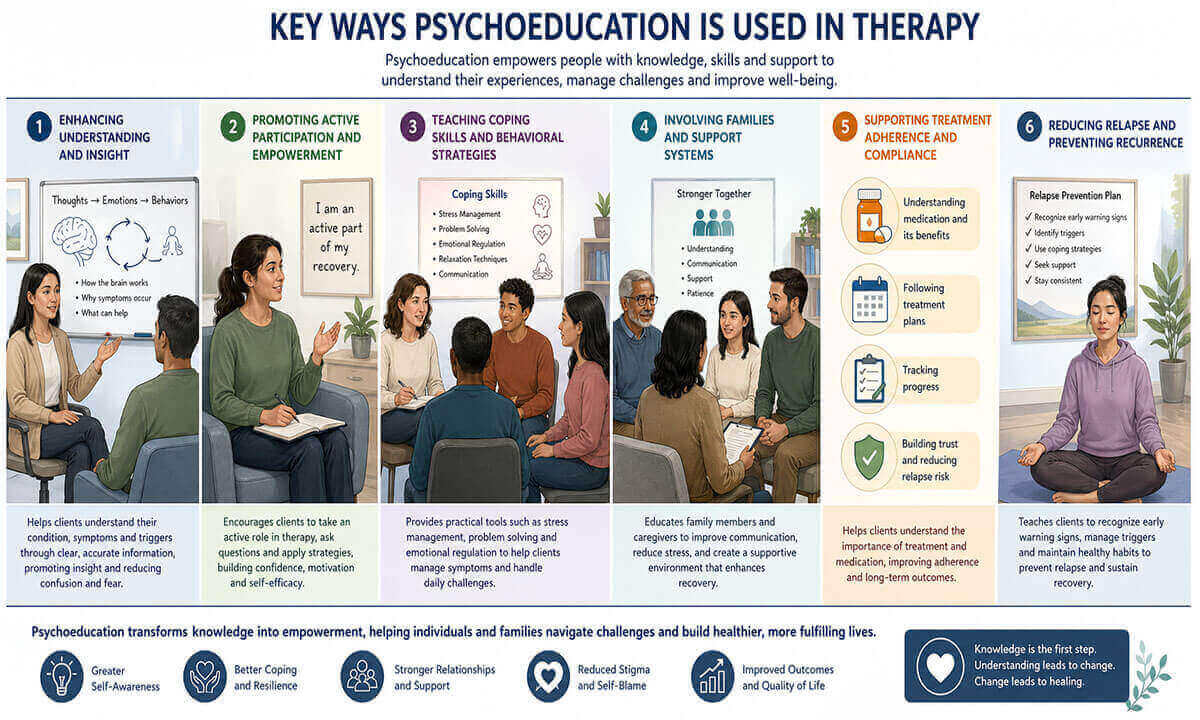
1. Enhancing Client Understanding and Insight: A central purpose of psychoeducation in therapy is to help clients develop a clear and accurate understanding of their psychological condition. Many individuals enter therapy with confusion, fear, or misconceptions about their symptoms; for example, interpreting anxiety as a sign of weakness or depression as a personal failure. Psychoeducation addresses these misunderstandings by providing scientifically grounded explanations of how thoughts, emotions, behaviors, and biological processes interact.
Therapists often explain the cognitive, emotional, and physiological mechanisms underlying mental health conditions. For instance, in anxiety disorders, clients learn about the body’s stress response (e.g., fight-or-flight activation), cognitive distortions, and avoidance behaviors that maintain anxiety over time. Similarly, neuroscience-informed psychoeducation in addiction treatment helps clients understand how brain reward systems, impulse control, and decision-making processes are affected by substance use, making their experiences feel more predictable and less stigmatizing (Ekhtiari et al., 2017).
This increased understanding promotes insight, which is crucial for therapeutic change. When clients can identify patterns in their own thinking and behavior, they are better equipped to recognize triggers, anticipate reactions, and apply coping strategies. Moreover, research shows that structured psychoeducational interventions significantly reduce symptoms of anxiety and depression by improving knowledge and self-awareness (Dolan et al., 2021). In this way, psychoeducation transforms abstract clinical concepts into meaningful, personal knowledge that clients can use in everyday life.
2. Promoting Active Participation and Empowerment: Psychoeducation plays a vital role in shifting therapy from a therapist-led process to a collaborative partnership. By equipping clients with knowledge about their condition and treatment, it encourages them to take an active role in decision-making, goal-setting, and skill application. This empowerment is particularly important in modern therapeutic approaches that emphasize client autonomy and shared responsibility.
When clients understand the rationale behind therapeutic techniques (such as cognitive restructuring in cognitive-behavioral therapy or exposure exercises in anxiety treatment), they are more likely to engage consistently and practice these strategies outside of sessions. Rather than passively receiving advice, they become active participants who can evaluate what works best for them.
This approach aligns with the perspective that clients are “experts” in their own experiences. As highlighted by Swift and Parkin (2017), incorporating clients’ knowledge and perspectives into therapy enhances both treatment processes and outcomes. Psychoeducation supports this by validating clients’ lived experiences while integrating professional knowledge, creating a balanced and respectful therapeutic relationship.
Furthermore, empowerment through psychoeducation increases self-efficacy, the belief in one’s ability to manage challenges. Clients who feel informed and capable are more likely to take initiative, persist through difficulties, and maintain progress over time. This sense of control is especially important in conditions like depression or chronic mental illness, where feelings of helplessness are common. So, psychoeducation fosters not just understanding, but confidence and agency in the recovery process.
3. Supporting Treatment Adherence and Compliance: Psychoeducation plays a crucial role in improving clients’ adherence to therapeutic interventions, including both psychological strategies and pharmacological treatments. One of the most common barriers to effective therapy is non-compliance; clients may discontinue medication, avoid therapeutic exercises, or disengage from treatment due to misunderstanding, fear of side effects, or lack of perceived benefit. Psychoeducation directly addresses these issues by providing clear, transparent, and evidence-based information about how treatments work and why they are necessary.
For example, in psychiatric conditions such as schizophrenia and bipolar disorder, clients often struggle with long-term medication adherence. Psychoeducation helps them understand the purpose of medication, expected outcomes, possible side effects, and the risks associated with discontinuation. When clients are informed, they are less likely to rely on misconceptions or stigma-related beliefs. According to Unterecker (2019), psychoeducation significantly enhances treatment compliance by fostering trust and reducing uncertainty about medical and psychological interventions.
In addition, psychoeducation allows therapists to openly discuss concerns and misconceptions, creating a space where clients can ask questions and express doubts. This collaborative dialogue strengthens the therapeutic alliance, which is a key predictor of adherence. Clients who feel respected and informed are more likely to follow through with treatment plans, attend sessions regularly, and remain committed to the recovery process. Ultimately, psychoeducation transforms compliance from a passive obligation into an informed and voluntary commitment.
4. Involving Families and Social Support Systems: Psychoeducation extends beyond the individual client to include family members and significant others, recognizing that mental health is deeply embedded in social contexts. Family-based psychoeducation equips relatives with knowledge about the client’s condition, symptoms, treatment process, and effective ways to provide support. This approach is especially valuable in chronic and severe mental health conditions where ongoing support is essential for recovery.
For instance, psychoeducational family interventions in schizophrenia have been shown to reduce relapse rates and improve overall functioning. The pioneering work of Anderson, Hogarty, and Reiss (1980) demonstrated that when families are educated about the nature of schizophrenia and trained in communication and problem-solving skills, they can create a more supportive and less stressful home environment. This reduces emotional tension, which is often linked to symptom exacerbation.
Family psychoeducation also helps reduce stigma and misunderstanding. Relatives may initially interpret symptoms as intentional behavior, laziness, or personality flaws. Through education, they gain a more compassionate and accurate perspective, which improves empathy and reduces blame. Additionally, families learn practical skills such as managing crises, recognizing early warning signs of relapse, and supporting adherence to treatment.
Beyond families, psychoeducation can involve broader social networks, including caregivers, teachers, and community members. This wider involvement creates a supportive ecosystem that reinforces therapeutic gains. In this way, psychoeducation not only benefits the individual but also strengthens the social environment in which recovery takes place.
5. Teaching Coping Skills and Behavioral Strategies: Beyond simply increasing knowledge, psychoeducation is actively used to teach clients practical coping skills that they can apply in their everyday lives. This aspect transforms psychoeducation from a purely informational process into a skill-building intervention. Therapists often integrate structured guidance on techniques such as stress management, emotional regulation, problem-solving, communication skills, and relaxation exercises.
For example, in psychoeducational programs for anxiety and depression, clients are taught how to identify stress triggers, challenge negative thinking patterns, and use techniques like deep breathing or progressive muscle relaxation. These strategies help individuals manage symptoms in real time rather than feeling overwhelmed by them. Evidence from large-group psychoeducational interventions shows that such structured skill training significantly reduces anxiety and depressive symptoms by improving individuals’ ability to cope with stressors (Dolan et al., 2021).
Similarly, psychoeducational interventions for young people with ADHD focus on developing social skills, impulse control, and behavioral regulation. A meta-analysis by Powell et al. (2021) found that these interventions lead to meaningful improvements in interpersonal functioning and daily behavior. By equipping clients with concrete tools, psychoeducation ensures that therapeutic progress extends beyond the therapy room into real-world situations.
6. Integrating with Other Therapeutic Approaches: Psychoeducation is rarely used as a standalone intervention; instead, it is seamlessly integrated into various evidence-based therapeutic approaches. It often serves as the foundation upon which other techniques are built, helping clients understand the rationale behind specific therapeutic methods.
In cognitive-behavioral therapy (CBT), psychoeducation introduces clients to the connection between thoughts, emotions, and behaviors, making techniques like cognitive restructuring more understandable and effective. In the treatment of bipolar disorder, psychoeducation has been directly compared with CBT, with research indicating that both approaches can significantly improve outcomes, highlighting psychoeducation’s therapeutic value (Parikh et al., 2012).
Additionally, psychoeducation is integrated into mindfulness-based interventions, where clients learn about the nature of thoughts and awareness while practicing mindfulness skills. For example, mindfulness-based psychoeducational group programs for schizophrenia have shown long-term benefits in symptom reduction and functioning (Chien et al., 2019).
In motivational interviewing, psychoeducation complements the process by helping clients understand the consequences of their behaviors while supporting their intrinsic motivation to change (Hettema et al., 2005). In all these approaches, psychoeducation enhances engagement, comprehension, and the effective application of therapeutic techniques.
7. Reducing Relapse and Preventing Recurrence: A critical long-term function of psychoeducation is relapse prevention. Many psychological disorders, particularly chronic conditions such as schizophrenia, bipolar disorder, and recurrent depression, involve cycles of remission and relapse. Psychoeducation helps clients break this cycle by teaching them how to recognize early warning signs and respond proactively.
Clients learn to identify personal triggers, monitor changes in mood or behavior, and implement coping strategies before symptoms escalate. For instance, individuals with bipolar disorder may be taught to recognize early signs of mania or depression, such as sleep disturbances or changes in energy levels, allowing for timely intervention. Similarly, individuals with schizophrenia benefit from understanding how stress, medication non-adherence, or social factors can contribute to relapse.
Long-term studies indicate that psychoeducational interventions significantly reduce relapse rates and improve sustained recovery by reinforcing self-management skills (Chien et al., 2019). Moreover, psychoeducation encourages the development of structured relapse prevention plans, often involving both the client and their support system.
By fostering awareness, preparedness, and proactive coping, psychoeducation shifts the focus from crisis management to prevention. This not only improves long-term outcomes but also enhances clients’ confidence in their ability to maintain stability and well-being over time.
Benefits of Psychoeducation in Therapy:
Across different clinical populations, psychoeducation offers several consistent benefits:
- Improved knowledge and insight into mental health conditions
- Greater treatment engagement and adherence
- Enhanced coping and problem-solving skills
- Reduced stigma and increased self-acceptance
- Better family support and communication
- Lower relapse rates and improved long-term outcomes
These benefits highlight psychoeducation as both a therapeutic tool and a preventive strategy.
In conclusion, psychoeducation plays a vital role in contemporary therapy by transforming complex psychological and neuroscientific concepts into accessible, meaningful knowledge for clients. It empowers individuals, fosters collaboration, and enhances the effectiveness of various therapeutic approaches. From improving treatment adherence to preventing relapse, psychoeducation supports both immediate symptom relief and long-term recovery. As research continues to expand, it is clear that integrating psychoeducation into therapy is not optional but essential for holistic, client-centered care.
Frequently Asked Questions (FAQs):
What is psychoeducation in therapy?
Psychoeducation is a therapeutic approach that involves providing clients and their families with structured information about mental health conditions, treatment options, coping strategies, and recovery processes. It goes beyond simply giving information by helping individuals understand how their thoughts, emotions, and behaviors are connected, enabling them to actively manage their mental health.
How is psychoeducation different from regular advice?
Unlike general advice, psychoeducation is evidence-based and structured. It is grounded in psychological research and tailored to the client’s specific condition. Rather than telling clients what to do, it helps them understand why certain strategies work, fostering deeper insight and long-term behavioral change.
Is psychoeducation used alone or with other therapies?
Psychoeducation is rarely used as a standalone treatment. It is typically integrated into other therapeutic approaches such as cognitive-behavioral therapy (CBT), mindfulness-based therapy, and motivational interviewing. It often serves as a foundation that helps clients better understand and apply these therapeutic techniques (Parikh et al., 2012; Hettema et al., 2005).
Who can benefit from psychoeducation?
Psychoeducation is beneficial for a wide range of individuals, including those experiencing anxiety, depression, bipolar disorder, schizophrenia, ADHD, and substance use disorders. It is also helpful for family members and caregivers, as it enables them to better understand and support their loved ones (Anderson et al., 1980; Powell et al., 2021).
Does psychoeducation really improve treatment outcomes?
Yes, research shows that psychoeducation significantly improves treatment outcomes. It enhances understanding, increases engagement, and reduces symptoms in conditions like anxiety and depression (Dolan et al., 2021). It also improves medication adherence and reduces relapse rates in chronic mental health conditions (Unterecker, 2019; Chien et al., 2019).
How does psychoeducation help with stigma?
Psychoeducation reduces stigma by framing mental health conditions as understandable and treatable rather than as personal weaknesses. By learning about the biological, psychological, and social factors involved, clients and their families develop a more compassionate and informed perspective, which reduces self-blame and shame.
Can psychoeducation help prevent relapse?
Yes, one of the key goals of psychoeducation is relapse prevention. Clients learn to identify early warning signs, manage triggers, and use coping strategies to maintain stability. This proactive approach is particularly effective in long-term conditions such as schizophrenia and bipolar disorder (Chien et al., 2019).
Is psychoeducation suitable for group therapy settings?
Absolutely. Psychoeducation is commonly delivered in group settings, where individuals can learn from both the therapist and each other. Group psychoeducation programs have been shown to be effective in reducing symptoms of anxiety and depression while also providing social support (Dolan et al., 2021).
What role do families play in psychoeducation?
Families often play a crucial role in psychoeducation. They are taught about the nature of the condition, communication strategies, and ways to support recovery. This involvement improves the home environment and reduces relapse rates, especially in severe mental illnesses like schizophrenia (Anderson et al., 1980).
Is psychoeducation only for people with severe mental illness?
No, psychoeducation is useful for both mild and severe conditions, as well as for general mental well-being. It can help individuals manage everyday stress, improve emotional regulation, and develop healthier coping strategies, making it a valuable tool for preventive mental health care as well.
References:
- Anderson, C. M., Hogarty, G. E., & Reiss, D. J. (1980). Family treatment of adult schizophrenic patients: A psycho-educational approach. Schizophrenia Bulletin, 6(3), 490–505. https://doi.org/10.1093/schbul/6.3.490
- Chien, W. T., Cheng, H. Y., McMaster, T. W., Yip, A. L. K., & Wong, J. J. C. L. (2019). Effectiveness of a mindfulness-based psychoeducation group programme for early-stage schizophrenia: An 18-month randomized controlled trial. Schizophrenia Research, 212, 140–149. https://doi.org/10.1016/j.schres.2019.07.053
- Dolan, N., Simmonds‐Buckley, M., Kellett, S., Siddell, E., & Delgadillo, J. (2021). Effectiveness of stress control large group psychoeducation for anxiety and depression: Systematic review and meta-analysis. British Journal of Clinical Psychology, 60(3), 375–399. https://doi.org/10.1111/bjc.12288
- Ekhtiari, H., Rezapour, T., Aupperle, R. L., & Paulus, M. P. (2017). Neuroscience-informed psychoeducation for addiction medicine: A neurocognitive perspective. Progress in Brain Research, 239–264. https://doi.org/10.1016/bs.pbr.2017.08.013
- Hettema, J., Steele, J., & Miller, W. R. (2005). Motivational interviewing. Annual Review of Clinical Psychology, 1(1), 91–111. https://doi.org/10.1146/annurev.clinpsy.1.102803.143833
- Parikh, S. V., Zaretsky, A., Beaulieu, S., et al. (2012). A randomized controlled trial of psychoeducation or cognitive-behavioral therapy in bipolar disorder. The Journal of Clinical Psychiatry, 73(6), 803–810. https://doi.org/10.4088/jcp.11m07343
- Powell, L. A., Parker, J., Weighall, A., & Harpin, V. (2021). Psychoeducation intervention effectiveness to improve social skills in young people with ADHD: A meta-analysis. Journal of Attention Disorders, 26(3), 340–357. https://doi.org/10.1177/1087054721997553
- Swift, J. K., & Parkin, S. R. (2017). The client as the expert in psychotherapy: What clinicians and researchers can learn about treatment processes and outcomes from psychotherapy clients. Journal of Clinical Psychology, 73(11), 1486–1488. https://doi.org/10.1002/jclp.22528
- Unterecker, S. (2019). Compliance and psychoeducation. In NeuroPsychopharmacotherapy (pp. 1–9). https://doi.org/10.1007/978-3-319-56015-1_6-1

Meta Psychological Education focuses on the foundational, higher-order skills (meta-skills) that allow individuals to “learn how to learn,” manage their own cognitive processes, and adapt to new situations, often termed meta-learning. It bridges psychological research with practical application in learning and development.