Psychological Independence: The Key to Living with Confidence and Authenticity
Every person wants to feel confident, respected, and free to make their own choices. However, many people find themselves depending on the opinions, approval, or validation of others before making decisions. They may worry about what people think, fear criticism, or constantly seek reassurance. While caring about others’ opinions is natural, relying on them too much can reduce self-confidence and limit personal growth. Psychological independence is the ability to trust yourself, think for yourself, and make decisions based on your own values and beliefs. It does not mean ignoring others or refusing help when needed. Instead, it means developing a healthy sense of self that allows you to make choices with confidence while maintaining positive relationships with others. Building psychological independence helps people become more resilient, authentic, and emotionally balanced. This article explores the meaning of psychological independence, its characteristics, benefits, common obstacles, and practical ways to develop it.
What Is Psychological Independence?
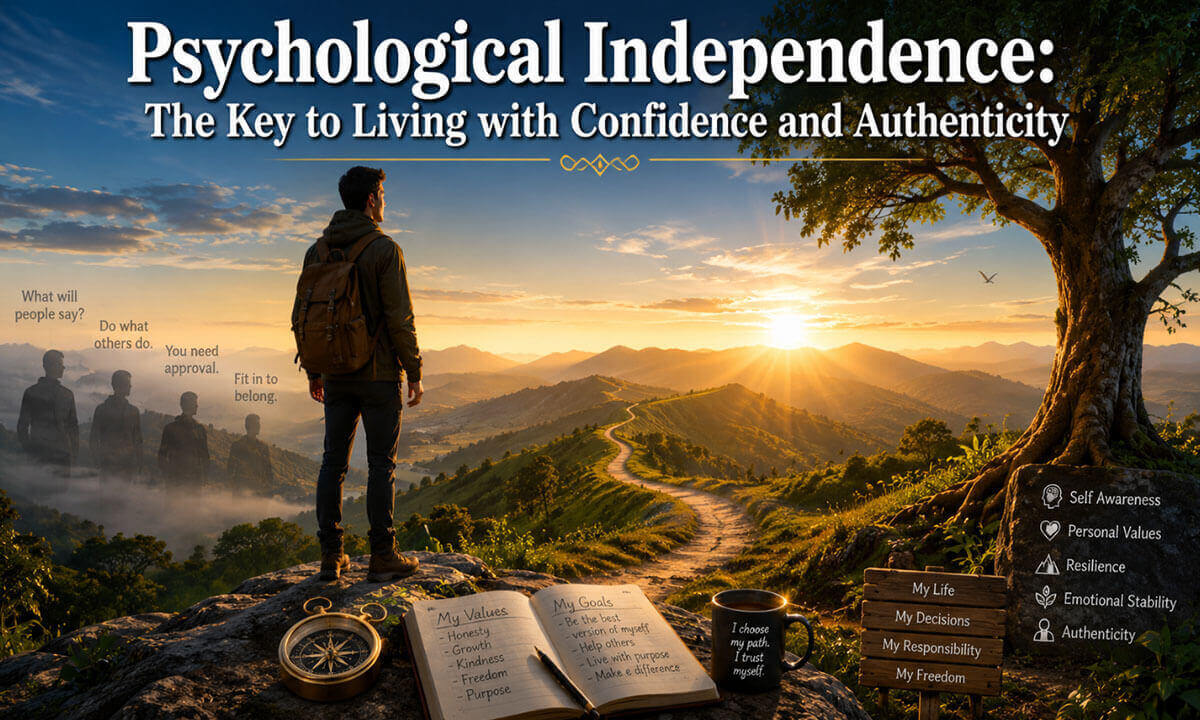
Psychological independence is the ability to think, feel, and act according to your own values rather than depending on other people for constant approval or reassurance. A psychologically independent person understands who they are, what they believe, and what they want from life. Their confidence comes mainly from within instead of relying on praise or acceptance from others.
This does not mean becoming isolated or emotionally distant. Humans naturally need relationships, support, and social connection. Psychological independence simply means that while other people’s opinions may be considered, they do not control your identity or determine your self-worth.
People with psychological independence can make thoughtful decisions even when others disagree with them. They are willing to listen to different perspectives, but they remain true to their personal values and principles.
Why Psychological Independence Matters:
Psychological independence plays an important role in emotional well-being and personal development. People who trust themselves are generally more confident, less anxious, and better able to handle life’s challenges. Instead of constantly worrying about pleasing everyone, they focus on making choices that align with their goals and beliefs.
When individuals become psychologically independent, they experience greater emotional stability because their happiness is not entirely dependent on external praise or recognition. They also develop stronger resilience, allowing them to recover more quickly from criticism, disappointment, or failure.
This independence encourages authenticity. Rather than pretending to meet other people’s expectations, individuals feel comfortable expressing their true personality, opinions, and interests. As a result, they often build healthier and more meaningful relationships based on honesty and mutual respect.
Characteristics of Psychologically Independent People:
Psychologically independent people have a strong sense of self and are able to make decisions based on their own values rather than constantly relying on the approval of others. Their independence does not make them selfish or isolated. Instead, it allows them to build healthier relationships, manage emotions effectively, and live with confidence and authenticity. The following are the key characteristics of psychologically independent people.
- Strong Self-Awareness: One of the most important characteristics of psychologically independent people is self-awareness. They have a clear understanding of who they are, what they believe, and what they want in life. They recognise their strengths, weaknesses, emotions, and personal values without allowing other people to define their identity.
Because they understand themselves well, they are less likely to compare themselves with others or feel pressured to follow every trend. They know that every individual has unique talents and goals, so they focus on their own personal growth instead of seeking constant approval.
Self-awareness also helps them recognize when their emotions are influencing their decisions. This allows them to make thoughtful choices rather than reacting impulsively.
- Confidence in Their Own Decisions: Psychologically independent people trust their ability to make decisions. They carefully consider available information, evaluate different options, and choose the course of action that best matches their values and goals.
They may ask for advice when necessary, but they do not depend entirely on other people’s opinions. Instead of expecting others to make decisions for them, they accept responsibility for their own choices.
Even when they make mistakes, they see them as valuable learning experiences rather than proof of failure. This confidence grows stronger through experience and continuous learning.
- Internal Sense of Self-Worth: Another important characteristic is that their self-worth comes mainly from within rather than from external praise or recognition. While they appreciate compliments and encouragement, they do not rely on them to feel valuable.
They understand that everyone experiences success and failure, praise and criticism. Their confidence remains relatively stable because it is built on their personal values, efforts, and character rather than on other people’s opinions.
This internal source of self-esteem helps them remain emotionally balanced even during difficult situations.
- Ability to Think Independently: Psychologically independent individuals are capable of forming their own opinions after carefully considering information from different sources. They are open-minded and willing to learn, but they do not simply accept ideas because they are popular or widely accepted.
Instead, they critically evaluate facts, question assumptions, and make decisions based on logic, evidence, and personal principles. This independent thinking helps them solve problems effectively and avoid being easily influenced by social pressure.
- Emotional Stability: Emotionally stable individuals are better able to manage their feelings without allowing emotions to control every decision. Psychologically independent people recognize emotions such as disappointment, fear, anger, or sadness, but they respond thoughtfully instead of reacting impulsively.
They understand that emotions are temporary and that difficult experiences are a natural part of life. This emotional balance helps them remain calm during stressful situations and recover more quickly from setbacks.
As a result, they are often viewed as dependable and emotionally mature.
- Healthy Boundaries: People with psychological independence know how to establish and maintain healthy personal boundaries. They understand that protecting their emotional well-being is essential for maintaining healthy relationships.
They can politely decline requests that conflict with their values, priorities, or personal limits without feeling excessive guilt. They also respect the boundaries of others and recognize that healthy relationships require mutual respect.
Healthy boundaries allow them to balance caring for others while also taking care of themselves.
- Responsibility for Their Actions: Psychologically independent people accept responsibility for their decisions and behavior. Instead of blaming others for every mistake or disappointment, they honestly evaluate their own actions and look for ways to improve.
When they succeed, they acknowledge the effort that contributed to their achievements. When they fail, they focus on learning valuable lessons instead of making excuses.
This willingness to accept responsibility strengthens their personal growth and builds greater confidence over time.
- Resilience During Difficult Times: Life presents challenges, disappointments, and unexpected changes. Psychologically independent people demonstrate resilience by adapting to these difficulties without losing hope or confidence.
Rather than giving up after setbacks, they look for practical solutions and continue working toward their goals. They understand that failure is often part of the learning process and use difficult experiences to become stronger and wiser.
Their resilience helps them maintain emotional well-being even during periods of uncertainty.
- Comfort with Constructive Criticism: Psychologically independent individuals are able to accept constructive criticism without feeling personally attacked. They recognize that feedback can provide valuable opportunities for learning and improvement.
Instead of becoming defensive or discouraged, they carefully consider whether the criticism is helpful and use it to improve their skills or behavior. At the same time, they understand that not every opinion accurately reflects their worth or abilities.
This balanced approach allows them to continue growing while maintaining healthy self-confidence.
- Authenticity: Authenticity is another defining characteristic of psychologically independent people. They strive to live according to their own beliefs, values, and principles rather than pretending to be someone else to gain acceptance.
They express their opinions honestly while remaining respectful of others. Their behavior remains consistent across different situations because they do not feel the need to change their personality simply to impress people.
Authenticity creates stronger relationships because others know they are genuine and trustworthy.
- Ability to Handle Disagreement: Psychologically independent people understand that disagreement is a normal part of life. They do not expect everyone to share the same opinions or values.
Instead of becoming upset or changing their beliefs simply to avoid conflict, they listen respectfully to different viewpoints and remain open to learning. If they still disagree after careful consideration, they are comfortable maintaining their own perspective while respecting the rights of others to think differently.
This ability promotes mature communication and healthier relationships.
- Balanced Relationships: People with psychological independence build relationships based on trust, respect, and mutual support rather than emotional dependence. They enjoy spending time with family and friends, but they do not rely on others to provide their entire sense of happiness or identity.
They can offer support without becoming controlling, and they can receive support without losing their independence. This balance creates healthier and more satisfying personal relationships.
- Continuous Personal Growth: Psychologically independent individuals are committed to lifelong learning and self-improvement. They regularly reflect on their experiences, evaluate their progress, and look for opportunities to develop new knowledge and skills.
Rather than comparing themselves with others, they focus on becoming a better version of themselves. Their motivation comes from personal growth rather than external competition or social approval.
This mindset helps them remain adaptable, confident, and prepared for future challenges.
Signs of Low Psychological Independence:
Low psychological independence occurs when a person depends heavily on the opinions, approval, or support of others to feel confident and secure. Everyone seeks advice or reassurance from time to time, and this is a normal part of human relationships. However, when a person constantly relies on others to make decisions, determine their self-worth, or guide their actions, it may indicate low psychological independence.
People with low psychological independence often struggle with self-confidence, fear criticism, and find it difficult to trust their own judgment. These patterns can affect personal happiness, relationships, career success, and emotional well-being. The following are some common signs of low psychological independence.
- Constant Need for Approval: One of the clearest signs of low psychological independence is the constant need for approval from others. Individuals with this tendency often feel good about themselves only when they receive praise, compliments, or encouragement from family members, friends, colleagues, or even strangers.
Before making decisions, they may ask several people for reassurance because they are afraid of making the wrong choice. If others disagree with them or fail to approve of their actions, they may begin to doubt themselves and lose confidence.
Progressively, this dependence on external approval can make it difficult to develop a strong sense of self and personal identity.
- Difficulty Making Decisions: People with low psychological independence often struggle to make decisions on their own. Even simple choices, such as selecting clothes, choosing a restaurant, or deciding how to spend their free time, may become stressful because they fear making mistakes.
Instead of trusting their own judgment, they frequently ask others what they should do. While seeking advice is sometimes helpful, relying on it for every decision can prevent people from developing confidence in their own abilities.
As a result, they may feel anxious whenever they must make important life decisions without guidance from others.
- Fear of Criticism: Another common sign is an intense fear of criticism or negative feedback. People with low psychological independence often take criticism very personally and view it as evidence that they are not good enough.
Even constructive feedback, which is meant to help them improve, may cause feelings of embarrassment, sadness, or self-doubt. Because they fear being judged, they may avoid taking risks, sharing ideas, or trying new experiences.
This fear can limit personal growth because learning often requires accepting mistakes and using feedback to improve.
- Changing Opinions to Please Others: Individuals with low psychological independence often change their opinions depending on the people around them. Instead of expressing their true beliefs, they may agree with others simply to avoid conflict or gain acceptance.
For example, they may pretend to enjoy certain activities, support ideas they do not truly believe in, or remain silent even when they disagree. Their main goal becomes avoiding rejection rather than expressing their authentic thoughts.
Over time, constantly changing opinions can make it difficult for individuals to understand what they genuinely believe and value.
- Low Self-Confidence: Low psychological independence is often accompanied by low self-confidence. People may constantly question their abilities, knowledge, and decisions, even when they have the skills needed to succeed.
They often underestimate themselves and compare their achievements with those of others. Instead of recognizing their strengths, they focus mainly on their weaknesses and mistakes.
This lack of confidence can prevent them from taking on new responsibilities, pursuing opportunities, or reaching their full potential.
- Overthinking Social Interactions: People with low psychological independence often spend a great deal of time analyzing conversations and social situations. After meeting someone, they may repeatedly ask themselves whether they said the right thing or whether others liked them.
They may worry that a simple mistake will damage relationships or cause people to reject them. This constant overthinking creates unnecessary stress and anxiety, making social interactions more emotionally exhausting.
Learning to trust oneself can reduce this tendency and improve emotional well being.
- Fear of Disappointing Others: Another important sign is an excessive fear of disappointing family members, friends, teachers, supervisors, or colleagues. People with low psychological independence often place other people’s happiness above their own needs and preferences.
They may agree to requests they do not want to accept because they fear saying no. Even when they feel overwhelmed, they continue trying to satisfy everyone around them.
Eventually, this pattern can lead to emotional exhaustion, stress, and resentment because their own needs remain ignored.
- Difficulty Setting Healthy Boundaries: Healthy boundaries help protect emotional well-being and maintain balanced relationships. However, people with low psychological independence often struggle to establish these boundaries.
They may feel guilty when refusing requests, expressing disagreement, or asking for personal space. As a result, others may take advantage of their willingness to please everyone.
Without healthy boundaries, individuals may experience burnout, frustration, and decreased self-respect.
- Avoiding Responsibility for Decisions: Some individuals with low psychological independence avoid making decisions because they fear being responsible for negative outcomes. Instead, they allow others to make important choices for them.
If something goes wrong, they may blame circumstances or depend on others to solve the problem rather than taking personal responsibility.
Developing confidence in decision-making helps individuals accept both the rewards and challenges that come with personal responsibility.
- Comparing Themselves with Others: Frequent comparison with others is another sign of low psychological independence. People may constantly judge their appearance, achievements, income, relationships, or lifestyle against those of others.
Instead of appreciating their own progress, they focus on what they believe they lack. Social media often increases this tendency because people usually share only the most positive moments of their lives.
Constant comparison reduces self-confidence and creates feelings of inadequacy, even when individuals are making meaningful progress.
- Fear of Being Alone: People with low psychological independence may feel uncomfortable spending time alone because they depend heavily on others for emotional security and reassurance.
They may constantly seek companionship, avoid solitude, or remain in unhealthy relationships simply because they fear loneliness. Their happiness becomes closely tied to the presence and approval of others.
Psychological independence helps people enjoy meaningful relationships while also feeling comfortable with themselves when alone.
- Ignoring Personal Needs and Values: Another crucial sign is consistently ignoring personal needs, goals, or values in order to satisfy others. Individuals may sacrifice their own interests, dreams, or well-being because they fear rejection or conflict.
Gradually, this behavior can create feelings of frustration, regret, and loss of identity. Living according to other people’s expectations often prevents individuals from discovering their true potential.
Psychological independence encourages people to respect both their own needs and the needs of others without sacrificing their personal values.
- Emotional Dependence on Others: People with low psychological independence often depend on others to regulate their emotions. Their mood may change dramatically depending on how others treat them or what others say about them.
Praise makes them feel valuable, while criticism or rejection makes them feel worthless. Because their emotional well-being depends heavily on external events, they may experience frequent emotional ups and downs.
Learning to develop internal confidence helps create greater emotional stability and resilience.
Benefits of Developing Psychological Independence:
The following are some of the most important benefits of developing psychological independence.
- Greater Self-Confidence: Psychological independence is associated with increased self-confidence. People who trust themselves become more willing to make decisions and take responsibility for their actions. Instead of constantly wondering whether they are making the right choice, they learn to believe in their own abilities and judgment.
This confidence grows gradually through experience. Every successful decision, every challenge overcome, and every lesson learned from mistakes strengthens their belief in themselves. As a result, they become more comfortable facing new opportunities and solving problems without excessive fear or doubt.
Greater self-confidence also encourages people to express their opinions, share their ideas, and pursue goals that truly matter to them.
- Better Decision Making: Psychological independence improves decision making because individuals learn to rely on their own values, knowledge, and careful thinking rather than simply following the opinions of others.
While they are open to receiving advice, they do not allow outside pressure to control every decision they make. They carefully consider different viewpoints, evaluate available information, and choose the option that best matches their personal goals and beliefs.
This balanced approach leads to more thoughtful and responsible decisions in education, careers, relationships, finances, and everyday life.
- Improved Emotional Stability: People who are psychologically independent experience greater emotional stability because their happiness and self-worth are not entirely dependent on external praise or approval.
They understand that criticism, disagreements, and temporary failures are normal parts of life. Instead of allowing these experiences to destroy their confidence, they respond calmly and focus on learning from them.
This emotional balance helps reduce unnecessary stress, anxiety, and emotional ups and downs. As a result, they are better able to maintain inner peace even during challenging situations.
- Stronger Resilience: Life is filled with obstacles, disappointments, and unexpected changes. Psychological independence helps individuals become more resilient by teaching them to rely on their own inner strength rather than depending completely on others for emotional support.
When setbacks occur, psychologically independent people do not give up easily. They analyze the situation, learn from their mistakes, and continue moving forward. They recognize that failure is often a valuable opportunity for growth rather than a sign of personal weakness.
This resilience allows them to recover more quickly from difficulties and maintain hope during uncertain times.
- Greater Authenticity: Psychological independence encourages people to live authentically. Instead of pretending to be someone else to gain acceptance, they feel comfortable expressing their true personality, beliefs, and values.
Authentic individuals do not constantly change their opinions simply to please others. They remain respectful of different viewpoints while staying true to themselves.
Living authentically creates a stronger sense of personal satisfaction because individuals know they are making choices based on what genuinely matters to them rather than on social expectations.
- Healthier Relationships: Many people assume that becoming more independent will weaken relationships. In reality, psychological independence often leads to healthier and stronger relationships.
People who are psychologically independent build relationships based on trust, respect, honesty, and mutual support rather than emotional dependence. They enjoy spending time with others, but they do not rely on others to determine their happiness or self-worth.
Because they have healthy boundaries, they communicate more openly, respect differences of opinion, and avoid becoming overly controlling or emotionally dependent. These qualities strengthen friendships, family relationships, and romantic partnerships.
- Reduced Need for External Validation: One of the most freeing benefits of psychological independence is becoming less dependent on external validation. Instead of constantly seeking compliments, praise, or approval, individuals learn to appreciate their own efforts and recognize their personal achievements.
They no longer allow every compliment to determine their confidence or every criticism to damage their self-esteem. Their sense of worth comes mainly from within.
This internal confidence creates greater emotional freedom because happiness becomes less dependent on other people’s opinions.
- Better Stress Management: Psychological independence helps people manage stress more effectively. Since they trust themselves and accept responsibility for their decisions, they spend less time worrying about whether everyone approves of their actions.
Instead of becoming overwhelmed by fear of criticism or rejection, they focus on finding practical solutions to problems. This problem-solving mindset reduces emotional tension and increases confidence when facing difficult situations.
Better stress management also contributes to improved physical health by reducing the long-term effects of chronic anxiety and emotional pressure.
- Increased Personal Responsibility: Psychologically independent people recognize that they are responsible for their own choices, behaviors, and personal growth. Rather than blaming others for every setback, they honestly evaluate what they can improve.
Accepting responsibility encourages maturity, accountability, and continuous learning. It also helps individuals develop stronger problem-solving skills because they actively look for solutions instead of waiting for others to solve their problems.
As time goes on, this personal responsibility builds confidence and prepares people for greater success in both personal and professional life.
- Greater Freedom to Pursue Personal Goals: When people become psychologically independent, they feel more confident pursuing goals that truly reflect their interests and values. They are less likely to choose careers, lifestyles, or relationships simply because others expect them to do so.
Instead, they make decisions based on what gives their lives meaning and purpose. This freedom allows them to develop fulfilling careers, meaningful hobbies, and rewarding life experiences.
By following their own path, they often experience greater motivation and long-term satisfaction.
- Improved Problem Solving Skills: Psychological independence encourages individuals to think critically and solve problems independently. Instead of immediately relying on others whenever difficulties arise, they analyze situations carefully and explore possible solutions.
This ability strengthens creativity, logical thinking, and confidence. Each successfully solved problem increases their belief in their own abilities and prepares them to handle future challenges more effectively.
Strong problem-solving skills are valuable in education, the workplace, family life, and everyday decision-making.
- Stronger Sense of Identity: People who develop psychological independence have a clearer understanding of who they are and what they stand for. They know their personal values, strengths, interests, and long-term goals.
Because they are not constantly changing to fit other people’s expectations, they develop a stable and consistent sense of identity. This self-understanding helps them make better life choices and experience greater inner peace.
A strong sense of identity also reduces confusion and increases confidence during periods of change or uncertainty.
- Better Life Satisfaction: Ultimately, psychological independence contributes to healthier overall life satisfaction. People who trust themselves, make authentic decisions, and maintain healthy relationships often experience greater happiness and emotional well-being.
Rather than constantly worrying about pleasing everyone, they focus on living according to their personal values while maintaining respect for others. This balanced approach creates a deeper sense of fulfillment and purpose.
So, psychological independence allows individuals to enjoy a more meaningful life that reflects their true identity rather than external expectations.
Practical Ways to Build Psychological Independence:
The following practical strategies can help build psychological independence and strengthen emotional well-being over time.
- Develop in fine fettle Self-Awareness: The first step toward psychological independence is becoming more self-aware. Self-awareness means understanding your thoughts, emotions, strengths, weaknesses, beliefs, and personal values.
Spend time reflecting on your experiences and asking yourself important questions. What matters most to you? What are your strengths? What situations make you feel confident or insecure? Understanding yourself helps you make decisions that reflect your true identity rather than simply following the expectations of others.
Keeping a journal can be an effective way to increase self-awareness. Writing about your daily experiences, emotions, and decisions helps you recognize patterns in your thinking and behavior. Over time, this practice strengthens your understanding of yourself and increases confidence in your own judgment.
- Identify Your Personal Values: Psychological independence becomes stronger when you have a clear understanding of your personal values. Values are the beliefs and principles that guide your decisions and behavior.
Take time to identify what is truly important to you. For example, you may value honesty, kindness, responsibility, creativity, education, family, or personal growth. When your decisions are based on these values rather than on the opinions of others, you develop greater confidence and consistency.
Knowing your values also makes it easier to say no to situations that do not align with your beliefs or long-term goals.
- Practice Making Your Own Decisions: Many people with low psychological independence hesitate to make decisions because they fear making mistakes. Building independence requires regular practice in making choices for yourself.
Begin with small everyday decisions such as choosing your daily schedule, selecting books to read, or deciding how to spend your free time without asking for reassurance. As your confidence grows, gradually take responsibility for more important decisions involving your education, career, finances, or personal life.
Remember that no one makes perfect decisions all the time. Every decision provides an opportunity to learn and grow.
- Trust Your Own Judgment: Learning to trust your own judgment is essential for developing psychological independence. While seeking advice from knowledgeable people can be helpful, you should not allow every opinion to determine your choices.
Before asking others for reassurance, take time to evaluate the situation yourself. Consider the available information, think about possible outcomes, and ask yourself what decision best reflects your values and goals.
The more you practise trusting your own thinking, the stronger your confidence will become.
- Accept That Mistakes Are Part of Learning: Many people depend on others because they fear making mistakes. However, mistakes are a natural part of personal growth and learning.
Instead of viewing mistakes as failures, see them as valuable learning experiences. Every successful person has made mistakes while developing new skills and gaining experience.
When something does not go as planned, ask yourself what you can learn from the experience and how you can improve next time. This positive mindset reduces fear and encourages greater independence.
- Reduce the Need for Constant Approval: One of the most effective ways to build psychological independence is to gradually reduce your dependence on external approval.
Before seeking reassurance, ask yourself whether you truly need someone else’s opinion or whether you already know the answer. Learn to appreciate your own efforts instead of waiting for compliments or praise from others.
In the course of time, your confidence will come more from your own achievements and personal values rather than from external recognition.
- Build Healthy Self-Confidence: Healthy self-confidence develops through experience, preparation, and self-acceptance. Recognize your strengths and celebrate your progress, even if it seems small.
Instead of focusing only on your weaknesses, acknowledge the skills you have developed and the challenges you have already overcome. Remind yourself that personal growth is a continuous journey.
The more confidence you have in your own abilities, the less dependent you become on other people’s approval.
- Learn to Accept Constructive Criticism: Psychologically independent people understand that criticism does not define their value as individuals.
When receiving feedback, listen carefully and ask yourself whether it contains useful information that can help you improve. If the criticism is constructive, use it as an opportunity to learn. If it is unfair or inaccurate, avoid allowing it to damage your self-esteem.
Separating your personal worth from other people’s opinions is an important step toward emotional independence.
- Set Healthy Personal Boundaries: Healthy boundaries protect your emotional well-being and help maintain balanced relationships. They allow you to respect both your own needs and the needs of others.
Learn to say no politely when requests conflict with your values, priorities, or personal limits. Saying no does not make you selfish. It simply means that you are taking responsibility for your own well being.
People who establish healthy boundaries often experience healthier and more respectful relationships because they communicate their needs honestly and confidently.
- Spend Time Alone Comfortably: Being comfortable alone is another important aspect of psychological independence. Spending time by yourself allows you to understand your thoughts, interests, and personal goals without outside influence.
Use this time for reading, exercising, learning new skills, reflecting, or enjoying hobbies that you genuinely like. Solitude helps strengthen self-awareness and reminds you that your happiness does not always depend on being surrounded by other people.
Learning to enjoy your own company creates greater emotional stability and confidence.
- Practice Self-Compassion: People often judge themselves more harshly than they judge others. Practising self-compassion means treating yourself with kindness, patience, and understanding during difficult times.
When you make mistakes or experience failure, avoid negative self-criticism. Instead, remind yourself that every person experiences setbacks and that personal growth takes time.
Self-compassion reduces anxiety, improves emotional resilience, and strengthens your ability to trust yourself.
- Develop Critical Thinking Skills: Psychological independence requires independent thinking. Instead of automatically accepting the opinions of others, learn to analyze information carefully.
Ask questions, evaluate evidence, compare different viewpoints, and form conclusions based on logic and reliable information. Critical thinking helps you make informed decisions while reducing the influence of social pressure.
This skill is especially important in today’s world, where people are constantly exposed to information through social media, news, and online discussions.
- Build Emotional Resilience: Life will always include challenges, disappointments, and unexpected changes. Building emotional resilience helps you recover from these experiences without losing confidence.
Resilience develops by maintaining a positive attitude, solving problems calmly, learning from setbacks, and seeking support when necessary without becoming dependent on it.
Each challenge you overcome strengthens your belief in your own ability to handle future difficulties.
- Surround Yourself with Positive and Supportive People: Although psychological independence means relying less on external approval, supportive relationships remain important. Spend time with people who encourage personal growth, respect your opinions, and support your independence rather than controlling your decisions.
Healthy relationships provide encouragement while still allowing you to think independently and make your own choices.
Positive people inspire confidence and create an environment where personal development can flourish.
- Continue Learning and Growing: Psychological independence is not a destination but an ongoing process. Continue learning new skills, reading books, exploring new experiences, and reflecting on your personal development.
Each new experience increases your knowledge, broadens your perspective, and strengthens your confidence. Lifelong learning helps you become more adaptable, capable, and emotionally independent.
Growth occurs gradually through consistent effort, curiosity, and a willingness to improve.
Psychological Independence and Healthy Relationships:
Some people doubtfully believe that becoming psychologically independent means avoiding close relationships or refusing support. In reality, the opposite is true.
Psychologically independent people often build healthier relationships because they are not driven by fear of abandonment or constant need for approval. They can express their thoughts honestly, respect differences, and support others while maintaining their own identity.
Healthy relationships are based on trust, communication, and mutual respect rather than emotional dependence. Psychological independence allows individuals to love and care for others without losing themselves in the process.
In conclusion, Psychological independence is an essential foundation for confidence, emotional resilience, and authentic living. It enables people to trust their own judgment, make decisions according to their personal values, and maintain healthy relationships without relying excessively on external approval. Although developing this independence takes time and practice, every small step strengthens self-confidence and emotional well-being.
By increasing self-awareness, making independent decisions, accepting constructive feedback, and building inner confidence, individuals can gradually create a stronger sense of self. Psychological independence is not about rejecting others or facing life alone. It is about finding the confidence to live according to your own values while remaining connected to the people who matter. Ultimately, cultivating psychological independence leads to greater happiness, healthier relationships, and a more meaningful and fulfilling life.
References:
- Albarracin, M., Bouchard-Joly, G., Sheikhbahaee, Z., Miller, M., Pitliya, R. J., & Poirier, P. (2024). Feeling our place in the world: An active inference account of self-esteem. Neuroscience of Consciousness, 2024(1). https://doi.org/10.1093/nc/niae007
- Feldborg, M., Lee, N. A., Hung, K., Peng, K., & Sui, J. (2021). Perceiving the self and emotions with an anxious mind: Evidence from an implicit perceptual task. International Journal of Environmental Research and Public Health, 18(22), 12096. https://doi.org/10.3390/ijerph182212096
- Harter, S. (2012). The construction of the self: Developmental and sociocultural foundations (2nd ed.). Guilford Press.
- Kim, S., Park, S., Kim, H., & Noh, D. (2025). Mediating effects of psychological independence and social support on the association between family strength and depression in young Korean adults: Cross-sectional study. JMIR Formative Research, 9, e71485. https://doi.org/10.2196/71485
- Moza, D., Lawrie, S. I., Maricuțoiu, L. P., Gavreliuc, A., & Kim, H. S. (2021). Not all forms of independence are created equal: Only being independent the “right way” is associated with self-esteem and life satisfaction. Frontiers in Psychology, 11, 606354. https://doi.org/10.3389/fpsyg.2020.606354
- Neoh, M. J. Y., Teng, J. H., Lee, A., Setoh, P., Mulatti, C., & Esposito, G. (2022). Negative emotional reactions to criticism: Perceived criticism and source affects extent of hurt and relational distancing. PLoS ONE, 17(8), e0271869. https://doi.org/10.1371/journal.pone.0271869
- Oda, M., & Yoshioka, S. (2021). Factors influencing psychological independence in adolescents and their relationship to coaching-based support from significant others. Yonago Acta Medica, 64(1), 34–45. https://doi.org/10.33160/yam.2021.02.007

Meta Psychological Education focuses on the foundational, higher-order skills (meta-skills) that allow individuals to “learn how to learn,” manage their own cognitive processes, and adapt to new situations, often termed meta-learning. It bridges psychological research with practical application in learning and development.