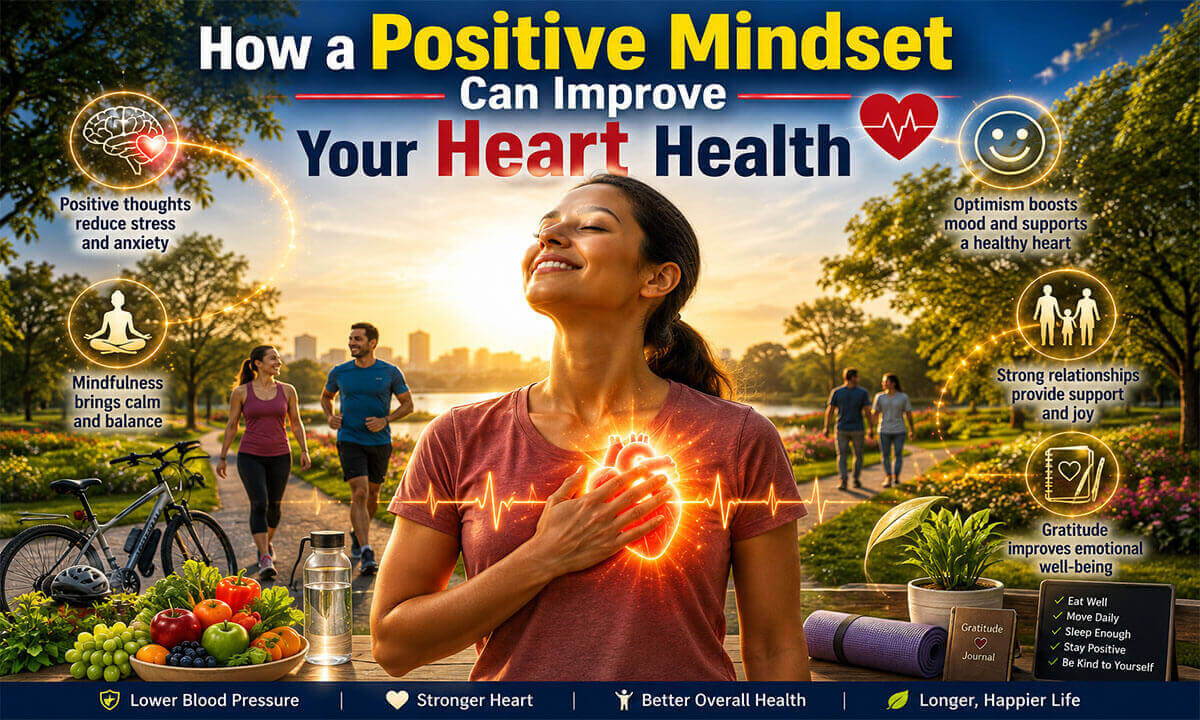
How a Positive Mindset Can Improve Your Heart Health:
Heart disease is one of the leading causes of illness and death around the world. Most people know that eating healthy foods, exercising regularly, and avoiding smoking are important for keeping the heart strong. However, many people do not realize that the way they think and feel can also have a powerful effect on their heart health. A positive mindset is more than simply looking on the bright side. It is the ability to approach life with hope, confidence, and resilience, even during difficult times. People with a positive mindset are more likely to cope well with stress, recover from setbacks, and maintain healthy habits that protect their hearts. Scientific research has shown that positive emotions and optimistic thinking can reduce the risk of cardiovascular disease while improving overall physical and mental wellbeing. This article explores how a positive mindset can improve your heart health.
Understanding a Positive Mindset:
A positive mindset is the habit of focusing on possibilities rather than limitations. It does not mean ignoring problems or pretending that everything is perfect. Instead, it means believing that challenges can be managed and that setbacks are opportunities to learn and grow.
People with a positive mindset usually have the following characteristics:
- They remain hopeful during difficult situations.
- They believe they can overcome obstacles.
- They focus on solutions instead of dwelling on problems.
- They accept mistakes as part of learning.
- They show kindness and patience toward themselves.
This healthy way of thinking reduces emotional pressure and helps people make better decisions about their physical health.
The Link Between Mental Health and Heart Health:
Mental health and heart health are closely connected. Although they may seem like two separate parts of the body, the brain and the heart constantly communicate with each other. The way people think, feel, and respond to everyday situations can directly affect how well their heart functions. This is why doctors and psychologists increasingly recognize that maintaining good mental health is an important part of protecting cardiovascular health.
When a person experiences positive emotions such as happiness, hope, and calmness, the body works more efficiently. The heart beats at a steady rate, blood pressure remains more stable, and the body’s systems function normally. However, when someone lives with ongoing stress, anxiety, sadness, or constant negative thinking, the body reacts differently. These emotional struggles can place extra strain on the heart over time and increase the risk of developing heart disease.
One of the main reasons for this connection is the body’s natural stress response. When people feel threatened or overwhelmed, the brain sends signals that release stress hormones, including cortisol and adrenaline. These hormones prepare the body for immediate action by increasing heart rate, raising blood pressure, and directing more blood to the muscles. This response is helpful during short term emergencies because it allows people to react quickly to danger.
The problem occurs when stress becomes a regular part of daily life. Many people experience ongoing pressure from work, financial problems, family responsibilities, health concerns, or personal relationships. If the body remains in a constant state of stress, stress hormone levels stay elevated for long periods. This continuous activation forces the heart to work harder than normal, which may gradually damage blood vessels, increase blood pressure, and contribute to inflammation throughout the body.
Chronic stress also influences people’s daily behaviors. Individuals who feel anxious, depressed, or emotionally exhausted may find it difficult to maintain healthy routines. They may skip exercise, eat unhealthy foods, smoke, drink excessive alcohol, or sleep poorly. These habits increase the risk of obesity, diabetes, high cholesterol, and high blood pressure, all of which are major risk factors for cardiovascular disease. In contrast, people with better mental health are generally more motivated to take care of themselves and maintain healthier lifestyles.
Mental health also affects recovery after illness. People who have a positive outlook and strong emotional resilience often recover more successfully after heart surgery, heart attacks, or other cardiovascular conditions. They are more likely to follow medical advice, attend rehabilitation programs, take prescribed medications, and continue healthy lifestyle changes. A hopeful attitude gives them the confidence to believe that recovery is possible, which supports both physical healing and emotional well-being.
Depression and anxiety have also been linked to an increased risk of heart disease. Depression may reduce motivation, lower energy levels, and make everyday activities feel overwhelming. Anxiety can keep the body in a constant state of alertness, causing rapid heartbeat, muscle tension, and ongoing stress. When these conditions continue without proper support or treatment, they can negatively affect the cardiovascular system over time.
Positive emotions, on the other hand, create protective effects for the heart. Feelings such as gratitude, optimism, joy, and contentment help reduce stress, improve emotional balance, and encourage healthier choices. People who regularly experience positive emotions often build stronger relationships, sleep better, exercise more consistently, and manage life’s challenges more effectively. These behaviors contribute to better heart health and improve overall quality of life.
Another important factor is emotional resilience, which is the ability to recover from difficulties without becoming overwhelmed. Resilient individuals understand that challenges are a normal part of life. Instead of remaining focused on problems, they look for solutions and continue moving forward. This mindset reduces the harmful effects of long-term stress and supports healthier emotional and physical functioning.
Taking care of mental health should be considered just as important as maintaining physical health. Simple practices such as regular physical activity, adequate sleep, relaxation techniques, mindfulness, spending time with supportive family and friends, and seeking professional help when needed can improve emotional wellbeing while also protecting the heart. Even small improvements in mental health can lead to meaningful benefits for cardiovascular health as time goes on.
How Positive Thinking Supports Heart Health:
Positive thinking influences heart health in many different ways. It improves both emotional well-being and daily lifestyle choices.
1. Reduces the Harmful Effects of Stress: Positive thinking supports heart health is by reducing stress. Everyone experiences stress from time to time, whether it comes from work, family responsibilities, financial concerns, or unexpected life events. Short periods of stress are normal, but ongoing stress can become harmful.
When people remain under constant stress, the body releases hormones such as cortisol and adrenaline. These hormones increase heart rate, raise blood pressure, and make the heart work harder. If this continues for a long time, it may damage blood vessels, increase inflammation, and raise the risk of heart disease.
Positive thinking helps people view stressful situations differently. Instead of immediately expecting the worst, optimistic individuals look for practical solutions and believe they can overcome challenges. This calmer response reduces the production of stress hormones and allows the heart and blood vessels to function more normally. As a result, positive thinkers often experience lower stress levels and better cardiovascular health.
2. Encourages Healthy Lifestyle Choices: A healthy heart depends greatly on everyday habits. Eating nutritious foods, exercising regularly, sleeping well, avoiding smoking, and limiting alcohol all contribute to better cardiovascular health.
People with a positive mindset are generally more motivated to maintain these healthy habits. They believe that their efforts will improve their health, which encourages them to stay committed even when progress is slow. Instead of seeing healthy living as a burden, they often view it as an investment in their future well-being.
For example, someone with a positive attitude is more likely to continue exercising even if they do not see immediate results. They understand that every healthy choice contributes to long-term improvement, making it easier to maintain good habits consistently.
3. Improves Emotional Resilience: Life is full of unexpected challenges, and no one succeeds all the time. Positive thinking strengthens emotional resilience, which is the ability to recover from disappointments, failures, and difficult experiences.
People with strong emotional resilience do not allow temporary setbacks to control their lives. If they miss a workout, eat unhealthy food, or face a stressful situation, they do not immediately give up. Instead, they accept that mistakes are a normal part of life and simply begin again.
This resilient attitude reduces emotional distress and helps people maintain healthy routines over the long term. Since consistency is essential for protecting heart health, emotional resilience plays an important role in reducing the risk of cardiovascular disease.
4. Supports Better Blood Pressure Control: High blood pressure is one of the leading risk factors for heart disease and stroke. Emotional stress and persistent negative thinking can cause blood pressure to remain elevated for long periods.
Positive thinking promotes feelings of calmness and emotional balance, helping the body relax. When people feel more relaxed, blood vessels remain more flexible, allowing blood to flow more easily throughout the body. This can contribute to healthier blood pressure levels and reduce strain on the heart.
Although positive thinking alone cannot replace medical treatment for high blood pressure, it can complement healthy lifestyle habits and medical care by reducing emotional stress.
5. Promotes Better Sleep: Good quality sleep is essential for maintaining a healthy heart. During sleep, the body repairs itself, regulates hormones, and allows the heart to recover from the day’s activities.
People who constantly worry or think negatively often struggle with falling asleep or staying asleep. Poor sleep increases stress hormone levels, raises blood pressure, and may contribute to heart disease over time.
Positive thinking helps quiet anxious thoughts before bedtime. People who practise gratitude, relaxation, or optimistic thinking often experience better sleep quality. Improved sleep allows the heart to function more efficiently and supports overall physical health.
6. Strengthens the Immune System: Although the immune system and the cardiovascular system perform different functions, they are closely connected. Chronic stress weakens the immune system and increases inflammation throughout the body. Long-term inflammation can damage blood vessels and contribute to the development of heart disease.
Positive thinking helps reduce chronic stress, allowing the immune system to work more effectively. A healthier immune response lowers unnecessary inflammation and supports the long-term health of the cardiovascular system.
7. Improves Recovery After Heart Problems: Positive thinking also plays an important role during recovery from heart-related illnesses or medical procedures. Patients who maintain hope and optimism are often more willing to follow treatment plans, attend rehabilitation sessions, take prescribed medications, and continue making healthy lifestyle changes.
A positive attitude gives people confidence that their condition can improve. This motivation often leads to better recovery outcomes, improved physical functioning, and a higher quality of life after heart surgery or a heart attack.
Healthcare professionals frequently encourage patients to maintain emotional well-being because mental health can significantly influence physical recovery.
8. Encourages Stronger Social Relationships: People with positive attitudes often build healthier and more supportive relationships with family, friends, and colleagues. Strong social connections provide emotional support during stressful times and reduce feelings of loneliness.
Supportive relationships also encourage healthier behaviors. Friends and family may motivate one another to exercise together, prepare healthy meals, attend medical appointments, or simply provide encouragement during difficult periods.
Feeling connected to others reduces emotional stress, which benefits both mental health and heart health.
9. Increases Motivation for Long-Term Health: Maintaining heart health requires commitment over many years rather than a few weeks or months. Positive thinking helps people stay motivated even when results are not immediately visible.
Instead of becoming discouraged by slow progress, optimistic individuals celebrate small improvements and continue working toward their goals. This long-term motivation makes it easier to maintain healthy eating habits, regular physical activity, and routine medical checkups.
Small healthy choices made consistently over time have a much greater impact on heart health than occasional dramatic efforts.
10. Creates a Healthier and Happier Life: Positive thinking does more than protect the heart. It also improves overall wellbeing by increasing happiness, reducing anxiety, strengthening confidence, and helping people enjoy life more fully. When people feel emotionally healthy, they are more likely to care for their bodies, maintain positive relationships, and make decisions that support long-term health.
A healthy mind and a healthy heart work together. Improving one often leads to improvements in the other, creating a cycle of better physical and emotional wellbeing.
The Importance of Self-Compassion:
Self-compassion means treating yourself with the same kindness and understanding that you would offer to a close friend.
Many people believe that being hard on themselves increases motivation. In reality, constant self-criticism often creates stress, frustration, and emotional exhaustion.
Self-compassion encourages people to accept imperfections while continuing to improve. Instead of saying, “I failed, so there is no point continuing,” they think, “Everyone makes mistakes. I can start again tomorrow.”
This healthier attitude reduces emotional stress and helps maintain positive lifestyle changes over time.
The Role of Positive Relationships:
Healthy relationships also play an important role in heart health.
Supportive family members, friends, and colleagues provide encouragement during stressful periods. Talking with trusted people helps reduce feelings of loneliness and anxiety.
Positive relationships also encourage healthier behaviours. Family and friends often motivate one another to exercise together, prepare healthy meals, and maintain regular medical checkups.
Strong social connections create emotional security, which benefits both mental wellbeing and cardiovascular health.
Practising Gratitude for Better Heart Health:
Gratitude is one of the simplest ways to develop a positive mindset.
Taking a few minutes each day to appreciate good experiences helps shift attention away from constant worries and negative thoughts. Gratitude improves mood, reduces stress, and increases overall life satisfaction.
Simple gratitude practices include:
- Writing down three good things that happened each day.
- Thanking people who have helped you.
- Appreciating small moments of happiness.
- Reflecting on personal achievements and progress.
Gradually, gratitude strengthens emotional resilience and supports better heart health.
Building Emotional Resilience:
Life will always include unexpected challenges. Emotional resilience is the ability to recover from these difficulties without losing hope.
People with strong resilience:
- Adapt more easily to change.
- Remain calm under pressure.
- Solve problems effectively.
- Learn from difficult experiences.
- Continue pursuing healthy goals despite obstacles.
Developing resilience protects both mental health and cardiovascular health by reducing the long-term effects of stress.
Simple Ways to Develop a Positive Mindset:
Building a positive mindset does not happen overnight. Small daily habits gradually create lasting change.
Some practical strategies include:
- Practise positive self-talk.
- Focus on solutions rather than problems.
- Exercise regularly to improve mood.
- Get enough sleep every night.
- Spend time with supportive people.
- Limit exposure to unnecessary negativity.
- Practise mindfulness or deep breathing.
- Celebrate small achievements.
- Learn from mistakes instead of fearing them.
- Keep a daily gratitude journal.
Even small improvements in thinking patterns can produce meaningful benefits over time.
Why Small Changes Make a Big Difference:
Many people believe they must make dramatic lifestyle changes to improve heart health. In reality, lasting success usually comes from small, consistent improvements.
Choosing a healthy meal, taking a short walk, thinking positively during stressful situations, or showing yourself compassion after making a mistake may seem minor. However, these actions accumulate over months and years.
A positive mindset supports these daily choices, making healthy living more sustainable and enjoyable.
In conclusion, heart health depends on much more than physical fitness alone. The way people think, respond to stress, and care for themselves has a significant influence on the health of their hearts. A positive mindset reduces chronic stress, encourages healthier habits, strengthens resilience, and helps people recover from life’s inevitable setbacks. It also promotes stronger relationships, greater self-compassion, and a more balanced approach to everyday challenges.
Developing a positive mindset does not require ignoring life’s difficulties. Instead, it involves choosing hope over hopelessness, learning from mistakes, and believing that positive change is possible. By combining optimistic thinking with regular exercise, healthy eating, quality sleep, and routine medical care, individuals can protect both their mental wellbeing and their cardiovascular health. Small positive actions taken consistently can lead to a stronger heart, a healthier body, and a more fulfilling life.
References:
- Carver, C. S., & Scheier, M. F. (2014). Dispositional optimism. Trends in Cognitive Sciences, 18(6), 293–299. https://doi.org/10.1016/j.tics.2014.02.003
- Chudyk, A. M., Kullman, S., Pool, D., Duhamel, T. A., Ashe, M., & Strachan, S. (2024). Engaging patient and community stakeholders in the optimization of the Compassionate and Loving Mindset towards heart health risk (CALM Hearts) physical activity intervention: a description of initial work and protocol for future engagement activities. Research Involvement and Engagement, 10, Article 42. https://doi.org/10.1186/s40900-024-00577-z
- Labarthe, D. R., Kubzansky, L. D., Boehm, J. K., Lloyd-Jones, D. M., Berry, J. D., & Seligman, M. E. P. (2016). Positive cardiovascular health: A timely convergence. Journal of the American College of Cardiology, 68(8), 860–867. https://doi.org/10.1016/j.jacc.2016.03.608
- Maarsingh, B. M., Bos, J., Van Tuijn, C. F. J., & Renard, S. B. (2019). Changing stress mindset through Stressjam: A virtual reality game using biofeedback. Games for Health Journal, 8(5), 326–331. https://doi.org/10.1089/g4h.2018.0145
- Neff, K. D. (2023). Self-compassion: Theory, method, research, and intervention. Annual Review of Psychology, 74, 193–218. https://doi.org/10.1146/annurev-psych-032420-031047

Meta Psychological Education focuses on the foundational, higher-order skills (meta-skills) that allow individuals to “learn how to learn,” manage their own cognitive processes, and adapt to new situations, often termed meta-learning. It bridges psychological research with practical application in learning and development.