
The Zeigarnik Effect:
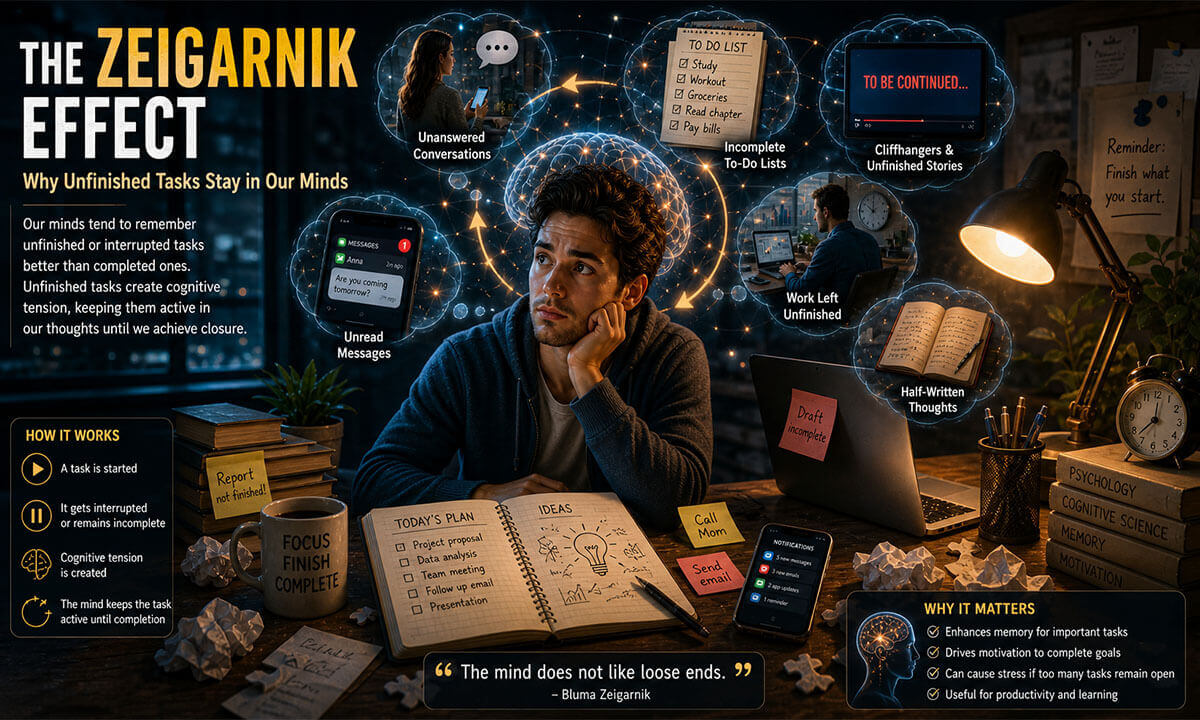
Have you ever noticed how unfinished tasks seem to linger in your mind far more than completed ones? A half-written assignment, an unresolved argument, or a television cliffhanger can continue occupying mental space long after the moment has passed. This psychological phenomenon is known as the Zeigarnik effect, a concept that explains why interrupted or incomplete tasks are often remembered better than finished activities. The theory was first proposed by Russian psychologist Bluma Zeigarnik in the 1920s after she observed that restaurant waiters remembered unpaid orders more accurately than completed ones (Zeigarnik, 1927).
The Zeigarnik effect has become an influential concept in cognitive psychology, particularly in the study of memory, motivation, learning, and attention. Researchers have explored its role in education, productivity, advertising, and emotional experiences such as regret and rumination. Although some later studies questioned the consistency of the effect, the concept remains widely discussed in both academic psychology and everyday life (Butterfield, 1964; MacLeod, 2020).
Origins of the Zeigarnik Effect:
The Zeigarnik effect emerged from observations made by Bluma Zeigarnik while studying under Gestalt psychologist Kurt Lewin in Berlin. According to historical accounts, Zeigarnik noticed that waiters in restaurants could accurately recall orders that were still unpaid, but once the orders had been completed and settled, the details were quickly forgotten (Zeigarnik, 1927).
This observation aligned closely with Lewin’s field theory, which proposed that human behavior is influenced by psychological tensions or motivational forces. Lewin believed that goals create internal tension systems that remain active until the goal is completed. Completion releases the tension, while interruption keeps the tension psychologically active (Marrow, 1977).
Gestalt psychology also influenced Zeigarnik’s thinking. Gestalt theorists argued that people naturally seek closure and completeness in perception and cognition. When a task remains unfinished, the mind continues to focus on it because psychological closure has not yet been achieved. This unresolved state creates cognitive tension, making the task more memorable (MacLeod, 2020).
Zeigarnik’s Original Experiments:
Bluma Zeigarnik formally tested her observations in a series of experiments published in 1927. Participants were asked to complete a variety of simple activities such as solving puzzles, folding paper, drawing shapes, performing arithmetic, and threading beads. Some participants were allowed to finish the tasks, while others were interrupted before completion (Zeigarnik, 1927).
After a delay, participants were asked to recall the tasks they had worked on. Zeigarnik found that interrupted tasks were remembered significantly more often than completed tasks. In some cases, unfinished tasks were recalled nearly twice as frequently as completed ones.
Zeigarnik also discovered that the timing of interruption mattered. Tasks interrupted near completion were remembered more strongly than those interrupted at the beginning. This suggested that motivation and emotional investment intensified memory for incomplete activities.
Her findings led to the conclusion that unfinished tasks create a state of mental tension that persists until the task is completed. Once completed, the tension disappears, reducing the cognitive priority of the information.
Psychological Mechanisms Behind the Zeigarnik Effect:
The Zeigarnik effect is not simply a curiosity about memory; it reflects several deeper psychological processes involving attention, motivation, cognition, emotion, and goal-directed behavior. Researchers have proposed multiple mechanisms to explain why unfinished tasks continue occupying mental space more strongly than completed activities. These mechanisms are interconnected and together help explain why incomplete experiences often feel mentally “unfinished” until closure is achieved.
- Cognitive Tension and the Need for Closure: The most influential explanation for the Zeigarnik effect comes from Kurt Lewin’s field theory, which argues that beginning a task creates a psychological state of tension directed toward completing the goal (Lewin, as cited in Marrow, 1977). When the task is interrupted before completion, this tension remains active within the cognitive system. Completion releases the tension, allowing the mind to disengage from the task.
Bluma Zeigarnik (1927) argued that unfinished tasks maintain a form of “quasi-need,” meaning the brain continues treating the task as psychologically important until closure is achieved. This unresolved tension keeps the task cognitively accessible and easier to recall. In contrast, once a task is completed, the motivational tension disappears, making the information less prominent in memory.
This mechanism is closely related to the broader human tendency to seek psychological closure. Gestalt psychologists proposed that humans naturally prefer complete and organized experiences over fragmented ones (Koffka, 1935). Incomplete situations therefore create a sense of imbalance that motivates individuals to mentally return to the unresolved activity.
For example, when someone stops writing an essay halfway through, their brain may continue processing ideas subconsciously because the task has not yet reached closure. Many people experience this as persistent mental “background activity.”
- Working Memory Activation: Another major explanation involves working memory, the system responsible for temporarily holding and manipulating information needed for ongoing cognitive tasks. Unfinished tasks remain active in working memory because the brain continues monitoring them as pending goals (Baddeley, 2012).
Completed tasks are typically removed from active cognitive processing because they no longer require attention. However, interrupted tasks continue competing for cognitive resources, which increases the likelihood of recall. This explains why people often suddenly remember unfinished responsibilities during unrelated activities, such as remembering an unanswered email while trying to sleep.
Modern cognitive psychology suggests that the brain prioritizes unresolved goals because they may still require future action. Goal-related information therefore remains more accessible than information associated with completed activities (Baumeister & Masicampo, 2011).
Research by Masicampo and Baumeister (2011) found that unfulfilled goals continue intruding into consciousness unless individuals create a clear plan for completion. Interestingly, the researchers discovered that forming a specific strategy for completing a task can reduce intrusive thoughts even before the task is finished. This finding suggests that the mind seeks not only completion, but also cognitive certainty.
- Goal-Oriented Cognitive Systems: Human cognition is fundamentally goal-directed. The brain constantly organizes thoughts and behavior around achieving objectives, whether those objectives are simple daily chores or long-term ambitions. The Zeigarnik effect reflects how unfinished goals maintain priority within motivational systems.
When individuals begin pursuing a goal, the brain allocates attentional and motivational resources toward it. Interruptions leave the goal in an “open loop,” meaning the cognitive system continues tracking it as unfinished (Savitsky et al., 1997). These open loops create persistent mental reminders that encourage eventual completion.
This mechanism is evolutionarily adaptive because remembering unfinished goals improves survival and efficiency. Forgetting incomplete tasks could lead to lost opportunities, unfinished responsibilities, or dangers left unresolved. From this perspective, the Zeigarnik effect may reflect an adaptive attentional system designed to prioritize unfinished obligations.
Goal persistence also explains why highly meaningful or emotionally important unfinished tasks tend to dominate attention more strongly than trivial ones. For instance, an unresolved relationship conflict usually produces greater mental preoccupation than an incomplete household chore because the emotional significance intensifies motivational tension.
- Selective Attention and Cognitive Accessibility: The Zeigarnik effect is also linked to selective attention. Incomplete tasks capture attention more easily because they remain cognitively accessible. Accessibility refers to how quickly information can be retrieved from memory.
Interrupted activities continue receiving unconscious attentional rehearsal, meaning individuals repeatedly think about them even without intending to do so. This repeated activation strengthens neural pathways associated with the task, increasing recall probability (Butterfield, 1964).
For example, students who leave a difficult mathematics problem unfinished may continue mentally reviewing possible solutions throughout the day. Even without conscious effort, the brain continues revisiting the unresolved challenge because it remains psychologically active.
This attentional mechanism helps explain why unfinished tasks sometimes appear suddenly in consciousness during unrelated moments. The information remains highly accessible due to ongoing cognitive activation.
- Emotional Arousal and Motivation: Emotion also plays a major role in the Zeigarnik effect. Unfinished tasks often produce emotional arousal, especially when the tasks are personally meaningful or associated with evaluation, reward, or anxiety.
Psychological tension generated by incomplete goals may trigger mild stress responses that reinforce memory consolidation. Emotional arousal increases attentional focus, making the unfinished experience more memorable (Eysenck & Keane, 2020).
For instance, a student awaiting exam results may repeatedly think about the unfinished evaluative process because uncertainty heightens emotional engagement. Similarly, unresolved interpersonal conflicts often persist in memory because emotional intensity strengthens cognitive rehearsal.
Motivation further influences the strength of the effect. Research suggests that interrupted tasks are remembered more strongly when individuals genuinely care about completing them (Atkinson, 1953). If motivation is low, the cognitive tension associated with interruption may weaken considerably.
- Rumination and Intrusive Thinking: In some situations, the Zeigarnik effect overlaps with rumination, the repetitive focus on unresolved thoughts or experiences. When unfinished tasks carry emotional significance, individuals may repeatedly revisit them mentally, leading to intrusive thinking patterns.
This mechanism is especially relevant in anxiety and stress-related conditions. Unfinished obligations can create cognitive overload because the mind continuously attempts to maintain awareness of unresolved responsibilities. Modern life often intensifies this effect through multitasking, digital notifications, and constant interruptions.
Research in cognitive psychology suggests that writing down unfinished tasks or creating structured plans can reduce this mental burden by signaling to the brain that the goal has been externally organized (Masicampo & Baumeister, 2011). This explains why to-do lists often reduce anxiety and improve focus.
- Memory Consolidation and Rehearsal Processes: Another explanation involves memory consolidation. Unfinished tasks may undergo stronger rehearsal because they continue resurfacing in thought. Repeated mental activation strengthens encoding within long-term memory systems.
In contrast, completed tasks may receive less rehearsal because the brain no longer prioritizes them. Over time, the reduced cognitive importance of completed activities weakens accessibility and recall.
This mechanism is particularly important in learning and education. Students often remember partially learned material more vividly because the brain continues attempting to organize and complete the information structure. Some educational methods intentionally use incomplete problem-solving exercises to stimulate deeper cognitive engagement.
- Neuroscientific Perspectives: Although early Zeigarnik research predates modern neuroscience, contemporary studies suggest that unfinished goals may involve interactions between executive control systems, attention networks, and reward-processing regions of the brain.
The prefrontal cortex, which plays a central role in goal management and working memory, appears especially important in maintaining unfinished goals within active cognition (Miller & Cohen, 2001). Dopaminergic motivational systems may also contribute by reinforcing attention toward unresolved objectives.
Neuroscientists increasingly view the Zeigarnik effect as part of broader predictive and goal-regulation systems that help humans organize behavior efficiently. The brain continuously monitors discrepancies between current states and desired outcomes, keeping unresolved goals mentally active until they are resolved.
- Individual Differences in the Zeigarnik Effect: Not everyone experiences the Zeigarnik effect equally. Personality traits, emotional regulation, perfectionism, and anxiety levels can influence how strongly unfinished tasks persist in memory.
People with high conscientiousness or perfectionistic tendencies may experience stronger cognitive tension from incomplete goals because they place greater value on closure and achievement. Similarly, individuals prone to anxiety may struggle more with intrusive thoughts related to unfinished responsibilities.
Cultural and contextual factors may also shape the experience of cognitive closure. In highly achievement-oriented environments, unfinished tasks may carry stronger emotional weight, increasing their psychological persistence.
Overall, the Zeigarnik effect emerges from the interaction of several psychological systems:
- Cognitive tension maintains mental activation for incomplete tasks.
- Working memory keeps unfinished goals cognitively accessible.
- Goal-oriented cognition prioritizes unresolved objectives.
- Selective attention repeatedly activates unfinished information.
- Emotional arousal strengthens memory and motivation.
- Rumination prolongs focus on unresolved experiences.
- Rehearsal processes reinforce long-term memory retention.
Together, these mechanisms explain why unfinished experiences continue occupying mental space long after they occur. The Zeigarnik effect therefore reveals how memory, motivation, attention, and emotion work together to push humans toward psychological closure.
The Zeigarnik Effect in Everyday Life:
The Zeigarnik effect is not limited to laboratory experiments or academic theories. It appears constantly in everyday human experience, shaping how people think, feel, remember, and behave. From unfinished homework assignments to cliffhangers in television dramas, incomplete experiences often remain psychologically active long after they occur. The effect influences productivity, education, relationships, entertainment, marketing, mental health, and even digital technology.
Understanding how the Zeigarnik effect operates in daily life helps explain why certain thoughts persist in consciousness, why unfinished goals create mental pressure, and why people often feel compelled to seek closure.
- Procrastination and Productivity: One of the most common areas where the Zeigarnik effect appears is productivity and procrastination. Many people struggle to begin difficult tasks, yet once they start, they often find it easier to continue working later. This happens because beginning a task creates cognitive tension that keeps the activity mentally active (Baumeister & Masicampo, 2011).
For example, a student who starts writing the introduction to a research paper may continue thinking about ideas for the assignment throughout the day, even after stopping work. The incomplete nature of the task keeps it active in working memory, increasing the likelihood that the student will eventually return to finish it.
This principle explains why productivity experts frequently recommend strategies such as:
- “Just start for five minutes”
- Breaking large projects into smaller tasks
- Leaving work intentionally unfinished
- Creating partial progress before taking breaks
Once a task has been initiated, the mind develops a stronger motivational connection to it. Incomplete work produces a subtle psychological discomfort that encourages completion (Masicampo & Baumeister, 2011).
Writers and creative professionals have long used this principle deliberately. Famous novelist Ernest Hemingway reportedly advised writers to stop writing while they still knew what would happen next. By leaving the work unfinished, the mind remained engaged with the story, making it easier to resume writing later.
The Zeigarnik effect also explains why unfinished responsibilities often intrude into consciousness during leisure time. People may suddenly remember unpaid bills, unanswered emails, or pending deadlines while relaxing or trying to sleep because unresolved tasks remain cognitively accessible.
- Education and Learning: The Zeigarnik effect plays an important role in learning and academic performance. Educational psychologists suggest that interrupted or incomplete learning tasks can strengthen memory retention because the brain continues processing unresolved material after the learning session ends (Hiramatsu et al., 2014).
For example, when students pause studying before fully mastering a topic, their minds may continue unconsciously organizing and rehearsing the information. This ongoing cognitive activation can improve later recall and understanding.
This mechanism helps explain the effectiveness of several educational techniques:
- Spaced Learning: Distributed study sessions are often more effective than cramming because interruptions between sessions keep the material mentally active. The brain repeatedly revisits unfinished learning tasks, strengthening memory consolidation over time.
- Problem-Based Learning: Teachers sometimes intentionally present incomplete problems or unresolved questions to stimulate curiosity and engagement. Students become psychologically motivated to seek answers because the unresolved information creates cognitive tension.
- Active Recall: When learners attempt to retrieve partially remembered information, the temporary incompleteness of recall increases attentional focus. The struggle to remember can strengthen long-term retention.
The Zeigarnik effect is also visible in classroom participation. Students are often more likely to remember topics associated with unanswered questions, unresolved debates, or unfinished discussions because incomplete cognitive structures remain mentally active.
However, excessive unfinished academic tasks can also increase stress and cognitive overload. Students managing multiple incomplete assignments may experience anxiety because unresolved goals compete continuously for attention.
- Entertainment and Storytelling: The entertainment industry heavily relies on the Zeigarnik effect to maintain audience engagement. Writers, filmmakers, television producers, and game developers intentionally create incomplete narratives that keep viewers psychologically invested.
- Cliffhangers: Cliffhangers are one of the clearest examples of the Zeigarnik effect in action. Television episodes often end with unresolved conflicts, surprising revelations, or unanswered questions. These interruptions create cognitive tension that motivates viewers to continue watching.
For example, when a mystery series ends an episode just before revealing the identity of a criminal, viewers experience an unresolved mental state. The desire for closure keeps the story active in memory until the next episode becomes available.
Research on narrative psychology suggests that incomplete stories remain more memorable because the brain continues attempting to organize and resolve the missing information (Brewer & Lichtenstein, 1982).
- Serialized Storytelling: Streaming platforms and social media content creators frequently structure narratives to encourage “binge-watching.” Episodes are intentionally connected through unresolved emotional arcs and ongoing plotlines that exploit the audience’s desire for completion.
- Video Games: Video games use unfinished missions, progress bars, achievement systems, and open quests to maintain player engagement. Incomplete goals create motivational tension that encourages players to continue interacting with the game environment.
The popularity of “to be continued” storytelling formats reflects the human mind’s natural preference for psychological closure.
- Advertising and Marketing: Marketers and advertisers also use the Zeigarnik effect to capture and sustain consumer attention. Incomplete information creates curiosity, which motivates people to seek closure.
- Suspenseful Advertisements: Advertisements that withhold key details or present unresolved scenarios are often more memorable than fully explained messages. Consumers continue thinking about the advertisement because the cognitive tension remains unresolved.
For example, teaser campaigns frequently reveal only partial information about a new product launch. This incompleteness increases anticipation and engagement.
- Digital Marketing and Notifications: Modern digital platforms heavily exploit the Zeigarnik effect through:
- Unread message notifications
- Progress indicators
- Incomplete user profiles
- Abandoned shopping cart reminders
- “Continue watching” prompts
These features maintain awareness of unfinished actions, encouraging users to return to the platform. Social media applications especially rely on unresolved interactions to sustain engagement.
For instance, seeing a notification badge signaling unread messages creates a small but persistent psychological tension that motivates users to check their phones.
- Consumer Behavior: Online retailers often remind customers about unfinished purchases through automated emails about abandoned carts. These reminders reactivate unresolved purchase intentions, increasing the likelihood of completing the transaction.
Heimbach and Jacoby (1972) found that interrupted advertising messages could increase memory retention because incomplete information remained cognitively active.
- Relationships and Social Interactions: The Zeigarnik effect also appears in interpersonal relationships and social experiences. Unresolved emotional situations often remain psychologically active far longer than completed interactions.
- Unresolved Conversations: People tend to replay unfinished conversations repeatedly in their minds. Arguments without resolution, unspoken feelings, or unanswered questions can continue generating cognitive tension because emotional closure has not been achieved.
For example, after a difficult interpersonal conflict, individuals may mentally rehearse what they should have said or how the conversation could have ended differently.
- Romantic Relationships: Breakups without closure often produce stronger emotional preoccupation than relationships that end with mutual understanding. Psychological research suggests that unresolved emotional experiences remain cognitively accessible because the mind continues seeking meaning and resolution (Baumeister & Leary, 1995).
This helps explain why people may struggle to stop thinking about unresolved relationships long after they have ended.
- Social Obligations: Incomplete social responsibilities such as forgotten messages, missed calls, or postponed meetings may continue producing low-level psychological tension until resolved.
- Mental Health and Emotional Well-Being: The Zeigarnik effect has significant implications for emotional well-being and mental health.
- Anxiety and Cognitive Overload: Modern life often involves managing numerous unfinished responsibilities simultaneously. Emails, deadlines, notifications, financial obligations, and personal commitments can create continuous cognitive tension.
When too many unfinished tasks accumulate, individuals may experience:
- Mental fatigue
- Anxiety
- Sleep disturbances
- Difficulty concentrating
- Intrusive thoughts
The brain continuously attempts to monitor unresolved goals, which consumes attentional resources.
- Rumination: The Zeigarnik effect may contribute to rumination, especially when unfinished experiences involve emotional pain or regret. People often repeatedly think about unresolved failures, missed opportunities, or unfinished ambitions because the mind seeks closure.
Savitsky et al. (1997) found that regrettable unfinished actions remain highly accessible in memory because unresolved emotional experiences maintain cognitive activation.
- Therapeutic Applications: Psychologists sometimes help clients reduce cognitive overload by externalizing unfinished tasks through journaling, planning, or structured goal-setting. Writing tasks down may reduce intrusive thinking because the brain perceives the responsibility as organized and manageable (Masicampo & Baumeister, 2011).
Mindfulness-based therapies also help individuals disengage from repetitive focus on unresolved concerns.
- Workplace and Professional Life: The Zeigarnik effect strongly influences workplace behavior and occupational stress.
- Task Switching and Multitasking: Employees frequently shift between unfinished tasks throughout the workday. Each interruption leaves unresolved cognitive tension that can reduce concentration and increase mental exhaustion.
Research on attention residue suggests that partially completed tasks continue occupying mental resources even after attention shifts elsewhere (Leroy, 2009). This can decrease productivity and impair decision-making.
- Deadline Pressure: Unfinished work assignments often dominate employee attention because pending goals remain psychologically active. Approaching deadlines intensify cognitive tension, making incomplete tasks even more difficult to ignore.
- Motivation and Goal Tracking: Organizations often use progress indicators, milestone systems, and performance tracking to harness the motivational power of incomplete goals. Employees remain motivated because visible progress emphasizes unfinished objectives.
- Technology and Digital Life: Digital environments increasingly exploit the Zeigarnik effect in sophisticated ways.
- Social Media Platforms: Social media applications are intentionally designed to create continuous loops of incomplete engagement. Infinite scrolling, partial notifications, and intermittent rewards maintain unresolved attentional states that encourage repeated checking behavior.
- Streaming Services: Platforms such as Netflix and YouTube use autoplay systems and unfinished episode transitions to sustain viewer engagement by minimizing psychological closure between viewing sessions.
- Productivity Apps: Task management applications often use incomplete checklists and progress tracking to motivate users through visible unfinished goals.
While these systems can improve productivity, they may also contribute to attentional fragmentation and digital fatigue.
- Everyday Examples of the Zeigarnik Effect: The Zeigarnik effect can be observed in countless ordinary situations, including:
- Remembering unfinished homework more clearly than completed assignments
- Thinking repeatedly about unanswered text messages
- Feeling compelled to finish puzzles or games
- Becoming emotionally attached to unresolved stories
- Replaying awkward social interactions mentally
- Remembering interrupted conversations better than completed ones
- Feeling mental relief after crossing tasks off a to-do list
These experiences reflect the mind’s natural tendency to prioritize incomplete cognitive and emotional experiences.
Emotional and Mental Health Implications of the Zeigarnik Effect:
The Zeigarnik effect has important implications for emotional well-being and mental health because unfinished experiences do not simply disappear from the mind after they occur. Instead, incomplete goals, unresolved conflicts, and interrupted emotional experiences often remain psychologically active, continuing to influence thoughts, emotions, attention, and behavior. While this cognitive mechanism can sometimes enhance motivation and persistence, it may also contribute to stress, anxiety, rumination, emotional exhaustion, and sleep disturbances when unresolved tasks accumulate.
Modern psychological research increasingly recognizes that the human mind is highly sensitive to incompleteness. People naturally seek closure, certainty, and resolution, and when these are absent, emotional tension often emerges. The Zeigarnik effect therefore helps explain why unfinished experiences can feel emotionally “heavy” and mentally difficult to ignore.
- Cognitive Tension and Emotional Stress: At the center of the Zeigarnik effect is the idea of unresolved psychological tension. When individuals begin pursuing a goal, form an intention, or become emotionally invested in an outcome, the brain creates a state of cognitive activation oriented toward completion (Lewin, as cited in Marrow, 1977). If the process remains unfinished, this tension continues operating in the background of consciousness.
This ongoing activation can produce emotional stress because unresolved tasks repeatedly compete for attention. The mind continues monitoring incomplete responsibilities as if they still require immediate action.
For example, a person who has not completed an important work assignment may experience persistent low-level anxiety throughout the day, even during unrelated activities. Similarly, unresolved family conflicts or unfinished personal goals can continue generating emotional discomfort long after the original situation occurred.
Research suggests that unfinished goals consume cognitive resources because the brain keeps them mentally accessible in preparation for future completion (Baumeister & Masicampo, 2011). As the number of unresolved obligations increases, psychological stress may intensify.
In modern life, individuals often manage numerous unfinished tasks simultaneously, including:
- Academic deadlines
- Financial responsibilities
- Emails and digital notifications
- Family obligations
- Career goals
- Social commitments
The accumulation of unresolved goals can create chronic mental tension and emotional overload.
- Anxiety and Intrusive Thoughts: One of the most significant mental health implications of the Zeigarnik effect is its connection to anxiety and intrusive thinking. Because unfinished tasks remain cognitively active, they may repeatedly intrude into consciousness even when individuals attempt to focus elsewhere.
These intrusive thoughts often appear during quiet moments, such as:
- Before sleeping
- During relaxation
- While attempting to concentrate
- During social interactions
For example, a student preparing for exams may repeatedly think about unfinished study material despite trying to rest. Likewise, someone with unresolved financial concerns may experience recurring worries throughout the day.
Research in cognitive psychology suggests that unresolved goals maintain a form of attentional priority because the brain interprets them as incomplete action systems requiring monitoring (Masicampo & Baumeister, 2011). This continuous monitoring process can contribute to chronic worry and mental exhaustion.
In anxiety disorders, the Zeigarnik effect may become amplified. Individuals with generalized anxiety disorder often experience excessive concern about unfinished responsibilities, unresolved uncertainties, and future obligations. The inability to achieve cognitive closure may intensify anxious thinking patterns.
Furthermore, perfectionistic individuals may be particularly vulnerable because they often perceive incomplete tasks as personal failures or threats to competence. Their heightened sensitivity to incompleteness strengthens cognitive tension and emotional distress.
- Rumination and Repetitive Thinking: The Zeigarnik effect is closely connected to rumination, a repetitive pattern of thinking about unresolved problems, emotional experiences, or negative events. Rumination occurs when individuals continuously revisit incomplete psychological situations without reaching resolution.
This process is especially common after emotionally significant experiences such as:
- Relationship breakups
- Social rejection
- Failure experiences
- Missed opportunities
- Unresolved arguments
- Regrettable decisions
Savitsky, Medvec, and Gilovich (1997) found that unfinished or regrettable experiences often remain highly accessible in memory because unresolved emotional situations continue generating cognitive activation. People may repeatedly replay conversations, imagine alternative outcomes, or think about “what could have been.”
For example, after an unresolved conflict, a person may mentally rehearse the interaction for days or weeks, continuously imagining different responses or outcomes. The mind keeps returning to the experience because psychological closure has not been achieved.
Rumination is strongly associated with depression and emotional distress. Persistent focus on unresolved negative experiences can reinforce feelings of sadness, helplessness, and self-criticism (Nolen-Hoeksema, 2000).
The Zeigarnik effect helps explain why emotionally unfinished experiences can become mentally dominant. Because the brain continues seeking resolution, unresolved emotional events may repeatedly reactivate themselves within consciousness.
- Sleep Disturbances and Mental Restlessness: Many people experience the Zeigarnik effect most strongly at night. Unfinished responsibilities and unresolved concerns frequently become more noticeable during attempts to sleep because external distractions decrease and internal thoughts become more prominent.
Research suggests that unfinished goals can impair sleep quality because the brain continues maintaining cognitive activation related to unresolved tasks (Scullin et al., 2018). Individuals often experience:
- Racing thoughts
- Difficulty falling asleep
- Repetitive mental rehearsals
- Increased nighttime anxiety
For instance, employees worrying about incomplete work projects may mentally revisit unfinished tasks while lying in bed. Students often report thinking about pending assignments or upcoming examinations during the night.
Interestingly, studies show that writing down unfinished tasks before sleeping may improve sleep onset by reducing cognitive load. Externalizing responsibilities into written plans appears to signal to the brain that the tasks have been organized and will not be forgotten (Scullin et al., 2018).
This finding supports the idea that the Zeigarnik effect is strongly tied to the brain’s need to maintain awareness of incomplete goals.
- Emotional Attachment to Unfinished Experiences: The Zeigarnik effect also influences emotional attachment and memory intensity. Unfinished emotional experiences often feel more emotionally powerful than completed ones because unresolved situations continue generating psychological tension.
This is particularly evident in interpersonal relationships.
- Unresolved Relationships: People frequently struggle more with relationships that end ambiguously than with relationships that conclude through clear communication and mutual closure. Unanswered questions, unexpressed feelings, or uncertain endings may continue occupying emotional attention for long periods.
The mind repeatedly revisits unresolved emotional situations because it continues searching for understanding, meaning, or completion.
- Grief and Loss: In some forms of grief, individuals may experience lingering emotional distress because aspects of the relationship or loss feel psychologically unfinished. For example, unresolved conversations or unexpressed emotions toward a deceased loved one may contribute to ongoing emotional preoccupation.
Psychologists recognize that emotional closure is often important for healthy adaptation following loss or trauma.
- Motivation and Goal Persistence: Although the Zeigarnik effect can contribute to stress, it also has positive motivational functions. Unfinished tasks remain mentally active partly because this persistence encourages eventual completion.
In many situations, the effect enhances:
- Goal persistence
- Motivation
- Task continuation
- Achievement-oriented behavior
For example, athletes, researchers, writers, and students often benefit from the mind’s tendency to remain engaged with incomplete goals. Cognitive tension can sustain motivation over long periods, helping individuals continue working toward challenging objectives.
This motivational aspect explains why some people intentionally leave work partially unfinished before taking breaks. The unresolved state keeps the task cognitively accessible, making it easier to resume later.
In therapeutic settings, psychologists sometimes use gradual goal-setting strategies that harness the motivational benefits of incomplete progress while minimizing overwhelming tension.
- Cognitive Overload and Burnout: While moderate cognitive tension may enhance productivity, excessive unresolved obligations can produce cognitive overload. Modern digital environments expose individuals to continuous streams of unfinished information:
- Notifications
- Emails
- Social media interactions
- Work demands
- News updates
- Personal commitments
Each unresolved item may create a small amount of psychological tension. Over time, the accumulation of these “open loops” can contribute to emotional exhaustion and burnout.
Research on attention residue suggests that switching between unfinished tasks leaves portions of attention attached to previous activities, reducing mental clarity and increasing fatigue (Leroy, 2009).
This helps explain why multitasking often feels mentally draining. The brain continues carrying fragments of unfinished cognitive processes even after attention shifts elsewhere.
- The Zeigarnik Effect and Depression: The relationship between the Zeigarnik effect and depression is complex. On one hand, unfinished goals may contribute to depressive rumination when individuals repeatedly focus on unresolved failures or unattained aspirations.
People experiencing depression often report persistent thoughts about:
- Missed opportunities
- Incomplete ambitions
- Unresolved emotional pain
- Personal disappointments
The inability to disengage from these unresolved experiences may reinforce negative emotional states.
On the other hand, depression can also reduce motivation to complete tasks, leading to further accumulation of unfinished responsibilities. This creates a cycle where incomplete goals increase distress, and distress reduces the ability to resolve those goals.
Psychological interventions often focus on breaking this cycle through small achievable actions, structured planning, and behavioral activation techniques.
- Therapeutic and Clinical Applications: Understanding the Zeigarnik effect has practical value in psychotherapy and mental health treatment.
- Cognitive Behavioral Therapy (CBT): CBT techniques often help clients reduce intrusive thinking by organizing unresolved tasks into structured plans. Creating actionable steps reduces uncertainty and weakens cognitive tension.
- Journaling and Externalization: Writing unfinished concerns in journals or to-do lists may reduce mental burden because the brain no longer needs to actively maintain the information internally.
- Mindfulness Practices: Mindfulness-based therapies teach individuals to observe unresolved thoughts without becoming trapped in repetitive rumination. This can reduce the emotional intensity associated with unfinished experiences.
- Exposure and Emotional Processing: In trauma therapy, unresolved emotional memories are often processed gradually to achieve psychological integration and closure.
- Positive Emotional Functions: Despite its association with stress, the Zeigarnik effect also supports several positive psychological functions.
- Creativity: Unfinished creative problems often continue incubating unconsciously, leading to sudden insights or problem-solving breakthroughs later.
- Curiosity and Engagement: Incomplete information stimulates curiosity and learning motivation. This mechanism helps sustain intellectual engagement and exploration.
- Long-Term Goal Achievement: Persistent awareness of unfinished goals may help individuals maintain focus on meaningful ambitions over extended periods.
Thus, the Zeigarnik effect is not inherently harmful; its emotional impact depends largely on the balance between motivational activation and cognitive overload.
Criticisms and Limitations of the Zeigarnik Effect:
Although the Zeigarnik effect became one of the most influential concepts in cognitive psychology, researchers have raised important criticisms regarding its reliability, universality, theoretical explanations, and experimental methods. While many studies support the idea that unfinished tasks are remembered better than completed ones, other investigations have failed to replicate the effect consistently. As a result, psychologists now view the Zeigarnik effect as a more complex and context-dependent phenomenon than originally believed.
The criticisms surrounding the Zeigarnik effect do not necessarily invalidate the theory; rather, they highlight the challenges of explaining human memory and motivation through a single universal principle. Modern psychological research suggests that the strength of the effect depends on multiple interacting factors, including motivation, emotional significance, personality, context, and task characteristics.
- Inconsistent Experimental Findings: One of the most significant criticisms of the Zeigarnik effect is that later studies did not consistently reproduce Bluma Zeigarnik’s original findings.
In her 1927 experiments, Zeigarnik reported that interrupted tasks were remembered almost twice as well as completed tasks (Zeigarnik, 1927). However, subsequent researchers often found weaker effects or no significant differences between interrupted and completed activities.
For example, Hovland and Sears (1938) conducted replication studies and found inconsistent evidence supporting enhanced recall for unfinished tasks. Similarly, Butterfield (1964) reviewed decades of research and concluded that the findings across studies were highly variable.
Some experiments demonstrated strong memory advantages for interrupted tasks, while others found:
- Minimal differences
- Context-specific effects
- Contradictory results
- Situations where completed tasks were remembered better
These inconsistencies raised questions about whether the Zeigarnik effect represents a universal cognitive principle or merely a phenomenon that appears under certain experimental conditions.
Modern researchers generally agree that the effect exists, but its magnitude is often smaller and less reliable than early studies suggested (MacLeod, 2020).
- Methodological Problems in Early Research: Another major criticism concerns methodological weaknesses in early Zeigarnik studies. Many psychologists argue that the original experiments lacked the methodological rigor expected in modern psychological research.
Several issues have been identified:
- Small Sample Sizes: Zeigarnik’s original experiments involved relatively small participant groups, limiting the generalizability of the findings. Small samples increase the likelihood that results may be influenced by chance or individual differences.
- Artificial Laboratory Tasks: Many early experiments used simple mechanical activities such as:
- Folding paper
- Stringing beads
- Solving puzzles
- Completing arithmetic problems
Critics argue that these tasks may not accurately reflect the complexity of real-world goals and motivations. Everyday unfinished experiences often involve emotional meaning, personal identity, and long-term consequences that laboratory tasks cannot fully capture.
- Lack of Experimental Standardization: Different studies used different interruption timings, task difficulties, and memory tests. These inconsistencies made it difficult to compare results across experiments.
Butterfield (1964) argued that variations in methodology contributed heavily to contradictory findings in the literature.
- Demand Characteristics: Some researchers suggested that participants may have guessed the purpose of the experiments and unconsciously altered their behavior. For instance, interrupted participants may have focused more on unfinished tasks simply because interruptions appeared unusual or memorable.
This possibility weakens confidence that the observed memory differences reflected natural cognitive processes rather than experimental expectations.
- The Role of Motivation: A major limitation of the Zeigarnik effect is that it does not occur equally for all tasks. Motivation appears to play a critical role in determining whether unfinished activities remain mentally active.
Research suggests that interrupted tasks are remembered more strongly only when individuals are genuinely invested in completing them (Atkinson, 1953). If participants feel indifferent toward the activity, interruption may produce little cognitive tension.
This creates an important limitation because the original theory implied that interruption itself automatically enhances memory. Modern findings indicate that the effect depends heavily on motivational significance.
For example:
- An unfinished personal project may remain mentally dominant for weeks.
- An interrupted meaningless task may be forgotten quickly.
This distinction suggests that emotional investment and goal relevance may matter more than interruption alone.
Furthermore, people vary significantly in achievement motivation, perfectionism, and conscientiousness. These personality differences can strongly influence the intensity of cognitive tension associated with incomplete goals.
- Individual Differences and Personality Factors: Another criticism is that the Zeigarnik effect may not operate similarly across individuals. Personality traits appear to influence how strongly unfinished tasks remain psychologically active.
For example:
- Perfectionism: Highly perfectionistic individuals may experience stronger cognitive tension from incomplete tasks because they place greater importance on achievement and closure.
- Anxiety: People with anxiety tendencies often struggle more with intrusive thoughts related to unfinished responsibilities. In these cases, the Zeigarnik effect may become amplified.
- Low Achievement Motivation: Individuals with low personal investment in goals may experience little or no persistent cognitive activation after interruption.
These variations challenge the assumption that the Zeigarnik effect reflects a universal psychological mechanism operating equally across all people.
Modern psychology increasingly recognizes that cognitive processes are shaped by personality, culture, emotion, and social context rather than fixed universal rules.
- Alternative Explanations for the Effect: Some researchers argue that the Zeigarnik effect may not require a special theory of cognitive tension at all. Instead, alternative explanations may account for the observed memory differences.
- Distinctiveness Theory: Interrupted tasks may simply be more unusual or distinctive than completed tasks. Since interruptions break expectations, they become more memorable due to novelty rather than unresolved tension.
This explanation suggests that memory advantages may result from attentional salience rather than psychological incompleteness.
- Rehearsal Effects: Interrupted tasks may receive more mental rehearsal because participants continue thinking about them after interruption. According to this interpretation, enhanced recall results from additional rehearsal rather than a special motivational system.
- Emotional Activation: Some psychologists argue that interruption creates mild frustration or emotional arousal, which strengthens memory encoding. In this case, emotional activation rather than cognitive tension may explain the findings.
These alternative interpretations demonstrate that the mechanisms underlying the Zeigarnik effect remain debated.
- Weak Predictive Power in Real-World Situations: Although the Zeigarnik effect is often discussed in everyday contexts, its real-world predictive power may be limited.
Human memory and attention are influenced by many competing variables, including:
- Emotional intensity
- Personal relevance
- Stress
- Fatigue
- Contextual cues
- Social influences
- Prior experiences
As a result, unfinished tasks do not always dominate memory or attention.
For example:
- People sometimes forget incomplete tasks entirely.
- Completed emotionally significant events may remain highly memorable.
- Some interruptions reduce motivation rather than enhancing it.
These realities suggest that the Zeigarnik effect operates as one factor among many rather than as a dominant universal principle.
- Cultural and Social Limitations: Most early research on the Zeigarnik effect was conducted in Western or European cultural contexts. Critics argue that the theory may not fully account for cultural differences in motivation, memory, and goal orientation.
Different cultures vary in:
- Attitudes toward achievement
- Emotional expression
- Task persistence
- Perceptions of completion and failure
For example, collectivist cultures may place greater emphasis on social harmony than individual task achievement, potentially influencing how cognitive tension develops around unfinished goals.
Cross-cultural research on the Zeigarnik effect remains relatively limited, making it difficult to determine how universally the phenomenon applies across diverse societies.
- The Problem of Overgeneralization: The Zeigarnik effect became extremely popular in self-help literature, marketing discussions, and productivity advice. However, critics argue that many popular interpretations oversimplify the phenomenon.
For instance, some productivity systems claim that simply starting any task guarantees future motivation and completion. Yet research shows that beginning a task does not always lead to sustained engagement.
Similarly, marketers often assume that incomplete information automatically increases consumer interest, but excessive ambiguity may instead create confusion or frustration.
Psychologists caution against treating the Zeigarnik effect as a universal solution for motivation, learning, or behavior change.
- Emotional Costs of Unfinished Tasks: Although incomplete tasks can sometimes enhance motivation, critics note that persistent cognitive tension may also produce harmful psychological consequences.
Excessive unfinished obligations can contribute to:
- Anxiety
- Rumination
- Sleep disturbances
- Stress
- Cognitive overload
- Burnout
Modern digital life intensifies this problem because people constantly encounter unresolved notifications, unfinished communications, and interrupted tasks.
Critics argue that the Zeigarnik effect is often discussed positively in productivity contexts while its potential emotional costs receive less attention.
Research on attention residue suggests that repeatedly switching between unfinished tasks reduces concentration and increases mental fatigue (Leroy, 2009).
Thus, unfinished tasks are not always psychologically beneficial; in some situations, they may impair well-being and performance.
- Challenges from Modern Cognitive Psychology: Contemporary cognitive psychology increasingly views memory as highly dynamic and context-dependent. Modern theories emphasize that memory involves complex interactions among:
- Attention systems
- Emotional regulation
- executive functioning
- long-term goals
- environmental cues
Within this framework, the Zeigarnik effect may represent only one small aspect of broader goal-management systems.
MacLeod (2020) argued that the historical popularity of the Zeigarnik effect partly reflects psychology’s attraction to elegant and memorable theories. However, human cognition rarely operates according to simple universal rules.
Recent meta-analytic research suggests that while the effect exists, its strength varies considerably depending on methodological design and contextual conditions (Ghibellini & Meier, 2025).
This modern perspective treats the Zeigarnik effect as probabilistic rather than absolute.
- Meta-Analytic Findings: Recent meta-analyses provide a more balanced understanding of the phenomenon.
Ghibellini and Meier (2025) analyzed decades of research on both the Zeigarnik effect and the related Ovsiankina effect, which refers to the tendency to resume interrupted tasks. Their findings suggested:
- The effects are real but moderate in size.
- Context strongly influences outcomes.
- Motivation significantly affects results.
- Experimental design impacts reliability.
These findings support the idea that the Zeigarnik effect is neither entirely invalid nor universally powerful.
Instead, it appears to function as a context-sensitive cognitive tendency influenced by emotional, motivational, and situational factors.
Modern Relevance of the Zeigarnik Effect:
The Zeigarnik effect remains highly relevant in modern society because contemporary life is filled with interruptions, unfinished tasks, digital distractions, and continuous streams of incomplete information. Although the theory was first proposed nearly a century ago, its importance may actually be greater today than in Bluma Zeigarnik’s time. Modern technologies, work environments, educational systems, and social interactions increasingly depend on cognitive processes related to attention, motivation, and unfinished goals.
The human mind evolved to monitor unresolved tasks and seek psychological closure. However, in the modern world, individuals are exposed to far more unfinished cognitive demands than ever before. Notifications, emails, social media feeds, online learning systems, multitasking work environments, and endless digital content continuously create “open loops” that keep attention partially engaged. As a result, the Zeigarnik effect has become deeply connected to issues such as productivity, digital behavior, mental health, marketing, learning, and workplace efficiency.
Researchers today view the Zeigarnik effect not merely as a memory phenomenon, but as part of a broader system of goal management, cognitive control, and motivational regulation.
- The Zeigarnik Effect in the Digital Age: One of the most important reasons the Zeigarnik effect remains relevant is the rise of digital technology. Smartphones, social media platforms, and online communication systems are intentionally designed around incomplete interactions that maintain user engagement.
Notifications and Unfinished Attention: Modern digital devices constantly generate unresolved cognitive signals:
- Unread messages
- Notification badges
- Missed calls
- Unanswered emails
- Pending updates
- Incomplete downloads
- Unfinished videos
Each notification creates a small cognitive interruption that remains mentally active until addressed. The brain interprets these unfinished interactions as unresolved goals requiring attention.
For example, seeing a red notification icon on a smartphone often produces a subtle sense of tension or curiosity. Even when individuals try to ignore it, part of their attention may remain attached to the unresolved notification. This reflects the Zeigarnik effect in action.
Research on attentional control suggests that unresolved digital interruptions can reduce concentration and increase cognitive fatigue because unfinished stimuli continue competing for mental resources (Leroy, 2009).
Modern technology therefore amplifies the Zeigarnik effect by exposing individuals to hundreds of incomplete cognitive loops every day.
- Social Media and Continuous Engagement: Social media platforms heavily rely on psychological mechanisms similar to the Zeigarnik effect to maintain user engagement.
Infinite Scrolling and Incomplete Closure: Platforms such as Facebook, Instagram, TikTok, and X (formerly Twitter) use endless scrolling systems that rarely provide a clear sense of completion. Unlike traditional activities with natural stopping points, social media feeds continuously present unresolved streams of information.
This design keeps users psychologically engaged because the brain continues anticipating new rewards, updates, or social information.
Variable Rewards and Open Loops: Social media interactions often remain incomplete:
- Someone may not respond immediately to a message.
- A post may continue receiving likes and comments.
- Notifications may arrive unpredictably.
- Stories disappear after limited periods.
These unresolved interactions maintain attentional activation and encourage repeated checking behavior.
Psychologists increasingly connect these digital engagement systems to the brain’s goal-monitoring and reward-processing mechanisms (Alter, 2017). The Zeigarnik effect helps explain why unfinished digital interactions are difficult to ignore.
- Workplace Relevance and Modern Productivity: The Zeigarnik effect has become highly relevant in modern workplaces because professional environments increasingly involve multitasking, interruptions, and fragmented attention.
Attention Residue and Task Switching: Modern employees frequently move between unfinished tasks throughout the workday:
- Emails
- Meetings
- Reports
- Messages
- Deadlines
- Phone calls
- Collaborative projects
Each interruption leaves part of attention attached to the unfinished task. Leroy (2009) described this phenomenon as attention residue, where cognitive resources remain partially occupied by previous unfinished work even after switching tasks.
This helps explain why multitasking often reduces productivity and mental clarity. The brain continues monitoring unresolved goals in the background, making it difficult to fully concentrate on new tasks.
Burnout and Cognitive Overload: The modern workplace often generates constant cognitive tension through accumulating unfinished responsibilities. Employees may experience:
- Mental fatigue
- Difficulty relaxing after work
- Persistent work-related thoughts
- Sleep disturbances
- Stress and burnout
Digital communication technologies intensify this problem because work tasks now frequently extend beyond traditional office hours. Unanswered emails and pending notifications keep work-related goals mentally active even during personal time.
Productivity Systems and Task Management: At the same time, modern productivity systems intentionally use principles related to the Zeigarnik effect.
For example:
- Progress bars motivate completion.
- Task lists reduce cognitive burden.
- Project milestones maintain engagement.
- Goal tracking systems encourage persistence.
Research by Masicampo and Baumeister (2011) found that making structured plans for unfinished goals can reduce intrusive thoughts because planning creates a sense of cognitive control.
This explains why productivity methods such as:
- To-do lists
- Time blocking
- Kanban boards
- Goal-setting systems
often improve both performance and psychological well-being.
- Educational Relevance in Contemporary Learning: The Zeigarnik effect remains highly relevant in modern education because learning itself depends heavily on attention, motivation, and memory consolidation.
Online Learning and Cognitive Engagement: Digital learning environments increasingly use incomplete tasks and progress systems to sustain student engagement. Educational platforms often incorporate:
- Partial progress indicators
- Unfinished modules
- Interactive quizzes
- Incremental achievements
- Gamified learning systems
These features maintain cognitive tension that encourages students to continue learning activities.
Curiosity and Problem-Based Learning: Modern educational approaches frequently rely on unresolved questions to stimulate curiosity and deeper cognitive engagement. Problem-based learning intentionally presents students with incomplete information so they become motivated to search for solutions.
For example:
- Mystery-based science lessons
- Open-ended research questions
- Incomplete case studies
- Inquiry-based discussions
all use cognitive incompleteness to enhance motivation and retention.
Educational psychology research suggests that moderate cognitive tension can improve learning by increasing attentional focus and rehearsal processes (Hiramatsu et al., 2014).
Risks of Academic Overload: However, modern students also face unprecedented levels of unfinished academic obligations. Continuous assignments, digital coursework, and online communication may create chronic cognitive tension and stress.
Many students experience difficulty disengaging from academic concerns because unfinished educational tasks remain mentally active long after study sessions end.
- Marketing, Consumer Behavior, and Advertising: Modern marketing strategies continue to use principles closely related to the Zeigarnik effect.
Curiosity-Based Marketing: Advertisers often create incomplete informational experiences that stimulate curiosity and encourage engagement.
Examples include:
- Teaser campaigns
- Suspenseful advertisements
- “Coming soon” promotions
- Partial product reveals
- Cliffhanger storytelling in commercials
Incomplete information creates psychological tension that motivates consumers to seek closure.
E-Commerce and Digital Shopping: Online retailers frequently use unfinished purchase reminders such as:
- Abandoned cart notifications
- “Continue shopping” prompts
- Incomplete profile reminders
- Limited-time offers
These systems reactivate unresolved purchase intentions, encouraging users to return and complete transactions.
Streaming and Subscription Services: Streaming platforms also exploit the Zeigarnik effect by minimizing closure between episodes. Automatic playback and unresolved storylines encourage continuous consumption.
This reflects how modern digital industries increasingly depend on maintaining unresolved attentional states.
- Mental Health and Psychological Well-Being: The Zeigarnik effect has become increasingly relevant in discussions of mental health because modern lifestyles expose individuals to continuous cognitive fragmentation.
Anxiety and Persistent Mental Activation: Digital culture creates constant exposure to unfinished tasks and unresolved information. As a result, many individuals experience persistent cognitive activation that contributes to:
- Anxiety
- Restlessness
- Mental exhaustion
- Difficulty concentrating
- Emotional overload
Psychologists increasingly recognize that excessive “open loops” may contribute to chronic stress.
Sleep Problems in Modern Life: Unfinished digital interactions often interfere with sleep. Many people continue thinking about work emails, notifications, unfinished conversations, or online responsibilities while trying to rest.
Scullin et al. (2018) found that writing down unfinished tasks before bedtime improved sleep onset because externalizing responsibilities reduced cognitive activation.
This finding highlights how deeply the Zeigarnik effect influences modern mental functioning.
Mindfulness and Cognitive Closure: Modern therapeutic approaches increasingly emphasize strategies that help individuals disengage from unresolved cognitive loops.
Examples include:
- Mindfulness meditation
- Journaling
- Cognitive restructuring
- Structured planning
- Digital detox practices
These techniques help reduce excessive cognitive tension while improving emotional regulation.
- The Zeigarnik Effect and Artificial Intelligence: The rise of artificial intelligence and algorithm-driven platforms has introduced new dimensions to the Zeigarnik effect.
AI systems increasingly personalize content to maintain user engagement by predicting unresolved interests and attentional patterns. Recommendation algorithms continuously present incomplete informational sequences that encourage further interaction.
Examples include:
- Personalized video recommendations
- “Next article” suggestions
- Adaptive learning systems
- Interactive gaming environments
These technologies often function by sustaining curiosity and unresolved cognitive engagement.
As digital systems become more psychologically sophisticated, understanding the Zeigarnik effect becomes increasingly important for ethical discussions about technology design and attentional manipulation.
- Creativity and Innovation in Modern Contexts: The Zeigarnik effect also remains important in creative and innovative work.
Incubation and Creative Thinking: Modern creativity research suggests that unfinished problems often continue processing unconsciously. Many creative breakthroughs occur after periods of interruption because unresolved cognitive tension keeps the problem mentally active.
Writers, scientists, designers, and artists frequently report that stepping away from incomplete work allows ideas to incubate subconsciously before sudden insights emerge later.
Innovation and Long-Term Goals: The persistence of unfinished goals may support long-term innovation by maintaining motivational engagement over extended periods. Complex projects often require sustained cognitive activation that unfolds across months or years.
Thus, the Zeigarnik effect may contribute not only to memory and attention, but also to creativity and intellectual persistence.
- The Zeigarnik Effect in Contemporary Relationships: Modern communication technologies have transformed social interactions in ways that intensify unresolved social experiences.
Unanswered Messages and Social Anxiety: Text messaging and online communication frequently create incomplete social interactions:
- Messages remain unread
- Responses are delayed
- Conversations stop abruptly
- Social feedback becomes ambiguous
These unresolved social situations often produce anxiety and rumination because the brain continues seeking closure.
For example, many individuals repeatedly check messaging apps after sending emotionally significant messages because the unresolved interaction remains cognitively active.
Online Relationships and Emotional Incompletion: Digital relationships sometimes lack clear emotional boundaries or closure, contributing to persistent emotional preoccupation.
Psychologists increasingly recognize that modern communication environments amplify unresolved social tension through constant partial connectivity.
- Neuroscientific and Cognitive Research Relevance: Modern neuroscience continues exploring how the brain manages unfinished goals and attentional priorities.
Research involving working memory, executive functioning, and reward systems suggests that the prefrontal cortex plays a major role in maintaining unresolved goals within active cognition (Miller & Cohen, 2001).
Contemporary research increasingly integrates the Zeigarnik effect into broader theories involving:
- Goal regulation
- Predictive processing
- attentional control
- reward anticipation
- executive functioning
Thus, the effect remains highly relevant within modern cognitive science.
- Ethical Concerns and Attention Economy: The modern “attention economy” raises ethical concerns about how companies intentionally exploit unresolved cognitive tension.
Digital platforms increasingly compete for attention by creating endless streams of unfinished engagement. Critics argue that many technologies deliberately manipulate psychological mechanisms related to the Zeigarnik effect to maximize screen time and user dependence.
This has led to growing discussions about:
- Digital well-being
- Ethical design
- Technology addiction
- Cognitive autonomy
- Attention protection
Understanding the Zeigarnik effect therefore has practical importance not only for psychology, but also for public policy and digital ethics.
In conclusion, the Zeigarnik effect remains one of the most fascinating insights in cognitive psychology because it reveals how deeply unfinished experiences influence human thought. First identified by Bluma Zeigarnik nearly a century ago, the phenomenon demonstrates that incomplete tasks continue generating mental tension, making them more memorable than completed activities.
Although researchers continue debating the consistency and mechanisms of the effect, its influence can be observed across education, productivity, entertainment, marketing, and emotional life. Whether it appears in unfinished homework, unresolved emotions, or television cliffhangers, the Zeigarnik effect highlights the human mind’s powerful desire for closure.
Finally, the theory reminds us that unfinished experiences are not merely forgotten fragments of life. Instead, they remain psychologically active, shaping attention, memory, motivation, and behavior until closure is finally achieved.
Frequently Asked Questions (FAQs):
What is the Zeigarnik effect?
The Zeigarnik effect is a psychological phenomenon in which people remember unfinished or interrupted tasks better than completed ones. The concept was introduced by Russian psychologist Bluma Zeigarnik in 1927 after observing that incomplete activities tend to remain mentally active until they are finished (Zeigarnik, 1927).
Why do unfinished tasks stay in our minds?
Unfinished tasks remain in the mind because they create psychological tension and cognitive activation. According to Kurt Lewin’s motivational theory, incomplete goals continue demanding attention until closure is achieved (Marrow, 1977). This unresolved tension keeps the task active in memory and increases the likelihood of recall.
Who discovered the Zeigarnik effect?
The Zeigarnik effect was discovered by Russian psychologist Bluma Zeigarnik while studying under Gestalt psychologist Kurt Lewin at the University of Berlin. Her research was first published in 1927 in the journal Psychologische Forschung (Zeigarnik, 1927).
How did Bluma Zeigarnik discover the effect?
According to historical accounts, Zeigarnik noticed that restaurant waiters remembered unpaid orders very well but quickly forgot them after the bills were settled. This observation inspired her experimental studies on interrupted and completed tasks (MacLeod, 2020).
How does the Zeigarnik effect work?
The effect works through several psychological mechanisms, including:
- Cognitive tension
- Working memory activation
- Goal-oriented attention
- Emotional engagement
- Rehearsal processes
When a task remains unfinished, the brain continues treating it as an unresolved goal, keeping it mentally accessible until completion.
Is the Zeigarnik effect related to memory?
Yes, the Zeigarnik effect is strongly connected to memory processes, especially working memory and recall. Research suggests that unfinished tasks are often remembered more easily because they remain cognitively active and receive repeated mental rehearsal (Baddeley, 2012).
What are some everyday examples of the Zeigarnik effect?
Common examples include:
- Thinking about unfinished homework
- Remembering unanswered text messages
- Feeling compelled to finish a television series
- Replaying unresolved arguments mentally
- Remembering interrupted conversations
- Returning to incomplete video game missions
These experiences reflect the mind’s tendency to seek closure.
How is the Zeigarnik effect used in education?
Teachers and educational psychologists sometimes use incomplete problems, curiosity-based learning, and spaced learning techniques to maintain student engagement. Interrupted learning tasks may strengthen memory retention because the brain continues processing unresolved material (Hiramatsu et al., 2014).
Can the Zeigarnik effect improve productivity?
Yes, in some situations. Starting a task often increases motivation to continue because the unfinished activity remains mentally active. Productivity strategies such as breaking projects into smaller tasks or beginning work for just a few minutes may use this principle to reduce procrastination (Masicampo & Baumeister, 2011).
How is the Zeigarnik effect connected to procrastination?
The Zeigarnik effect can both reduce and contribute to procrastination. Beginning a task may increase motivation to finish it, but too many unfinished tasks can also create cognitive overload and stress. This mental burden sometimes causes individuals to avoid difficult responsibilities altogether.
Why do cliffhangers feel so powerful?
Cliffhangers create unresolved narrative tension. Because the story remains incomplete, viewers continue thinking about it and feel motivated to seek closure by watching the next episode or reading the next chapter. Entertainment industries frequently use the Zeigarnik effect to maintain audience engagement.
How do marketers use the Zeigarnik effect?
Marketers use incomplete information, teaser campaigns, progress indicators, and abandoned-cart reminders to sustain consumer attention. Unresolved experiences create curiosity and psychological tension that encourage continued engagement or purchasing behavior.
Can the Zeigarnik effect cause stress or anxiety?
Yes, when too many unfinished tasks accumulate, the continuous cognitive tension may contribute to:
- Anxiety
- Mental fatigue
- Sleep disturbances
- Rumination
- Emotional overload
Modern digital life often intensifies these effects through constant notifications and interruptions.
Is the Zeigarnik effect linked to rumination?
Yes, rumination involves repetitive thinking about unresolved experiences or concerns. The Zeigarnik effect helps explain why unfinished emotional situations, regrets, or conflicts may repeatedly return to consciousness (Savitsky et al., 1997).
Does the Zeigarnik effect affect sleep?
Research suggests that unfinished tasks can interfere with sleep because unresolved goals remain cognitively active. Many people think about incomplete responsibilities while trying to fall asleep. Writing down unfinished tasks before bed may reduce mental tension and improve sleep quality (Scullin et al., 2018).
Is the Zeigarnik effect always beneficial?
No, while it can improve motivation, memory, and persistence, excessive unfinished tasks may create stress, distraction, and cognitive overload. The effect becomes problematic when unresolved obligations accumulate faster than they are completed.
Does everyone experience the Zeigarnik effect equally?
No, personality traits, emotional involvement, motivation, perfectionism, and anxiety levels can influence how strongly unfinished tasks remain mentally active. Some individuals experience stronger cognitive tension from incompleteness than others.
Is the Zeigarnik effect scientifically proven?
Many studies support the existence of the Zeigarnik effect, but research findings have been mixed. Some experiments strongly replicate the effect, while others show weaker or inconsistent results. Modern psychologists generally believe the phenomenon exists, but its strength depends on context and motivation (Butterfield, 1964; Ghibellini & Meier, 2025).
What is the difference between the Zeigarnik effect and attention residue?
The Zeigarnik effect refers to improved memory and persistent mental activation for unfinished tasks, whereas attention residue refers to leftover cognitive attention after switching between tasks (Leroy, 2009). The two concepts are related because unfinished tasks often continue occupying mental resources.
How can people manage the negative effects of unfinished tasks?
Several strategies can help reduce harmful cognitive tension:
- Writing to-do lists
- Creating structured plans
- Breaking large goals into smaller tasks
- Practicing mindfulness
- Limiting multitasking
- Completing small tasks regularly
- Reducing digital interruptions
These methods help the brain feel more organized and reduce intrusive thinking.
How is the Zeigarnik effect relevant in the digital age?
The Zeigarnik effect is highly relevant today because modern technology constantly creates unfinished cognitive loops through notifications, social media interactions, emails, and streaming platforms. Digital systems often intentionally use unresolved engagement to maintain user attention.
Is the Zeigarnik effect related to Gestalt psychology?
Yes, the Zeigarnik effect was strongly influenced by Gestalt psychology, which emphasizes the human tendency to seek completeness and organized patterns. Incomplete experiences create psychological imbalance that motivates people to seek closure (Koffka, 1935).
Can unfinished goals improve creativity?
Yes, some research suggests that unfinished problems may continue processing unconsciously, leading to creative insights later. Many writers, scientists, and artists report that stepping away from incomplete work sometimes produces sudden breakthroughs afterward.
What is the Ovsiankina effect?
The Ovsiankina effect is closely related to the Zeigarnik effect. It refers to the tendency for people to resume interrupted tasks voluntarily after being interrupted. While the Zeigarnik effect focuses on memory for unfinished tasks, the Ovsiankina effect focuses on the motivation to continue incomplete activities.
Why is the Zeigarnik effect still important today?
The Zeigarnik effect remains important because it helps explain modern experiences involving attention, productivity, digital distraction, learning, emotional stress, and motivation. In an increasingly interruption-filled world, understanding how unfinished tasks influence cognition and behavior has become more relevant than ever.
References:
- Alter, A. (2017). Irresistible: The rise of addictive technology and the business of keeping us hooked. Penguin Press.
- Atkinson, J. W. (1953). The achievement motive and recall of interrupted and completed tasks. Journal of Experimental Psychology, 46(6), 381–390. https://doi.org/10.1037/h0057286
- Baddeley A. (2012). Working memory: theories, models, and controversies. Annual review of psychology, 63, 1–29. https://doi.org/10.1146/annurev-psych-120710-100422
- Baumeister, R. F., & Leary, M. R. (1995). The need to belong: Desire for interpersonal attachments as a fundamental human motivation. Psychological Bulletin, 117(3), 497–529. https://doi.org/10.1037/0033-2909.117.3.497
- Brewer, W. F., & Lichtenstein, E. H. (1982). The Zeigarnik effect: A review of relevant literature. ERIC Clearinghouse. https://eric.ed.gov/?id=ED222854
- Butterfield, E. C. (1964). The interruption of tasks: Methodological, factual, and theoretical issues. Psychological Bulletin, 62(5), 309–322. https://doi.org/10.1037/h0039873
- Eysenck, M.W., & Keane, M.T. (2020). Cognitive Psychology: A Student’s Handbook (8th ed.). Psychology Press. https://doi.org/10.4324/9781351058513
- Ghibellini, R., & Meier, B. (2025). Interruption, recall and resumption: A meta-analysis of the Zeigarnik and Ovsiankina effects. Humanities and Social Sciences Communications, 12(1), Article 962. https://doi.org/10.1057/s41599-025-05000-w
- Heimbach, J. T., & Jacoby, J. (1972). The Zeigarnik effect in advertising. ACR Special Volumes.
- Hiramatsu, Y., Ito, A., Fujii, M., & Sato, F. (2014). Development of the learning system for outdoor study using Zeigarnik effect. In P. Zaphiris & A. Ioannou (Eds.), Learning and collaboration technologies. Technology-rich environments for learning and collaboration. LCT 2014 (Lecture Notes in Computer Science, Vol. 8524, pp. 121–130). Springer. https://doi.org/10.1007/978-3-319-07485-6_13
- Hovland, C. I. (1951). Human learning and retention. In S. S. Stevens (Ed.), Handbook of experimental psychology (pp. 613–689). Wiley.
- Koffka, K. (1935). Principles of Gestalt psychology. Harcourt Brace.
- Leroy, S. (2009). Why is it so hard to do my work? The challenge of attention residue when switching between work tasks. Organizational Behavior and Human Decision Processes, 109(2), 168–181. https://doi.org/10.1016/j.obhdp.2009.04.002
- MacLeod, C. M. (2020). Zeigarnik and von Restorff: The memory effects and the stories behind them. Memory & Cognition, 48(6), 1073–1088. https://doi.org/10.3758/s13421-020-01033-5
- Marrow, A. J. (1977). The practical theorist: The life and work of Kurt Lewin. Teachers College Press.
- Masicampo, E. J., & Baumeister, R. F. (2011). Consider it done! Plan making can eliminate the cognitive effects of unfulfilled goals. Journal of personality and social psychology, 101(4), 667–683. https://doi.org/10.1037/a0024192
- Miller, E. K., & Cohen, J. D. (2001). An integrative theory of prefrontal cortex function. Annual review of neuroscience, 24, 167–202. https://doi.org/10.1146/annurev.neuro.24.1.167
- Nolen-Hoeksema, S. (2000). The role of rumination in depressive disorders and mixed anxiety/depressive symptoms. Journal of Abnormal Psychology, 109(3), 504–511. https://doi.org/10.1037/0021-843X.109.3.504
- Savitsky, K., Medvec, V. H., & Gilovich, T. (1997). Remembering and regretting: The Zeigarnik effect and the cognitive availability of regrettable actions and inactions. Personality and Social Psychology Bulletin, 23(3), 248–257. https://doi.org/10.1177/0146167297233004
- Scullin, M. K., Krueger, M. L., Ballard, H. K., Pruett, N., & Bliwise, D. L. (2018). The effects of bedtime writing on difficulty falling asleep: A polysomnographic study comparing to-do lists and completed activity lists. Journal of experimental psychology. General, 147(1), 139–146. https://doi.org/10.1037/xge0000374
- Wright, S. A. (2021). How to use the Zeigarnik effect to boost mental health. Psych Central. Retrieved From: https://psychcentral.com/health/zeigarnik-effect
- Zeigarnik, B. (1927). Das Behalten erledigter und unerledigter Handlungen [On finished and unfinished tasks]. Psychologische Forschung, 9, 1–85.

Meta Psychological Education focuses on the foundational, higher-order skills (meta-skills) that allow individuals to “learn how to learn,” manage their own cognitive processes, and adapt to new situations, often termed meta-learning. It bridges psychological research with practical application in learning and development.