The Relationship between Emotional Intelligence and Derailment:
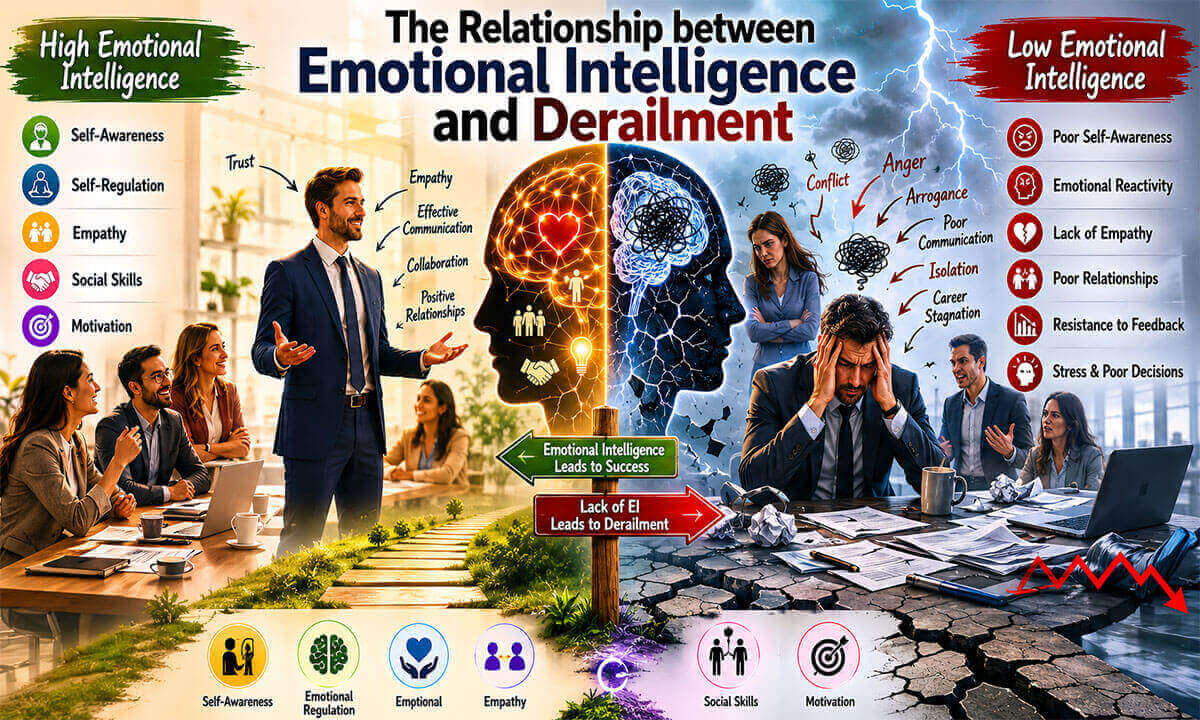
In modern organizations, technical expertise and intelligence alone are no longer enough to ensure long-term professional success. Many highly talented employees and leaders fail not because they lack knowledge or competence, but because they struggle to manage emotions, relationships, stress, and interpersonal dynamics. This phenomenon is often referred to as derailment. Leadership or career derailment occurs when a previously successful individual experiences failure, stagnation, or loss of credibility that prevents further career advancement. Researchers have increasingly connected derailment to deficiencies in emotional intelligence (EI), particularly in areas such as self-awareness, emotional regulation, empathy, and relationship management. The concept of emotional intelligence gained widespread attention through the work of Daniel Goleman, who argued that emotional competencies are critical predictors of workplace effectiveness and leadership success. Emotional intelligence refers to the ability to recognize, understand, manage, and use emotions effectively in oneself and others. Individuals with high EI tend to communicate more effectively, adapt better to organizational change, and maintain healthier professional relationships. The relationship between emotional intelligence and derailment has become an important topic in leadership and organizational studies because emotionally unintelligent behaviors often contribute to leadership failure, workplace conflict, reduced employee morale, and organizational instability. Understanding this relationship helps organizations identify potential derailment risks and develop emotionally competent leaders who can sustain long-term success.
Understanding Emotional Intelligence:
Emotional intelligence is generally defined as the ability to perceive, understand, regulate, and use emotions effectively in oneself and others. The concept gained significant recognition through the work of Daniel Goleman (1998), who explained that emotional intelligence consists of five major dimensions:
- Self-awareness
- Self-regulation
- Motivation
- Empathy
- Social skills
These competencies influence how individuals interact with others, respond to stress, make decisions, solve workplace problems, and lead teams effectively. Emotional intelligence is considered one of the most important predictors of leadership success, interpersonal effectiveness, and long-term career sustainability.
- Self-Awareness: Self-awareness refers to recognizing and understanding one’s emotions, strengths, weaknesses, values, and behavioral patterns. Self-aware individuals understand how their emotions influence their thoughts, decisions, and interactions with others.
Leaders who lack self-awareness often overestimate their abilities, reject constructive criticism, and fail to recognize the negative effects of their behavior on colleagues and employees. This can increase the likelihood of derailment because poor self-awareness frequently leads to arrogance, defensiveness, poor communication, and interpersonal conflict.
In contrast, highly self-aware leaders are more open to feedback, willing to learn from mistakes, and capable of making thoughtful behavioral adjustments. Self-awareness also promotes personal growth, accountability, and emotional maturity, all of which contribute to effective leadership and workplace stability.
- Self-Regulation: Self-regulation involves controlling emotional reactions, managing impulses, and maintaining composure during stressful or challenging situations. Emotionally regulated individuals can think rationally even under pressure and avoid impulsive or destructive behaviors.
Employees or leaders who cannot regulate emotions such as anger, frustration, anxiety, or disappointment may react aggressively, make poor decisions, or create toxic work environments. Emotional instability often damages professional relationships and reduces team morale.
On the other hand, effective self-regulation helps individuals remain calm, adaptable, and solution-focused. Leaders who demonstrate emotional control are more likely to earn employee trust, handle crises effectively, and create psychologically safe work environments. Self-regulation also strengthens resilience, stress management, and professional credibility.
- Motivation: Motivation in emotional intelligence refers to the internal drive to achieve goals, pursue excellence, remain optimistic, and stay committed despite obstacles or setbacks. Emotionally intelligent individuals are often motivated by personal growth, achievement, purpose, and long-term success rather than external rewards alone.
Highly motivated leaders tend to demonstrate enthusiasm, persistence, initiative, and dedication in their work. They inspire employees through positive energy, clear vision, and commitment to organizational goals. Such leaders are more likely to encourage innovation, productivity, and continuous improvement within teams.
Motivation also helps individuals cope with stress, failure, and workplace challenges more effectively. Instead of becoming discouraged during difficult situations, emotionally intelligent and motivated individuals maintain optimism and focus on problem-solving. This resilience reduces the likelihood of career derailment and supports long-term leadership effectiveness.
In contrast, low motivation may lead to disengagement, lack of ambition, reduced productivity, and resistance to change. Leaders who lack motivation may struggle to inspire others or sustain organizational performance.
- Empathy: Empathy is the ability to understand, appreciate, and respond appropriately to the emotions, needs, and perspectives of others. Empathetic leaders are sensitive to employee concerns and capable of building strong interpersonal relationships based on trust and respect.
Leaders with high empathy encourage collaboration, improve communication, and create inclusive workplace environments where employees feel valued and supported. Empathy also strengthens conflict resolution because empathetic individuals can better understand different viewpoints and respond compassionately.
A lack of empathy often contributes to insensitive leadership behaviors, poor morale, employee dissatisfaction, and workplace conflict. Leaders who ignore employees’ emotional needs may appear authoritarian, disconnected, or unsupportive, which can negatively affect organizational culture and performance.
- Social Skills: Social skills involve communication, teamwork, collaboration, conflict management, persuasion, and relationship-building abilities. Strong social skills enable leaders to interact effectively with employees, colleagues, and stakeholders across diverse organizational situations.
Leaders with strong interpersonal skills can motivate teams, resolve conflicts diplomatically, encourage cooperation, and maintain healthy workplace relationships. They are often skilled at networking, negotiation, active listening, and inspiring trust among employees.
Weak social skills, however, are strongly associated with leadership derailment. Poor communication, inability to manage conflict, lack of collaboration, and difficulty building relationships can create organizational tension and reduce leadership effectiveness.
Effective social skills are especially important in modern organizations where teamwork, communication, and adaptability are essential for success.
Understanding Derailment:
Derailment refers to the inability of an employee or leader to maintain expected performance or career progression. The term is commonly used in leadership research to describe situations where promising individuals fail to achieve their potential due to behavioral or interpersonal problems.
Leadership derailment may include:
- Failure to adapt to change
- Poor interpersonal relationships
- Inability to manage teams effectively
- Excessive arrogance or defensiveness
- Ethical misconduct
- Emotional instability
- Resistance to feedback
- Poor stress management
Researchers have found that derailment is rarely caused by technical incompetence alone. Instead, interpersonal and emotional deficiencies are among the strongest predictors of career failure.
Derailment can have severe organizational consequences, including:
- Reduced employee morale
- Increased turnover
- Financial losses
- Damaged organizational reputation
- Lower productivity
- Workplace conflict
Because of these consequences, organizations increasingly emphasize emotional intelligence in leadership development and talent management programs.
The Relationship between Emotional Intelligence and Derailment:
Emotional Intelligence as a Protective Factor: High emotional intelligence acts as a protective factor against derailment because emotionally intelligent individuals are better equipped to handle workplace pressure, conflict, and uncertainty. They can regulate emotional reactions, communicate effectively, and maintain constructive relationships even in stressful situations.
Leaders with high EI are more likely to:
- Accept feedback constructively
- Demonstrate empathy toward employees
- Adapt to organizational changes
- Resolve conflicts diplomatically
- Inspire trust and collaboration
- Manage stress effectively
These abilities reduce the risk of behaviors commonly associated with derailment.
Research on leadership derailment and emotional intelligence suggests that deficits in emotional competencies contribute significantly to professional failure. Studies particularly highlight poor interpersonal skills, difficulty adapting to change, and weak teamwork abilities as major derailment predictors.
How Low Emotional Intelligence Contributes to Derailment:
- Poor Self-Awareness: One of the most common causes of derailment is low self-awareness. Leaders who lack insight into their behavior may ignore criticism, overestimate their competence, or fail to recognize negative workplace impacts. Such individuals may become resistant to coaching and unable to improve problematic behaviors.
Without self-awareness, individuals often repeat destructive patterns that damage professional relationships and organizational trust.
Emotional Reactivity: Emotionally reactive leaders may display anger, impatience, defensiveness, or hostility under pressure. These behaviors create fear and instability within teams and reduce employee motivation.
In high-pressure organizational environments, emotional outbursts can significantly damage leadership credibility and increase the likelihood of derailment.
- Lack of Empathy: Leaders who fail to understand employees’ emotions often appear insensitive, authoritarian, or disconnected. This can lead to poor communication, low employee engagement, and workplace dissatisfaction.
A lack of empathy weakens trust between leaders and subordinates, making collaboration difficult and increasing interpersonal conflict.
- Inability to Build Relationships: Professional success depends heavily on networking, collaboration, and relationship management. Individuals with weak social skills may struggle to maintain productive workplace relationships.
Research shows that interpersonal problems are among the most consistent predictors of leadership derailment.
- Resistance to Feedback: Emotionally unintelligent individuals often react defensively to criticism rather than viewing feedback as an opportunity for growth. This resistance prevents professional development and contributes to repeated mistakes.
Constructive feedback is essential for leadership growth, and the inability to process criticism effectively increases derailment risk.
Leadership Derailment and Emotional Intelligence:
Leadership positions require constant emotional interaction with employees, stakeholders, and organizational systems. As leaders rise in organizations, technical expertise becomes less important than emotional and interpersonal competence.
Research on leadership derailment indicates that leaders frequently fail because of behavioral and relational deficiencies rather than lack of intelligence or technical skills.
Emotionally intelligent leaders are better able to:
- Motivate employees
- Build psychologically safe environments
- Handle organizational change
- Manage crises calmly
- Resolve conflicts effectively
- Foster collaboration
In contrast, leaders with low emotional intelligence may create toxic work environments characterized by fear, mistrust, poor communication, and employee disengagement.
Organizational Factors Influencing the Relationship:
Although emotional intelligence plays a major role in preventing derailment, organizational culture and systems also influence outcomes.
- Workplace Stress: Highly stressful environments can intensify emotional weaknesses and increase derailment risk. Leaders who lack emotional regulation may become overwhelmed by pressure and react negatively.
- Organizational Politics: Political environments often require strong emotional intelligence skills such as diplomacy, empathy, and social awareness. Individuals who cannot navigate interpersonal complexities may experience conflict and career setbacks.
- Lack of Development Opportunities: Organizations that fail to provide emotional intelligence training, coaching, or mentoring may unintentionally increase derailment risks among employees and leaders.
- Toxic Organizational Culture: Cultures that reward aggression, dominance, or excessive competition may encourage emotionally unhealthy leadership behaviors that eventually contribute to derailment.
Preventing Derailment through Emotional Intelligence Development:
Organizations can reduce derailment risk by investing in emotional intelligence development programs. Effective strategies include:
- Leadership Coaching: Coaching helps leaders improve self-awareness, emotional regulation, and interpersonal effectiveness. Executive coaching is particularly valuable for identifying derailment tendencies early.
- Feedback Systems: 360-degree feedback systems provide leaders with insights into how others perceive their behavior. Such systems improve self-awareness and encourage behavioral adjustment.
- Emotional Intelligence Training: Structured EI training programs can enhance communication skills, empathy, stress management, and conflict resolution abilities.
- Mentoring Programs: Mentorship provides guidance, emotional support, and professional feedback that help individuals manage workplace challenges more effectively.
- Stress Management Interventions: Stress reduction strategies such as mindfulness, emotional regulation training, and resilience development help leaders maintain emotional stability under pressure.
Criticisms and Limitations:
Although emotional intelligence is widely recognized as valuable, some scholars argue that the concept lacks conceptual clarity and overlaps with personality traits and social skills. Critics also question whether EI can consistently predict leadership success across all organizational contexts.
Additionally, emotional intelligence alone cannot guarantee leadership effectiveness. Technical competence, ethical judgment, organizational support, and cognitive ability also influence professional success.
Nevertheless, despite these criticisms, most contemporary leadership research acknowledges that emotional competencies significantly affect workplace performance and derailment potential.
In conclusion, the relationship between emotional intelligence and derailment is deeply interconnected. Emotional intelligence serves as a critical factor in determining how individuals manage stress, relationships, communication, and workplace challenges. While technical skills and cognitive intelligence may contribute to initial career success, emotional intelligence often determines long-term sustainability and leadership effectiveness.
Low emotional intelligence increases the likelihood of derailment by contributing to interpersonal conflict, emotional instability, poor decision-making, resistance to feedback, and ineffective leadership behaviors. In contrast, emotionally intelligent individuals are more adaptable, self-aware, empathetic, and capable of maintaining healthy workplace relationships.
Organizations that prioritize emotional intelligence development through coaching, mentoring, training, and feedback systems are better positioned to reduce leadership failure and cultivate sustainable leadership success. As workplaces become increasingly complex and relationship-driven, emotional intelligence will continue to play a central role in preventing derailment and promoting effective organizational leadership.
Frequently Asked Questions (FAQs):
What is emotional intelligence?
Emotional intelligence (EI) refers to the ability to recognize, understand, manage, and use emotions effectively in oneself and others. It includes skills such as self-awareness, self-regulation, empathy, motivation, and social interaction. According to Daniel Goleman (1998), emotional intelligence is a major factor influencing workplace performance and leadership success.
What does derailment mean in organizational settings?
Derailment refers to a situation in which a previously successful employee or leader fails to maintain career growth or professional effectiveness. This failure is often caused by behavioral, interpersonal, or emotional problems rather than technical incompetence.
How are emotional intelligence and derailment connected?
Emotional intelligence and derailment are closely related because low emotional intelligence often contributes to behaviors associated with professional failure. Poor emotional regulation, lack of empathy, weak communication skills, and resistance to feedback can damage relationships and leadership effectiveness, increasing derailment risk.
Can highly intelligent people still experience derailment?
Yes, Individuals with strong technical or academic intelligence may still experience derailment if they lack emotional intelligence. Many leaders fail not because they lack expertise, but because they struggle with interpersonal relationships, stress management, or emotional control.
Which emotional intelligence skills are most important for preventing derailment?
Several EI competencies help reduce derailment risk, including:
- Self-awareness
- Emotional self-regulation
- Empathy
- Communication skills
- Conflict management
- Adaptability
- Relationship-building abilities
These skills help individuals navigate workplace challenges effectively.
What are common signs of leadership derailment?
Common signs include:
- Frequent conflicts with colleagues
- Poor teamwork
- Emotional outbursts
- Resistance to criticism
- Micromanagement
- Arrogance or overconfidence
- Difficulty adapting to change
- Declining employee trust and morale
These behaviors can gradually damage professional credibility and organizational performance.
Why is self-awareness important in emotional intelligence?
Self-awareness helps individuals recognize their emotions, behaviors, strengths, and weaknesses. Leaders with high self-awareness are more open to feedback and better able to adjust problematic behaviors before they negatively affect their careers.
Can emotional intelligence be developed?
Yes, Emotional intelligence is not fixed and can be improved through practice, training, coaching, mentoring, and self-reflection. Organizations often use leadership development programs and emotional intelligence workshops to strengthen these competencies.
How does low empathy contribute to derailment?
Low empathy can make leaders appear insensitive, detached, or overly authoritarian. Employees may feel undervalued or misunderstood, leading to reduced trust, poor morale, and workplace conflict. Over time, these issues can contribute to leadership failure.
What role does stress play in derailment?
Stress can intensify emotional weaknesses and impair decision-making. Individuals who cannot regulate emotions under pressure may react impulsively, communicate poorly, or create conflict within teams. Effective stress management is therefore essential for preventing derailment.
How can organizations reduce the risk of derailment?
Organizations can reduce derailment by:
- Providing emotional intelligence training
- Offering executive coaching and mentoring
- Using 360-degree feedback systems
- Encouraging open communication
- Promoting healthy organizational cultures
- Supporting employee well-being and stress management
These strategies help employees and leaders develop emotional competence and resilience.
Is emotional intelligence more important than IQ in leadership?
Both emotional intelligence and cognitive intelligence are important, but research suggests that emotional intelligence becomes increasingly important in leadership positions. Technical expertise may help individuals obtain leadership roles, but emotional intelligence often determines long-term leadership effectiveness and sustainability.
Can emotional intelligence improve workplace relationships?
Yes, Emotional intelligence improves communication, empathy, conflict resolution, and collaboration. Employees and leaders with high EI tend to build stronger professional relationships and create more positive workplace environments.
Are derailment behaviors always intentional?
No, Many derailment behaviors are unintentional and stem from poor emotional awareness, stress, insecurity, or ineffective coping strategies. This is why self-awareness and feedback are critical for professional growth.
Why is emotional intelligence important in modern organizations?
Modern workplaces are increasingly collaborative, diverse, and fast-changing. Emotional intelligence helps individuals adapt to change, manage relationships, communicate effectively, and maintain emotional stability under pressure. These abilities are essential for both personal success and organizational effectiveness.
References:
- Bar-On, R. (1997). Bar-On Emotional Quotient Inventory (EQ-i): Technical manual. Multi-Health Systems.
- Furnham, A., & Taylor, N. (2026). The relationship between emotional intelligence and dark side personality traits: A study from Africa. Psychology, 17(4), 477–491. https://doi.org/10.4236/psych.2026.174026
- Goleman, D. (1998). Working with emotional intelligence. Bantam Books.
- McCartney, W. W., & Campbell, C. R. (2006). Leadership, management and derailment: A model of individual success and failure. Leadership & Organization Development Journal, 27(3), 190–192.
- Rasmussen, S. (2017). Leadership derailment & emotional intelligence. Psychological Consultancy Ltd.
- Irani Williams, F., Campbell, C., McCartney, W., & Gooding, C. (2013). Leader derailment: The impact of self-defeating behaviors. Leadership & Organization Development Journal, 34(1), 85–97. https://doi.org/10.1108/01437731311289983
- Tajadura-Jiménez, A., Marquardt, T., Swapp, D., Kitagawa, N., & Bianchi-Berthouze, N. (2016). Action Sounds Modulate Arm Reaching Movements. Frontiers in psychology, 7, 1391. https://doi.org/10.3389/fpsyg.2016.01391
- Zhang, Y., & Chandrasekar, N. A. (2011). When building strength is not enough: An exploration of derailment potential and leadership strength. Journal of General Management, 36(3), 37–51. https://doi.org/10.1177/030630701103600303
Meta Psychological Education focuses on the foundational, higher-order skills (meta-skills) that allow individuals to “learn how to learn,” manage their own cognitive processes, and adapt to new situations, often termed meta-learning. It bridges psychological research with practical application in learning and development.